
Death Stranding 2: On The Beach Review – Time After Time(fall)
Platform: PlayStation 5
Genre: Adventure, Action, Delivery Game, Shooter, A Hideo Kojima joint
When Hideo Kojima and Konami broke up a long while back, people have wondered if he can survive on his own two feet with a new game series. Turns out that he can and will; while 2019’s Death Stranding had some polarizing viewpoints at launch, most people warmed up to it, this critic included.
Its eventual sequel, Death Stranding 2: On The Beach, is a tweaked-up and souped-up entry that just expands on everything, just like a true big-budget game sequel would. And just like the best sequels in the celluloid business -The Godfather 2, Terminator 2, The Empire Strikes Back- it’ll leave a lasting impression from start to finish.
Neither Rain Nor Snow, Nor Ghosts…
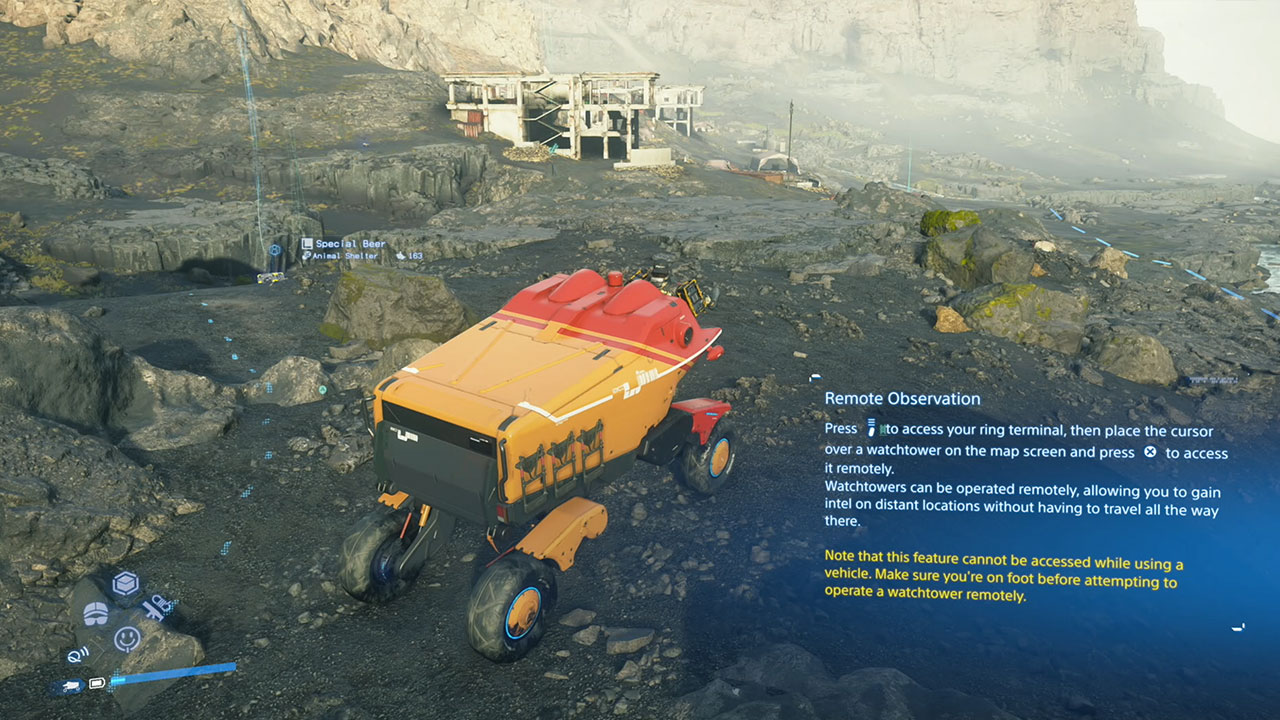
Let’s get this out of the way: Death Stranding 2 is more or less similar to the first game – you play as Sam Bridges and you are given the task of connecting a new country -the whole of Australia- to the Chiral Network by delivering packages and cargo any way you see fit. Whether by foot or using vehicles, you plan your route to determine the best way to get your package(s) across, get it there in one piece, and deal with armed forces, ghosts called BTs (Beached Things), and other strange-ass bad guys you meet along the broken highway.
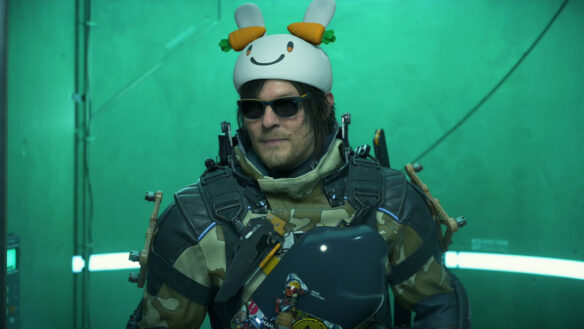
There’s also an overarching plot that deals with Sam’s backstory and the Bridge Baby (B.B) nicknamed Lou he’s carrying, and also the return of characters like Fragile, Deadman, Heartman, and antagonist Higgs. We also get new characters like Tarman, a pregnant girl named Rainie, and a mysterious girl named Tomorrow. Oh and a possessed doll named Dollman who acts as your navigator and assist whom you hang onto your suit like a utility tool.
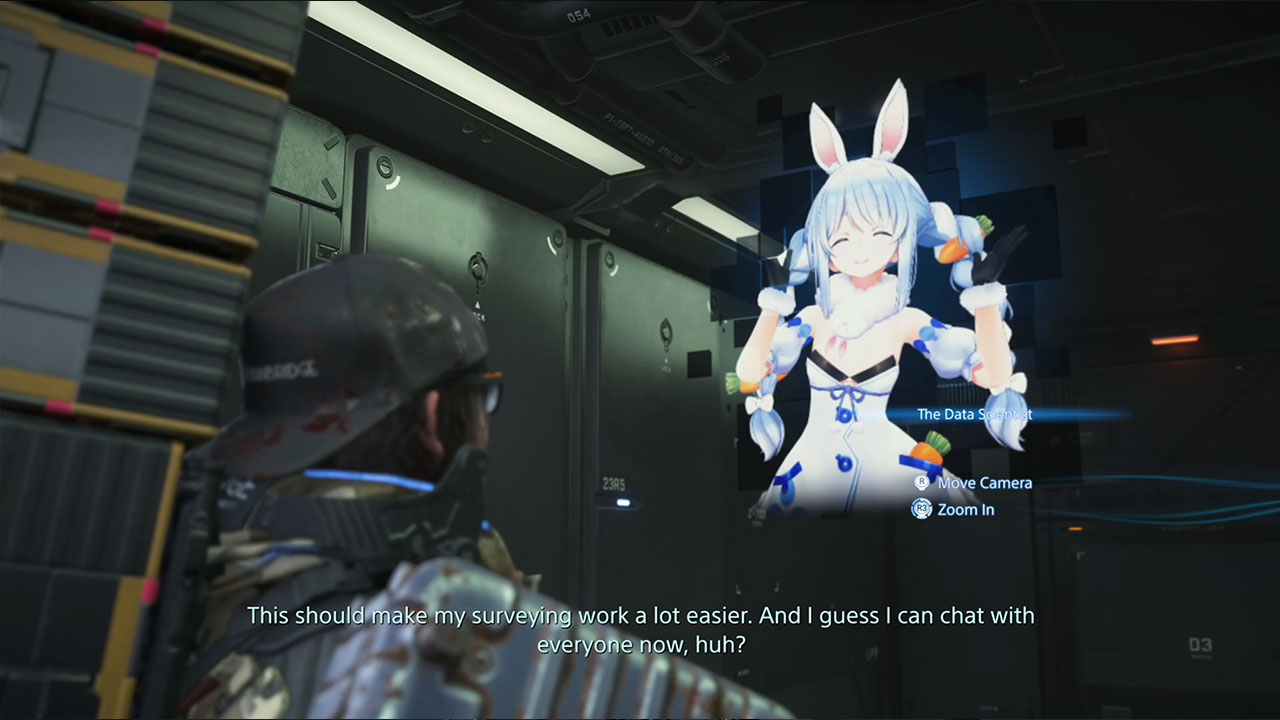
The narrative is definitely long but epic in its own way, with some bouts of levity and non-sequiturs and strange-as-heck imagery. Amazingly, it all makes sense through the thick of it all and its jargon (which you can refer to any time on the game’s Corpus compendium), and it’s a tale about how Sam deals with grief while using his job as a porter to see it through from start to finish. The tragedy he gets hit with really did a number on his psyche, so it’s up to him to help connect Australia while slowly letting go of his grief.
Luckily, all the aforementioned mental state our hero is experiencing don’t affect gameplay. Sam plays great in-game; he’s well-trained in shooting, being stealthy when needed, and being a porter who is nimble on his feet. The terrain is rough and unforgiving, and crossing hazards like rivers and tar can slow you down or even sink you, and the rain around you can degrade your packages, so at times you may need to speed things up when carrying the goods.
As such, Sam is able to craft equipment and structures to help him out on his job. Carrying too much on his back and need to make sure he doesn’t topple? Either attach some packages to his suit or stuff some in his utility belt(s), or creating a floating carrier (or daisy chain another one to it) to carry excess goods. Need more passive buffs? Use the APAS skill tree system to allocate powerups in the delivery side of things, or just have your gun’s fire rate higher than before, or even get a skill that lets you chuck ALL your grenades in one package.
You can build structures that get you across areas better and quicker, or even make a fancy catapult that throws your packages to its intended location. Or even launch yourself for a quick shortcut through treacherous terrain. You can even build teleporters to get you from one place to another quick, but at the cost of leaving your packages at the spot you teleported from. When all else fails, just build a tricycle or a delivery van outfitted with extra batteries (so it doesn’t die out halfway), terrain scaling, and sticky cannons to make your traversal stress-free. Heck, there are now monorails you can take that can carry you and your vehicle to pre-determined locations, and you get a nice ride with a view out of it too!
It also helps that Death Stranding 2 is fricking gorgeous. The Decima Engine is doing a lot of the heavy lifting in making us invested in Sam’s journey because digital Australia wastelands never looked this sublime and expansive. Outbacks and mountains are as red and fiery as they come, while the centre parts with the snow and the whiteouts do add to the challenge in navigation while being its own visual splendour. Your eyes won’t get tired of the vistas of the sunsets, the horizon, the red deserts, and many more elemental landscape treats offered here, coupled with appropriate sci-fi scores and Kojima Production’s contemporary playlist of atmospheric tunes from Ludwig Göransson, Woodkid, Low Roar, Gen Hoshino, and many more. If anything, director Hideo Kojima and co. really understands the importance of presentation and atmosphere in a big-budget title like this and doesn’t hold back.
The first Death Stranding made the delivery aspect pretty fun and zenlike, though it has its moments of monotony & long-windedness with its plot. Part 2 just makes it feel better with all sorts of new additions and tools, as well as quality-of-life features, while keeping the chatter to a minimum between Sam and Dollman. Rarely does the game go to a sudden halt to tell you important story bits, and usually these happen in smooth transitions to the end of the delivery/connection adventure.
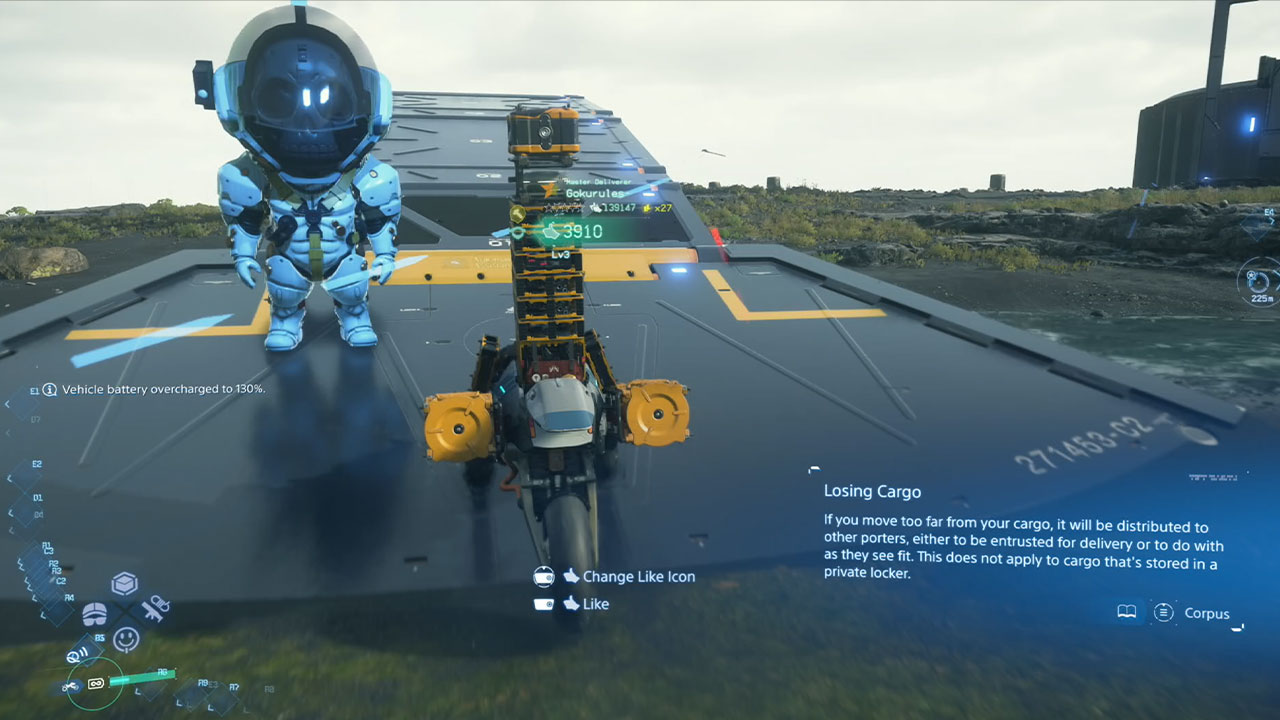
The beauty of Death Stranding 2 is the online help you can get. Even if it’s a single-player game, you will get objects, constructs, and tools created and left by other online players. Some kind souls will eventually help pave the way to your next objective with bridges and ziplines, if you so choose to use them. Even in boss battles, you can even have “tar ghosts” with online people’s names throwing weapons at you in case you came in ill-prepared. I purposely jumped into one fight with a giant “hand-crab” BT empty-handed and did manage to get through it through the skin of my teeth due to the online help I got. The weapons you get do scale according to how you’ve progressed, so you won’t get better weapon like rocket launchers at the start for the easier fights.
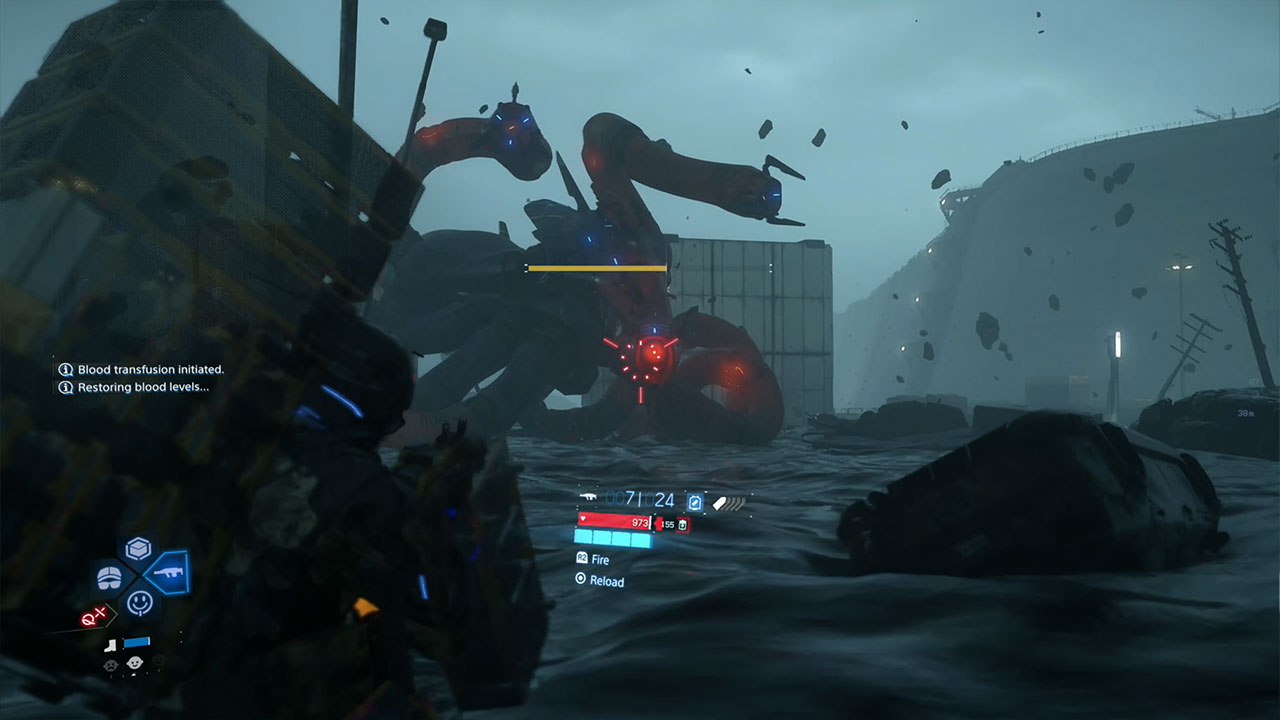
I do feel that the action portion of this sequel is improved tenfold from the 2019 base title, with a lot more emphasis on setpiece battles and boss fights up the wazoo. Just like Kojima’s past works pre-Konami, they’re epic and action-packed, and walk on that tightrope between easy and challenging. You will have options dealing with enemies, and you will be spoilt for choice, but you won’t leave unbruised as they do hit hard and do not let up. This may piss off players of the original who prefer less of these confrontations and opt for a stealth approach, but to each their own.
There’s even a VR room you can practice your new weapons in, as well as some obstacle courses to get the best grade and score for rewards and bragging rights. Death Stranding 2 keeps giving you new tools through its main missions, and even bonus ones that can help you better if you complete Sub-Orders and increase your relationship with your clients further. This one time, I helped out a pizza delivery guy with his orders, and sure enough I learned a couple of new melee moves that involve me having to keep in balance (the L2+R2 thing you do when scaling cliffs)
Not-So-Lonesome Road
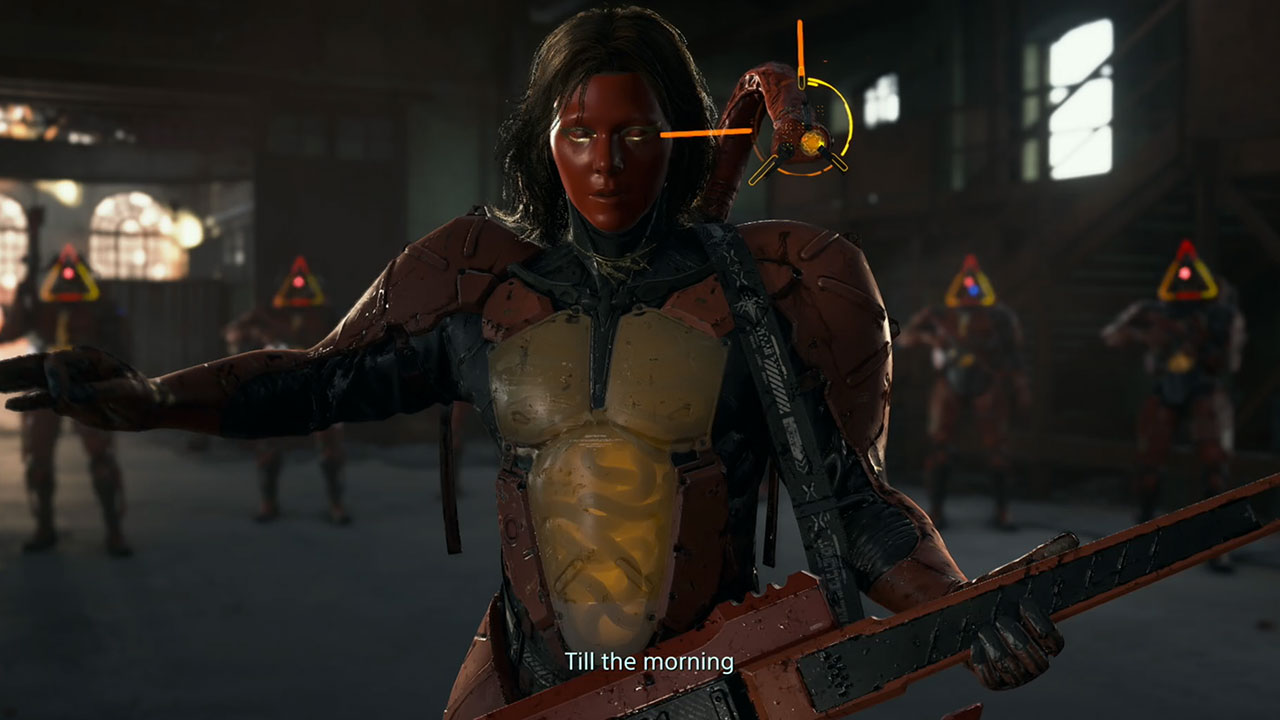
My 35+ hours with Death Stranding 2: On The Beach was laced with so many emotions and feelings: ennui, excitement, joy, confusion, and satisfaction. Yes, the delivery aspect of the sequel can be dependent on how reliant you are with other people’s contributions, or how diligent you are with building literal bridges. However, driving cross-country from the South to the North of Australia using the long-beaten road is its own zen-like experience, as does coming across the game’s ghosts and either confronting them head-first or just going around and avoiding it altogether.
Death Stranding 2 is not a game you should be rushing to complete; as a consumer, you should not be playing it on a deadline like us critics. It’s a triple-A action-adventure open-world game with a deft balance of POS Laju-simulating and shooting, along with some sightseeing of wasteland Australia to take in and drive/trek around in.
It is unabashed with its vision of human connection and its own Strand-type worldbuilding, and gives you enough tools to make the journey all the more worthwhile and memorable. It still has the trademarks of a Kojima-written narrative -“Muffin Man”-style dialogue, bats*** insane moments, subtle-as-a-sledgehammer storytelling with obvious symbolism. But that’s what makes this sequel all the more endearing; you may cringe at some moments, but you won’t be bored with the thread being spun here. Nor will you be left out of the lurch with the interactive experience you’re getting.
Pros
- Beautiful graphics & vistas.
- Awesome balance between delivery & combat gameplay.
- New skill tree & equipment/tech helps buff Sam up tenfold.
- Interesting & engaging plot that pays off big & resolves well…
Cons
- …if you can handle the Kojima-isms & dialogue.
- Can get tedious with the walking & backtracking when in offline mode.
Final Score: 90/100
Review copy provided by publisher.

Leave a Comment