
The Creators Of SURI: The Seventh Note On Making Sweet Music In Indie 2D Platforming
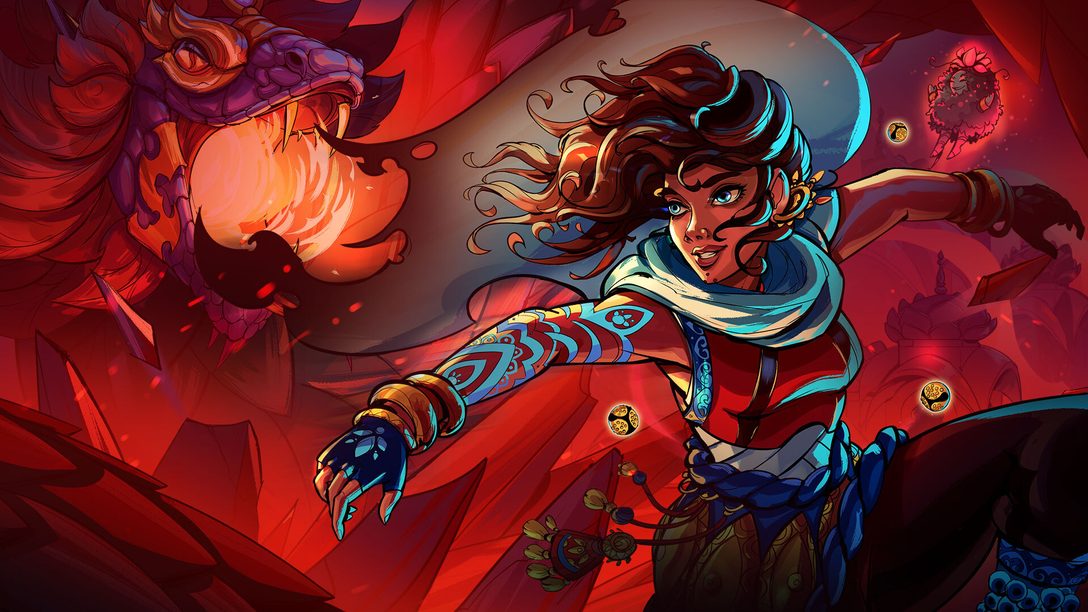
There aren’t that many 2D platforming rhythm game hybrids out there, or at least one that’s worth mentioning or even our time. South Asia-made game SURI: The Seventh Note comes close.
It’s possibly due to its unique art style, its adherence to Indian culture and myth in its narrative about a young girl adventuring through adversity to save her mother (filial piety is truly Asian), and a nifty Indian vibe in its platforming and gameplay. All this is made possible through the perseverance of indie gamemaker Tathvamasi Studio, who dared to defy current gaming trends with its unique 2D platforming take.
We talk to Tathvamasi Studios’ game director Glen Martin and art director Chitrak Srivastava in this exclusive interview.
What was the inspiration for making SURI: The Seventh Note?

Glen Martin: The concept really came together during the pandemic lockdowns. I found myself watching a lot of gameplay videos of challenging action games, and I was just super interested in these 100% parry damageless runs where the combat feels like music when you’re doing it really well.
We thought, “Hey, why not make a 2D version of that?” The goal was to build a rhythm platformer where the world itself moves to the beat, and every jump and dash has to land in time with the soundtrack.
Chitrak Srivastava: From an artistic point-of-view for me, the drive was cultural. When we look at all the games that we have grown up playing, we usually see a lot of Western influences, or even if it’s Eastern influences, they’re mostly not from India.
We wanted to put in some of the things that we grew up looking at. One thing we were sure from the absolute beginning that SURI has to be inspired by the Indian ethos.
Which music games or albums inspired the mechanics and soundtracks of SURI?
GM: SURI is inspired by games like Rayman Legends, 140, and Celeste. 140 really stood out to us; we felt that its minimalist approach to syncing gameplay with music could be expanded into a full rhythm platformer.
Rayman Legends inspired the faster-paced escape sequences, where platforms and hazards move to the beat, and Celeste informed the precision platforming feel. Hi-Fi Rush also showed us how the world itself could move in sync with the music.
On the soundtrack side, eighty percent of the music you hear in the game has been recorded with original analogue instruments rather than something synthesised electronically. We wanted to preserve the texture of the music.
At the same time we also wanted to maintain some geographical accuracy to the music you hear. When the player arrives in the southern part of the island of Suri, we’d use a veena (a South Indian instrument) instead of a sitar (a North Indian instrument), for instance. And then when we go to the desert portions of the game, we look to Rajasthan and its musical traditions.
What was the most challenging aspect of making SURI and getting it out the door?
GM: The craziest and most important concern we had was adapting musical variety to the speed at which human thumbs can move on a controller. There needs to be a minimum time window for player actions to happen. After a lot of trial and error, we finally cracked it. It’s around 480 milliseconds, so we need to maintain a gap of 480 milliseconds between the main beats of the game.
We chose 480 milliseconds between the main consecutive beats to create enough space for the player’s input response while still maintaining the game’s momentum. A longer window could disrupt the spacing, rhythm, and overall mood of the experience, making the game feel less responsive.
On the other hand, a shorter window may make the fail state too subtle or quick for the player to consciously or subconsciously recognize that they have fallen off rhythm.
The game is already out; did you get the reception you expected, or do you feel there’s room for improvement?
GM: Like any first-time developer, we do believe we always have room to grow and the reception to Suri proves this as well. That said, we’re aware of the game’s pain points and are looking to rectify them as soon as possible. This includes issues with difficulty which we are going to address in an update soon
What do you feel was the best part you worked on post-launch?
GM: The “Trials of Yama” DLC is something we are very proud of. It serves as a prequel story where players step into the role of Jaya, Ajira’s mother, as she tries to reunite with her love, Veer. It features new challenge rooms and puzzles and gives players who connected with the narrative a deeper look at the characters and the mythology underpinning the island of Suri.
In addition to this as a first time studio, dealing with the reception of a game is a challenge unto itself. We are really proud of — and humbled by — the community. The gamers and the reviewers have been so vocal in their feedback which has been an unexpected blessing. Not only does this help us make SURI a better game, but allows us to take those lessons for whatever we’re building next.
We knew we were a tough game but we didn’t know we’d have players dedicated enough to finish it twice just for the platinum trophy. It gives us the encouragement to move forward and fix the game the best we can.
Post-launch, what could have been done better, or fixed properly?
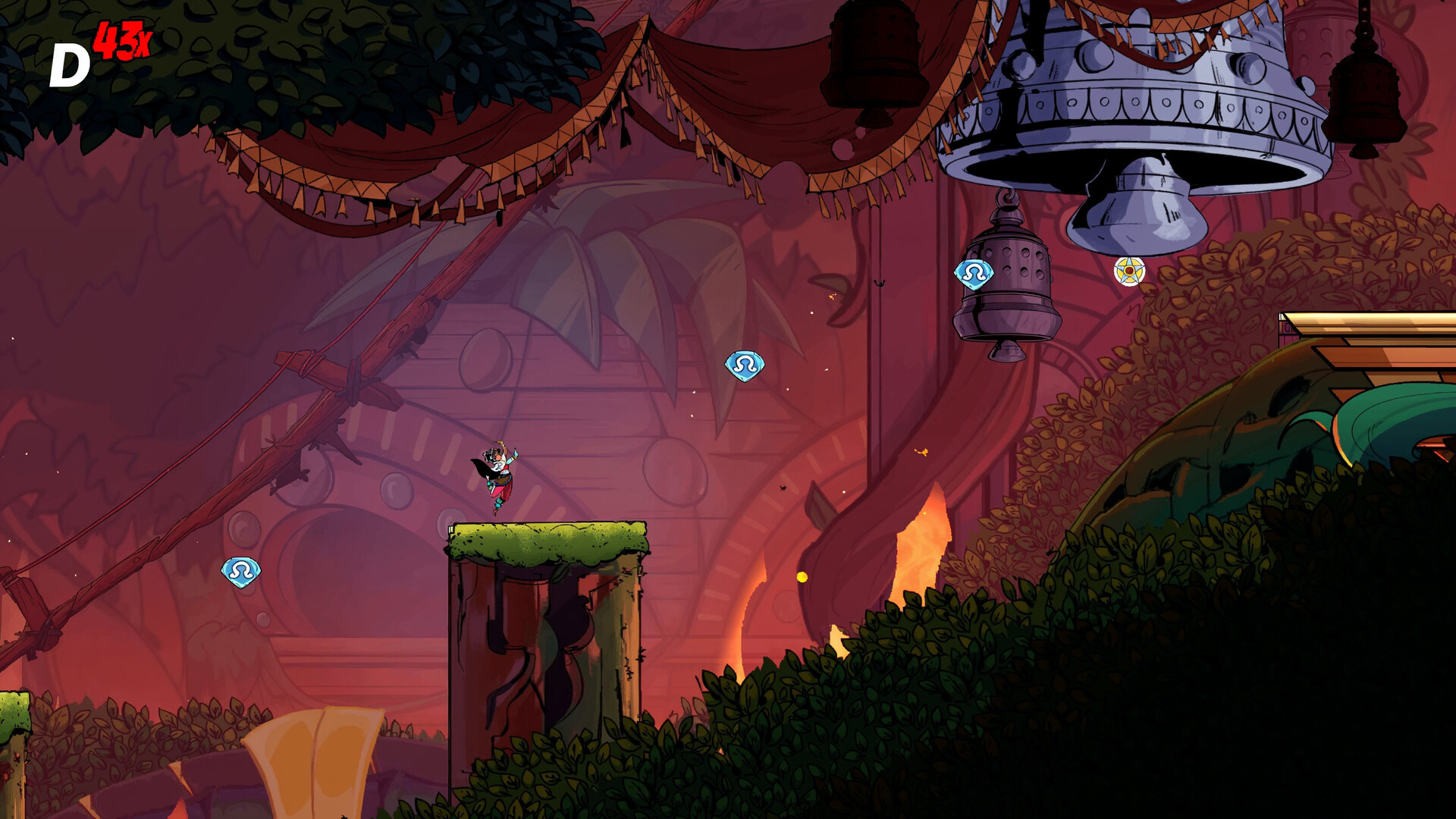
GM: Based on the critical feedback, the most impactful improvements would have been around the fundamental feel of the game. Polishing the input responsiveness and character animations to match the precision the rhythm system demands would have transformed the experience for many players.
Smoothing out the difficulty curve was also key rather than sudden spikes that halt momentum, a more gradual progression that teaches players the rhythm language before demanding mastery would have made the game more welcoming without sacrificing its challenge. We plan to address most of these in an update soon. Stay tuned.
Has PlayStation been helpful to you since this was filed as a PlayStation India Hero Project initiative?
GM: Absolutely. It’s our first game, and we wouldn’t be here without the gracious support of PlayStation India Hero Project. We applied because we get development funding without a lot of strings attached and there was no equity dilution whatsoever.
But the most amazing part of this program is the mentorship. PlayStation always holds us to a high level of quality, and it’s great for us because it pushes us to take our game to higher levels of polish and quality.
The technical support has also been incredible. We had some issues with the custom glue code we had written to sync up FMOD and Unity, and it just wouldn’t run on the devkit. The folks from the support team sat with us and dove deep into our codebase to debug this problem and solve it. They are literal superheroes.
They also collaborated with us on the Rhythm Haptics Engine for the DualSense, which lets us use the tactile medium to bring about a rhythmic experience so players can not just hear and see the beat, but feel it.
Do you see India’s game-making scene growing further and further? What is holding it back?
GM: India’s game development scene is definitely growing, but it faces structural hurdles. The biggest barrier is capital and publishing investment. Studios need patient capital that understands creative risk and long development cycles. There is also a gap between audience size and monetisation.
The annual revenue per user is very low, which means studios have to look outward for commercial viability.
CS: The talent and ambition are absolutely there. Programmes like the PlayStation India Hero Project are proving that world-class games can be made in India. What’s needed now is the infrastructure, more experienced publishing partners, better educational pipelines that focus on real team projects, and the time to let that talent mature.
We are toeing the line between being different enough to feel fresh and interesting, but not so different that it becomes alienating or confusing. The next wave of Indian developers will build on what we’ve learned, and I believe the scene will only get stronger.
SURI: The Seventh Note is out now for PC and PlayStation 5.


Leave a Comment