
Spirit X Strike Review: All Combo, No Soul

Platform(s): PC (version reviewed)
Genre: 3D beat ’em up
In the great pantheon of beat ‘em ups, I’ve always been a sucker for the more theatrical, hack-and-slash side of things. You know, the kind where the camera dramatically zooms in on your 400-hit combo while your character says something like “You’re not even worth killing” for the fiftieth time. Devil May Cry, Onimusha, Bayonetta—these were games that didn’t just let you fight enemies; they let you absolutely humiliate them.
And yet, for all the Dante-style flair, the game that always had me glued was Dynasty Warriors. Maybe it was the endless sea of identical soldiers. Maybe it was the absurdly dramatic retellings of Chinese history. Or maybe I just liked the idea of single-handedly committing war crimes on a battlefield while my PlayStation struggled to render grass. Regardless, that particular flavour of power fantasy was my bread and butter.
So when Spirit X Strike flashed across the screen during the PC Gaming Show 2025, I jotted the name down like a man who just saw a new Mortal Kombat with kung fu ghosts. It looked slick, it had style, and more importantly—it looked cool. Imagine my surprise when, just hours later, a code materialised in my inbox. A humble debut title from a mysterious outfit called Maicha Studio? My interest was piqued.
Now, before I dive into whether this neon-drenched throwback lives up to its stylish facade, let’s talk about how it feels. Because in a genre where you’re basically just punching everything that moves, that matters a lot. And Spirit X Strike… well, it’s complicated.
Swings Big, Hits… Something
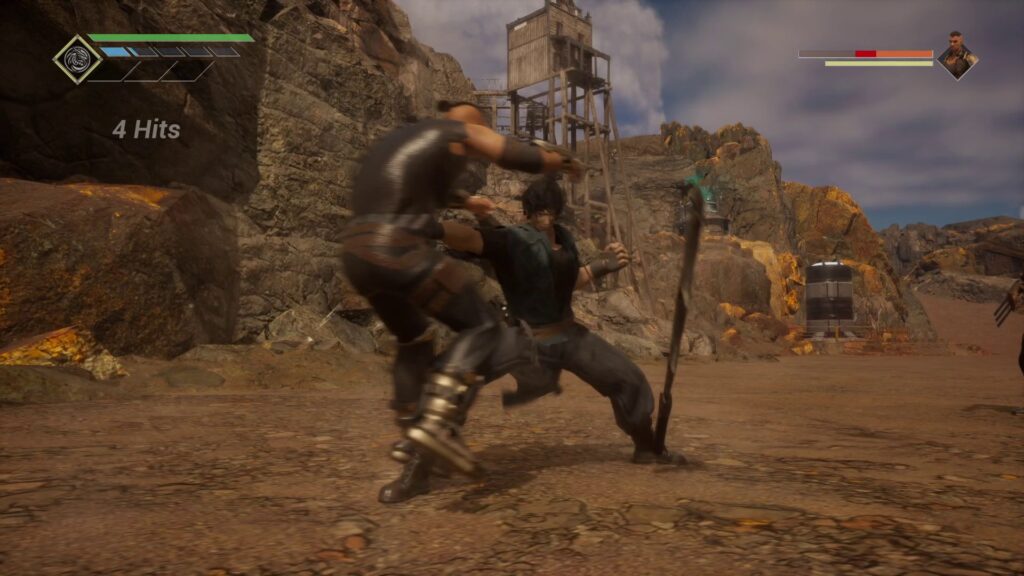
Let’s start with the controls—because Spirit X Strike feels like it’s been assembled by someone who’s only ever watched gameplay through a cracked phone screen on 1.25x speed. Movement is fine, but the moment you try to lock on or switch targets, it’s like the game momentarily forgets it’s supposed to be helping you. Locking on feels less like precision and more like arguing with a shopping trolley that’s determined to steer itself into oncoming traffic.
And then there’s the button mashing. Now, I’m no stranger to intense finger acrobatics—this is coming from someone who’s played enough Call of Duty to develop a kind of Stockholm Syndrome with slide-cancelling. My thumb is usually the one that suffers. But this? This game somehow managed to cramp fingers I didn’t know were capable of feeling pain. And for what? A combat loop that kind of works… but only just.
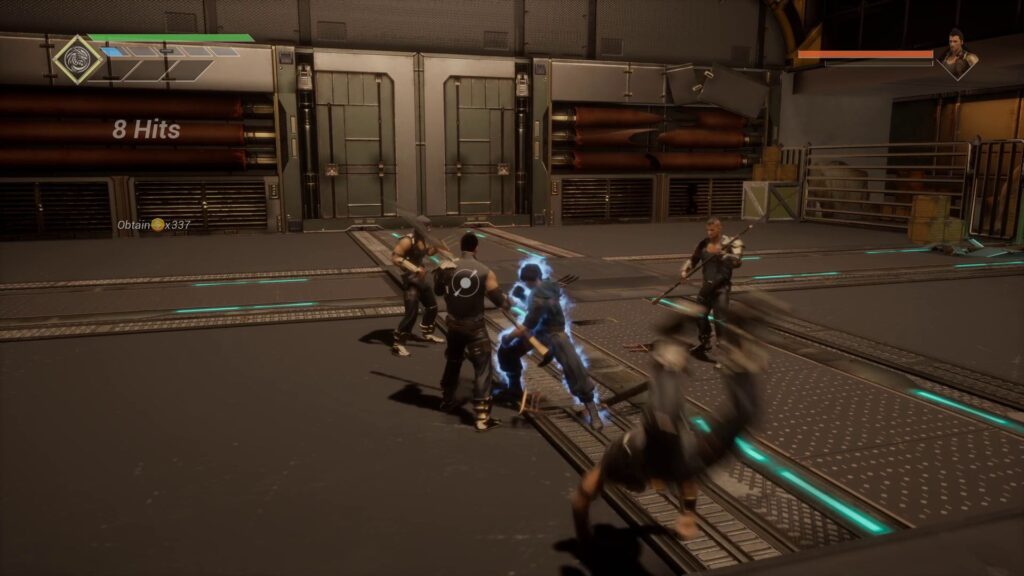
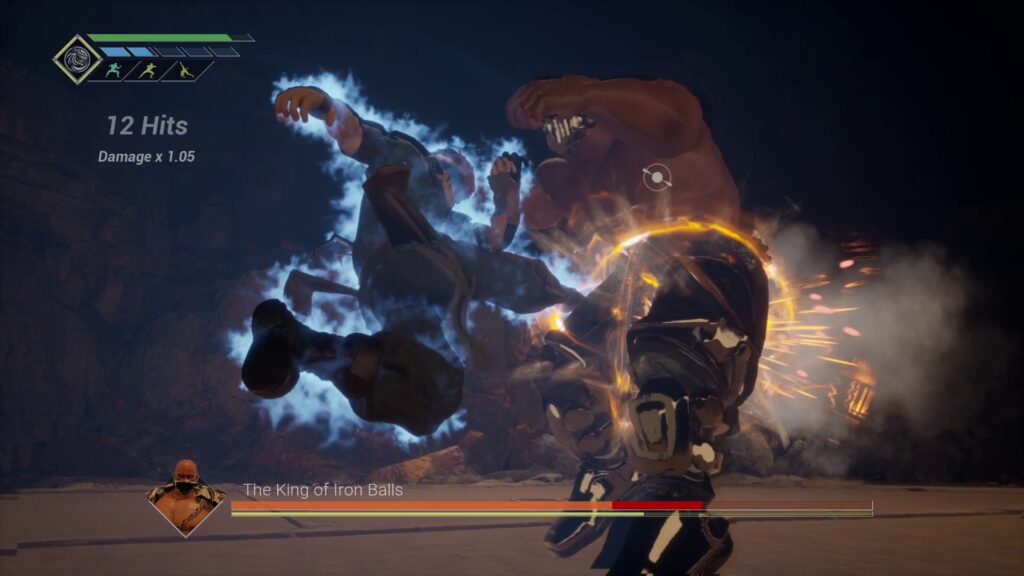
To its credit, the core mechanics aren’t terrible. You punch, they stagger, you combo, they die—it’s what you’d expect from any self-respecting beat ‘em up or hack-and-slash hybrid. The combo multiplier is a nice touch, rewarding you with extra damage for not getting slapped around like a toddler with foam boxing gloves.
And the execution animations? Surprisingly helpful. They punctuate the chaos like commas in an unhinged sentence, giving you just enough time to breathe before the next round of digital fisticuffs. I often found myself deliberately trying to stun enemies as quickly as possible—not just because it helps reset the relentless pace, but because, frankly, it looks bloody cool.
One moment you’re kicking someone skyward like you’re auditioning for Tekken, the next you’re pile-driving them into the floor hard enough to cause a minor earthquake. There’s even a subtle nod to Bruce Lee’s iconic one-inch punch, and yes—it made me grin like an idiot every single time. These finishers aren’t just flashy for the sake of it; they’re stylish, brutal, and they serve a purpose. Each one restores a sliver of health, which means the game actively encourages you to channel your inner stunt choreographer as often as possible. It’s violence with benefits—and I can’t complain.
Settings? What Settings?
But if the combat’s a little rough around the edges, the game’s functionality is where it properly starts to unravel. Customisation options? Practically nonexistent. You can fiddle with the resolution and maybe squint at a render quality slider, but don’t expect to tweak the controls, switch between fullscreen and borderless, or—God forbid—adjust the volume without jumping through hoops.
Now, to be fair, after some trial and error (and by that I mean randomly mashing keys out of sheer desperation), I did discover that pressing Enter swaps the game into windowed mode. Not borderless windowed, mind you—just a sad little window that floats awkwardly like a PDF someone forgot to maximise. And not once does the game tell you this. No tooltip. No menu hint. Nothing. It’s like the developers assumed you’d inherit this knowledge through divine revelation.
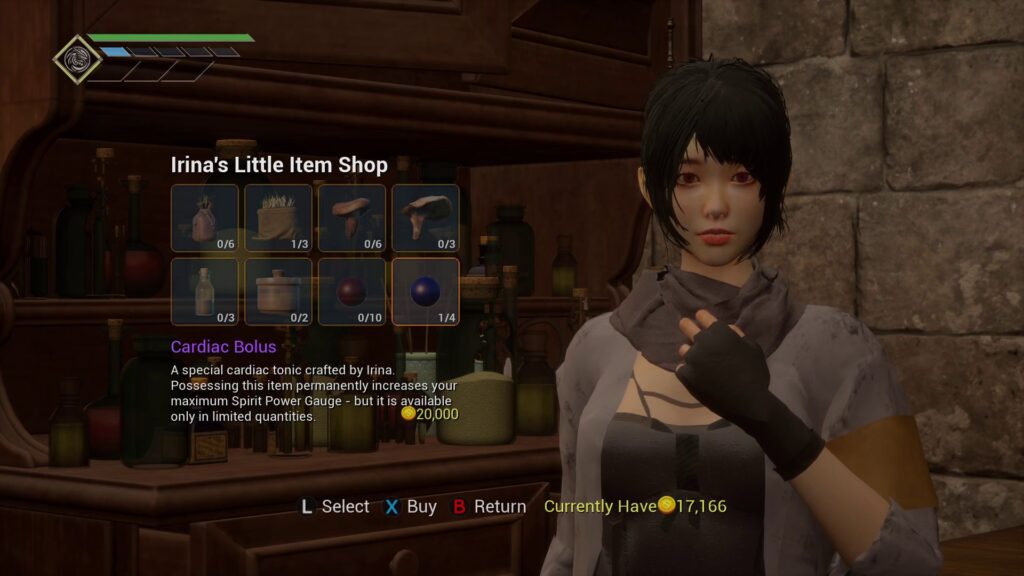
It’s the kind of UI oversight I’d forgive in a university group project running on Red Bull and poor decisions—not in a game being sold on digital storefronts with real money. It’s less “early indie charm” and more “accidentally shipped the alpha build.”
And here’s the kicker: none of these settings can be changed mid-game. You want to turn the volume down because the boss fight music is threatening to perforate your eardrums? Too bad. Exit to the main menu and try again. This isn’t just an oversight—it’s the kind of basic-level blunder you’d expect from a university student crunching through their final year capstone project. Not from a studio publishing a commercial release. It’s baffling. Like installing a fire alarm that only works when you’re not inside the building.
Looks Like A Game, Feels Like A Group Project
Now, this game clocks in at a whopping… 4GB. Which had me intrigued. Maybe it’s a triumph of optimisation? Maybe it’s a technical marvel packed into a tiny digital footprint?
No. It’s just small because it looks like it was made on a Chromebook during a lunch break.
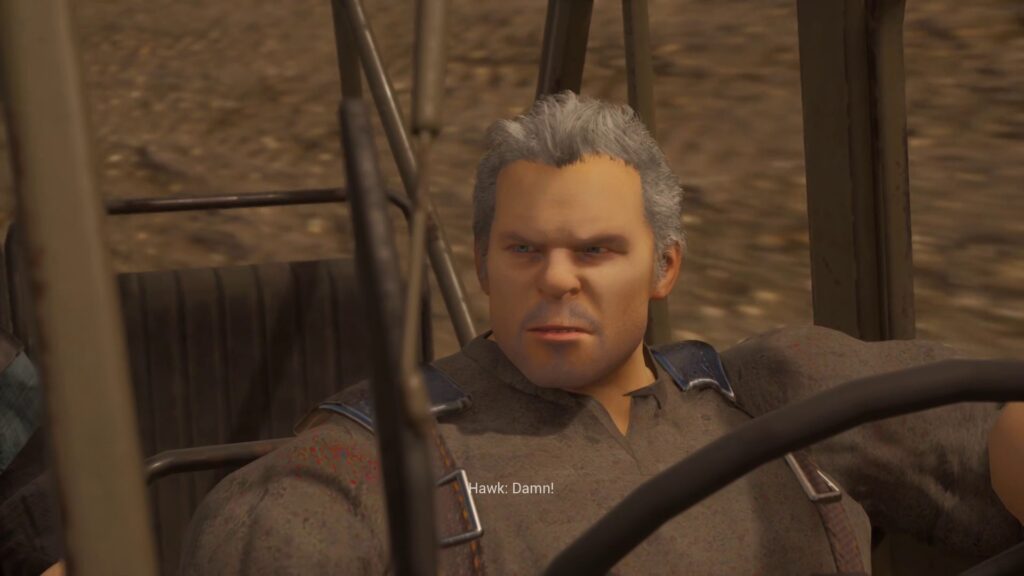
The moment the game loads, it hits you. Not with visual splendour, not with a breathtaking art style—but with the unmistakable vibes of a final-year game dev project cobbled together by four sleep-deprived students and a vending machine. And it’s not just the aesthetic; it’s the whole presentation. Menus, UI, character models—they all scream “placeholder” in a tone so loud it echoes.
Now, to its credit, my humble laptop, which, mind you, wheezes like a pensioner every time I launch Black Ops 6 on low—ran Spirit X Strike at Ultra settings with 144fps. Which sounds great until you realise it’s because the game has the graphical complexity of a mobile ad for a knockoff Devil May Cry.
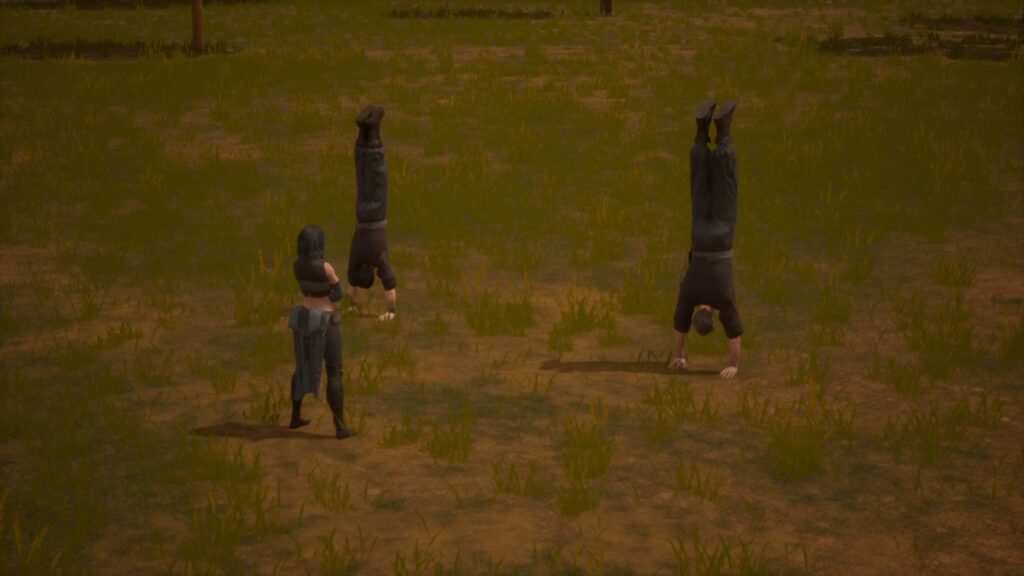
At least Tomb Raider on the PS1 had an iconic low-poly charm. It owned its aesthetic and turned it into something we now look back on fondly. Spirit X Strike doesn’t even try. It just feels visually vacant. Not retro. Not minimalist. Just… uninspired.
I suppose part of this disappointment stems from the initial trailer I saw during the PC Gaming Show. It looked promising—stylish even. But after being spoiled with games like Black Myth: Wukong, Infinity Nikki, and Naraka Bladepoint, all of which set a terrifyingly high bar for visual fidelity among Chinese developers, this feels like a shrug in response.
Then again, maybe this is the standard, and I’ve just been spoiled. Hard to say, considering there’s next to no information on Maicha Studio, the devs behind this. No background, no interviews, not even a flashy “we’re passionate indie devs” blog post. Just a game. A very small, very visually basic game.
Dialogue Duller Than Dishwater
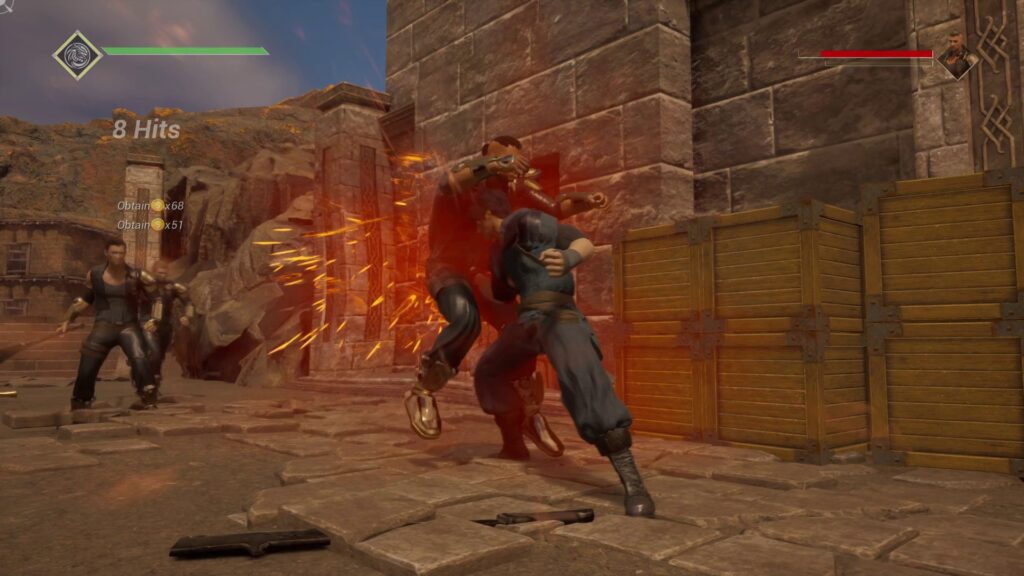
And then there’s the writing—oh dear, the writing.
If you’ve ever watched a bottom-shelf anime that clearly blew its entire budget on hair physics and forgot to hire writers (EX-ARM, I’m looking at you), then Spirit X Strike might feel eerily familiar. The dialogue feels like it was scribbled down by an AI trained exclusively on fridge magnet poetry and overwrought fanfiction. It’s not offensively bad—it’s just flat, awkward, and painfully forgettable.
The voice acting doesn’t help matters either. Now, while I don’t speak Chinese fluently, I do play a fair few Chinese games, and I usually prefer to stick with the original dub—y’know, the one the developers intended. But here, even with that in mind, the performances feel… anaemic. There’s no punch, no gravitas, no real emotion. Just line after line delivered with the enthusiasm of a man reading a terms and conditions page aloud for the third time.
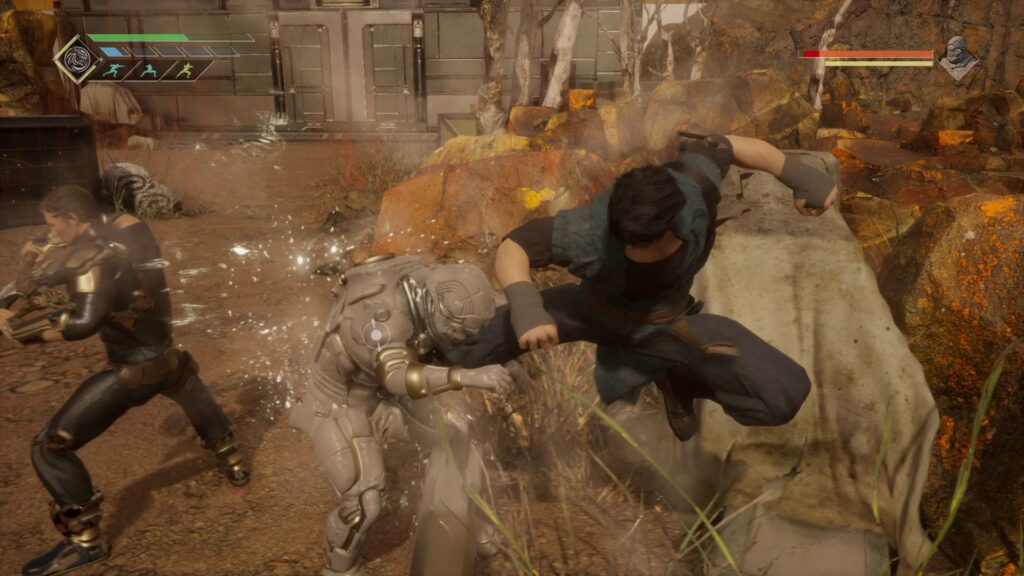
And that lack of expression builds a wall between you and the game—one that the writing certainly isn’t strong enough to scale. I’ve played janky, bug-riddled games before and still enjoyed them purely because the narrative and voice performances carried the weight. But in Spirit X Strike, that connection just doesn’t happen. The world fails to draw you in, not because it’s ugly or broken (though, let’s be honest, that doesn’t help), but because it simply can’t make you care.
It all feels like background noise—dialogue for the sake of having dialogue. And that’s never a good sign.
All Style, No Spirit
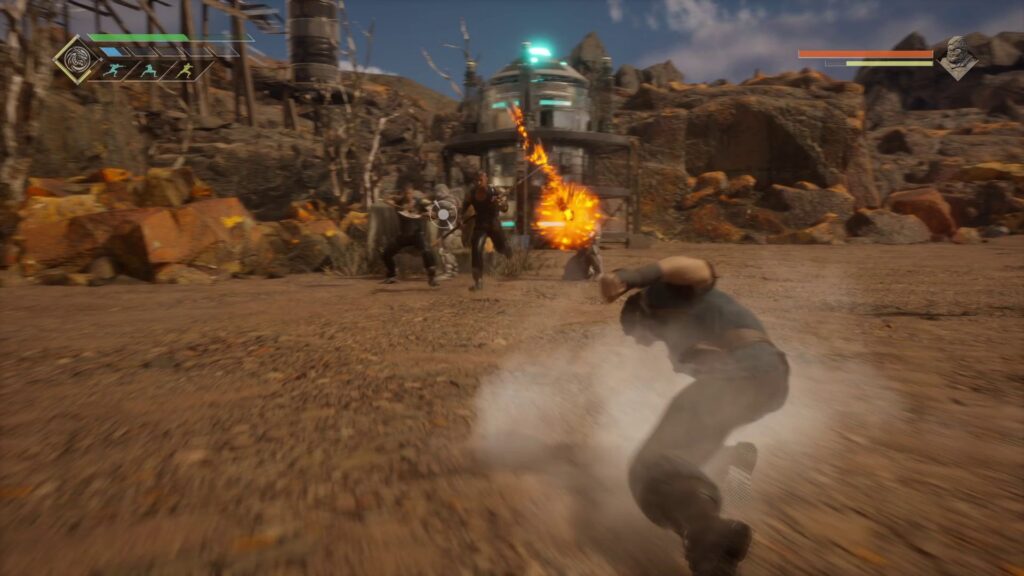
Spirit X Strike is what happens when ambition sprints face-first into execution. There’s a genuinely solid idea buried in here—a neon-drenched, combo-stacking, skull-cracking beat ‘em up with just enough Bruce Lee flair to make you raise an eyebrow. And for a debut effort from a no-name studio? Sure, some rough edges are to be expected.
But this isn’t a few jagged corners—this is a full-on tetanus hazard.
The combat, while mildly entertaining in short bursts, is dragged down by awkward controls and a reliance on button mashing that borders on finger abuse. The visuals are lifeless, the settings menu might as well not exist, and the writing feels like it was assembled from rejected anime scripts and Google Translate. Worse still, the voice acting doesn’t sell the world—it actively evicts you from it.
You can feel the effort in certain places—the executions, the combo system, the core idea—but like a group project where one person did everything while the others played Mobile Legends, the result is lopsided, unpolished, and deeply underwhelming.
I wanted to like Spirit X Strike. Hell, I tried. But unless you’re desperate for a barebones beat ‘em up with no soul and no settings menu, your time is better spent elsewhere.
Pros
- Execution animations are flashy and functional.
- Combo system is decent and encourages skill.
- It runs well even on underpowered hardware.
- A few combat moments that almost feel stylish.
Cons
- Awkward, stiff controls make fights a chore.
- Button mashing becomes physically exhausting.
- Visuals are embarrassingly basic.
- Writing is bland and voice acting lacks emotion.
- Near-zero settings or UI polish.
- No mid-game settings adjustment—seriously, why.
- Feels like a student project sold as a finished product.
Final Score: 30/100
Review code provided by publisher.


Leave a Comment