
Towa And The Guardians of the Sacred Tree Review: Blessed Roots

Platform(s): PC (version reviewed), PlayStation 5, Nintendo Switch 2
Genre: Action, Roguelite, Fantasy, Hades-like
Isometric roguelites are a dime a dozen these days. Throw a stone in the PC indie game Steam section and you’re bound to hit a couple of them on your first shot. Game developers really need to stand out in this giant vast ocean, and away from megalodons like the Hades series, to make it beyond the shallow end and still live.
Does Bandai Namco and Brownies Inc. latest foray into the genre, Towa and the Guardians of the Sacred Tree, add new gameplay elements to justify it swimming in said deep end? In my perspective, it’s a “half-and-half” situation.
Guardians Rise Up
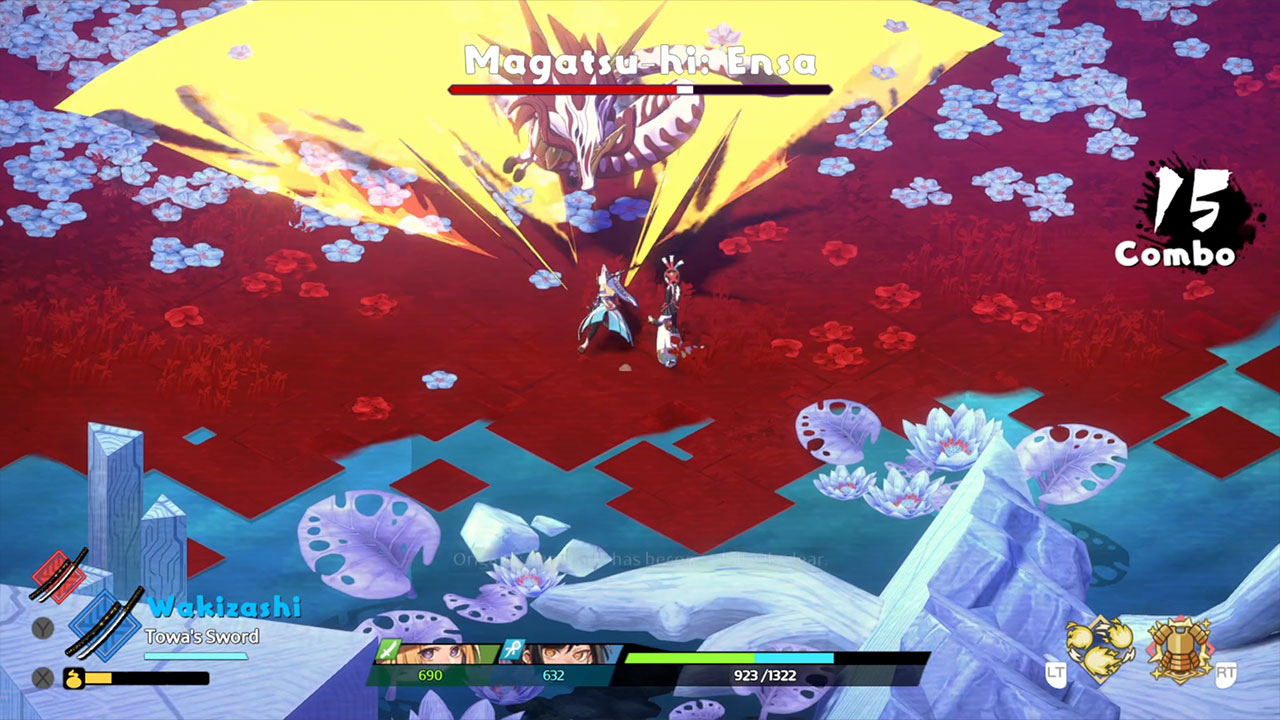
Towa and the Guardians of the Sacred Tree (or just Towa for brevity’s sake) pits players in a mythical Japanese folklore setting where an evil force called the Magatsu has stopped time and put a mystical village on a literal standstill. The title character, Towa, is a shrine maiden who is guarded by eight Prayer Children, the titular Guardians, brandishing their own set of weapons, playstyles, and skill. They’re equipped with the task of going through Journeys (runs in Towa’s case) and taking down evil Magatsu forces to sort out the problem plaguing Shinju Village.
Problem is, your eight Prayer Children will need to eventually give up their lives to contain the evil at each endpoint of a Journey. When you start your Journey, you pick two characters: one will be your Tsurugi (point person with the main sword attacks), and the other will be your Kagura (support). You go through runs with different waves of enemies and usually a boss fight, and they come in many, many randomized levels, hubs, and end goals. At the end of a major run, you fight a Magatsu boss, and after that your Kagura gets sacrificed for the greater good.
The game features eight Magatsu bosses to defeat, meaning you’ll eventually get to a point where you’re short of party members. You need to figure out which party member and playstyle you value the most, making tough choices on who to keep along the way to progress the story. And each of them have their own fighting styles and spells exclusive to them. Fishman Nishiki has more dance-like flurry attacks that puts him out of harm’s way, while Bampuku has more area-of-effect attacks than the rest.
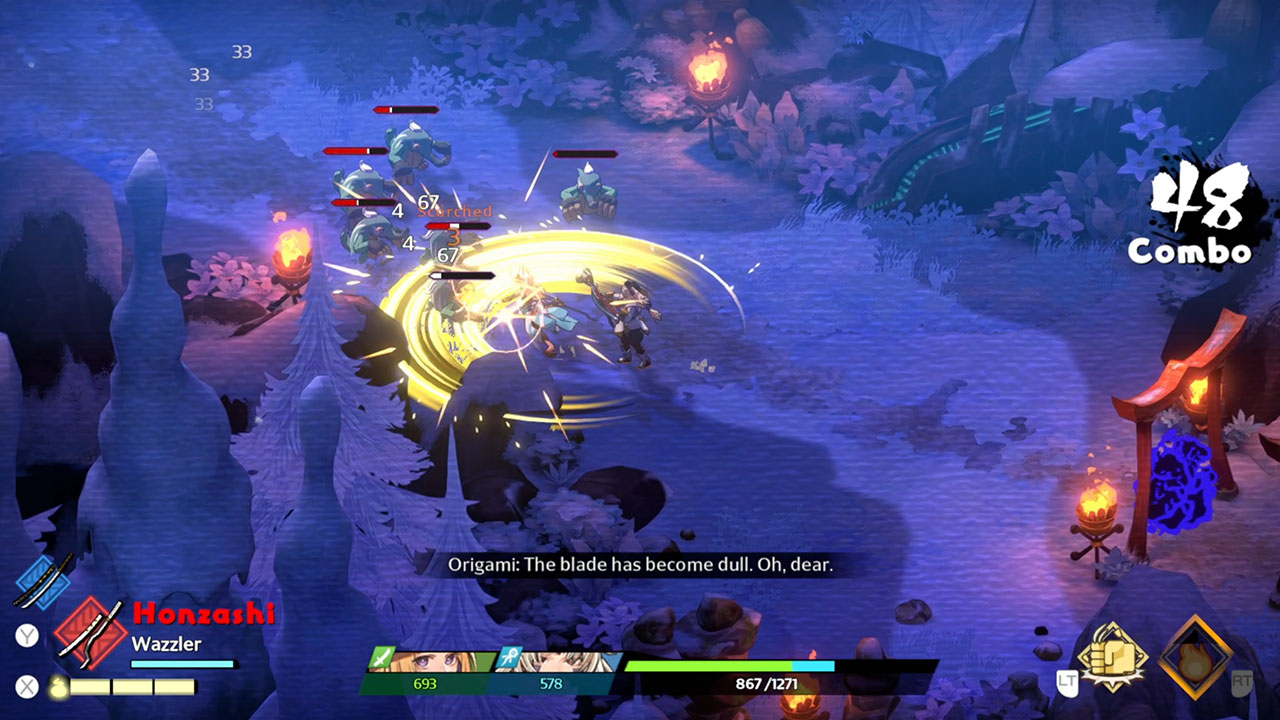
I personally went for Origami and Rekka in Tsurugi roles, as they have the most balanced fighting style, with different Honzashi and Wakizashi attacks that can answer a majority of the story Journey’s adversaries and foes. I’m sure you’ll find your own playstyle and favoured characters after futzing around for an hour on the first Journey’s character selection stage; the game offers that luxury before you fully commit.
Of course, the sacrificial mechanic isn’t going to send you up a creek without a paddle: you will be getting loads of skill points and passive permanent upgrades that buffs up any of your eight Prayer Children. Whether you’re successful or failed at one Journey a couple of times, you will be getting a ton of resources that you spend at the start.
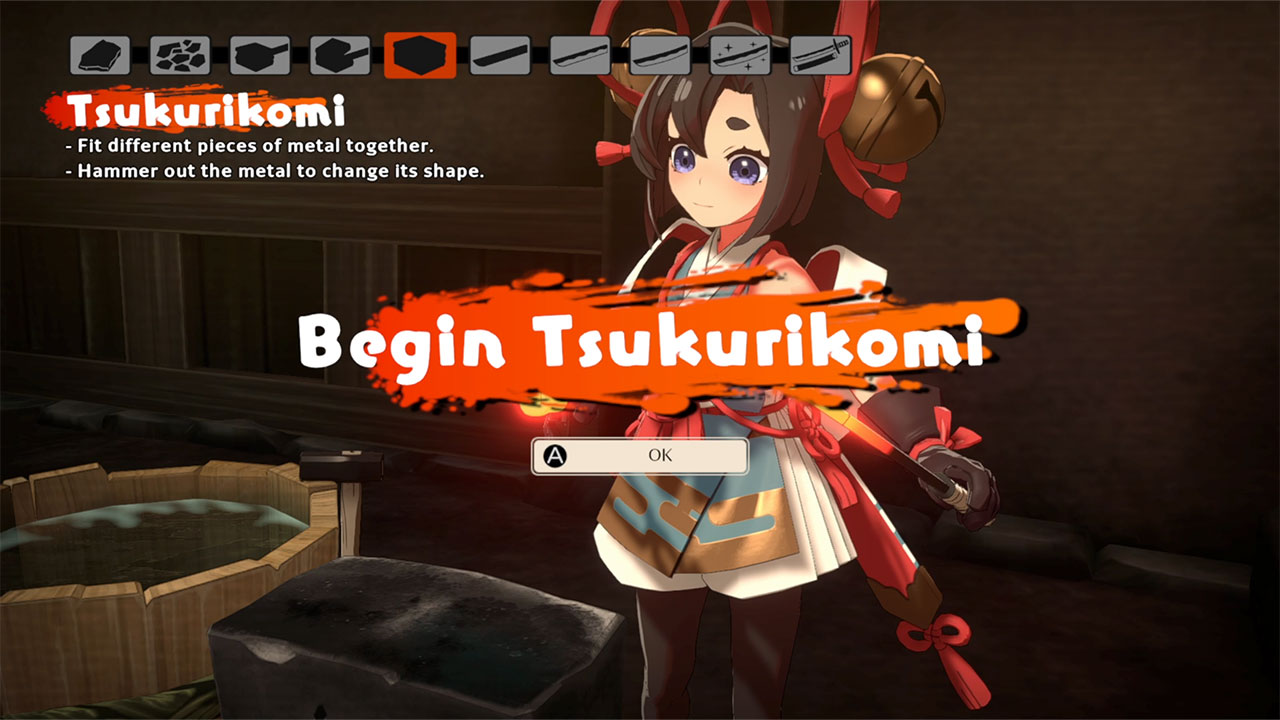
Towa also has a townbuilding mechanic where your hub has a ton of buildings that dish out upgrades and permanent buffs for your Prayer Children and their Journeys. For instance, the Smithy: you can also forge your own swords and customize them to your liking. Once you’ve farmed enough materials from your previous temple runs, you can make your own uber-weapon based on swords you’ve seen in either real life or anime series; it’s really cool to have your guardians brandishing blades from shows like Bleach and whatnot, each with their own properties and triggers to help you onward. The minigames themselves are a lot more practical and better-explained than Blades of Fire, a game that supposedly prides on its blacksmithing gameplay. It’s rather hilarious that the MercurySteam forging-focused title gets outshined by an isometric roguelite’s blacksmithing minigame that’s a lot more intuitive and fun.
There’s a lot more buildings in your town hub that improves your party’s magic, the powerups you get in your Journeys and what you want, and all sorts of other fun upgrades that can make your subsequent Journeys palatable. This is apparent with the game’s bosses hitting harder and faster than the trash mobs you fight. Related to that, my only complaint is the level design: it’s pretty much rote and traditional, as the majority of the roguelite randomized stages in each Journey feeling similar to one another. While some stages have more traps than others, these levels aren’t as inventive and creative like the ones you see in other roguelites like the Hades series.
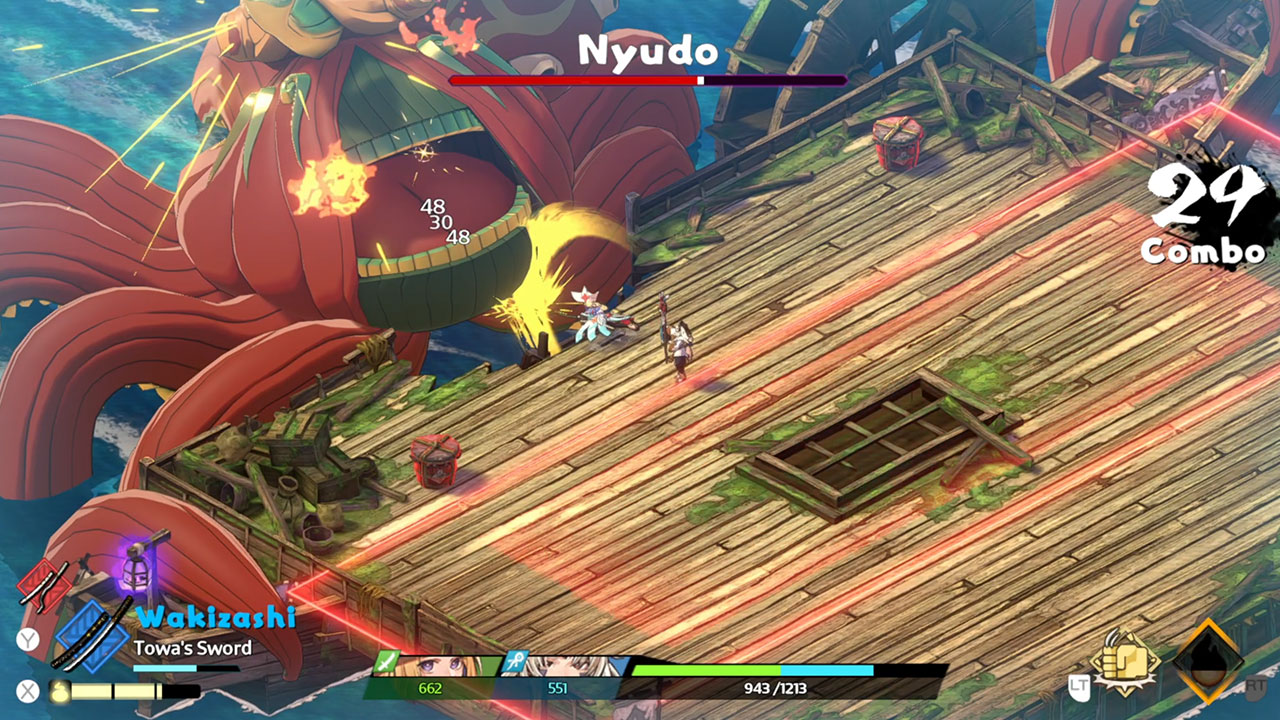
Aesthetic-wise, while its music is pretty well-done and whimsical to its subject matter, the art is hit-and-miss. The character portraits and facial expressions are great, but the in-game graphics look miniscule and tiny. At least for the characters and enemies; on the gorgeous backdrops it can get tough to tell what’s going on on-screen if it gets filled up with enemies and loads of attacks clashing with each, with you not knowing where to dodge and how to react since you can’t tell what your animations are from the get-go.
A Budding Tree Full Of Life
Still, there’s a lot to love in Brownie’s efforts in standing out, narrative-wise. The party members are a blast to be with, with dialogues between your two chosen ones per Journey fleshing their characteristics out. From the adventurous and self-reliant Origami to the Towa-simp Rekka, you’ll hear a lot of lovely colour-filled banter between them, it’ll be sad to sacrifice most of them for the game’s plot.
While not a grandstand-level roguelite experience, there’s a lot of charm and decent action, alongside an amazing Hitoshi Sakimoto score, that elevates Towa and the Guardians of the Sacred Tree apart from the dozens of roguelite isometric clones out there. It tries hard with its minigames and multitude of power-up and permanent buff mechanics, but it’s earnestly done and helps more than bloats and hinders the overall 8-hour-or-so-long fantasy package. Keep your eyes up for these Guardians, fellow roguelite enthusiasts.
Final Score: 70/100
Review code provided by publisher.


Leave a Comment