
DOOM: The Dark Ages Review – Slaying Demons With Chainmail Chic
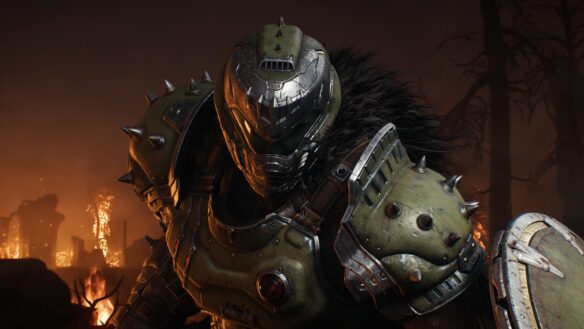
Platform(s): PS5 (version reviewed), Xbox Series, PC
Genre: Modern Boomer Shooter
You know, I’m 25 now—old enough to rent a car, not old enough to pretend I played the original DOOM without lying through my teeth. Back then, DOOM was that game the edgy kid with a pirated PC and absent parents raved about. Me? I was grinding multiplayer matches, because if a game didn’t have a leaderboard, it might as well have been a colouring book.
Even when DOOM made its big, gory comeback in 2016, I ignored it. Single-player shooters felt like a waste of bullets, and DOOM looked like something you played with the lights on and a finger hovering over the power button. I was the kind of coward who wouldn’t touch Kino der Toten unless my mates were online—so you can imagine how well the whole ‘face Hell alone’ thing went down.
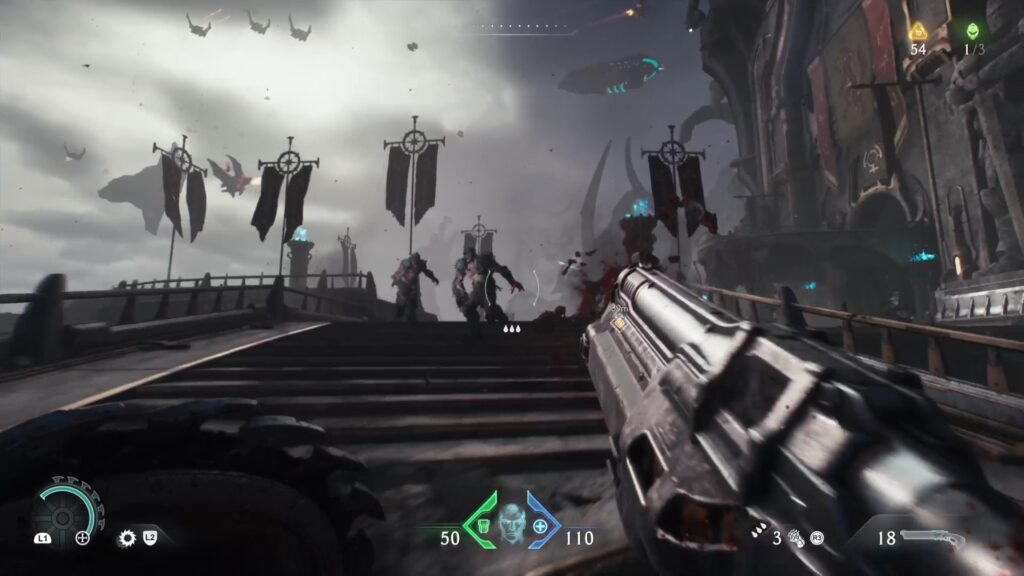
But after a few years in the games industry—where “just try it” is practically law—I finally did. And bloody hell, I’m glad I did. DOOM: The Dark Ages didn’t just impress me; it sideswiped me like a mancubus in a hallway. I expected misery. What I got was a glorious medieval bloodbath that made me regret skipping the others.
Now, don’t worry—this’ll be a spoiler-free review. All you need to know is it’s a prequel to DOOM (2016) and DOOM Eternal, neither of which I’ve played. So no lore deep-dives or demon family trees—just a vague idea of what’s going on before we dive headfirst into the real highlight: the gameplay.
A Medieval Prelude to Mayhem
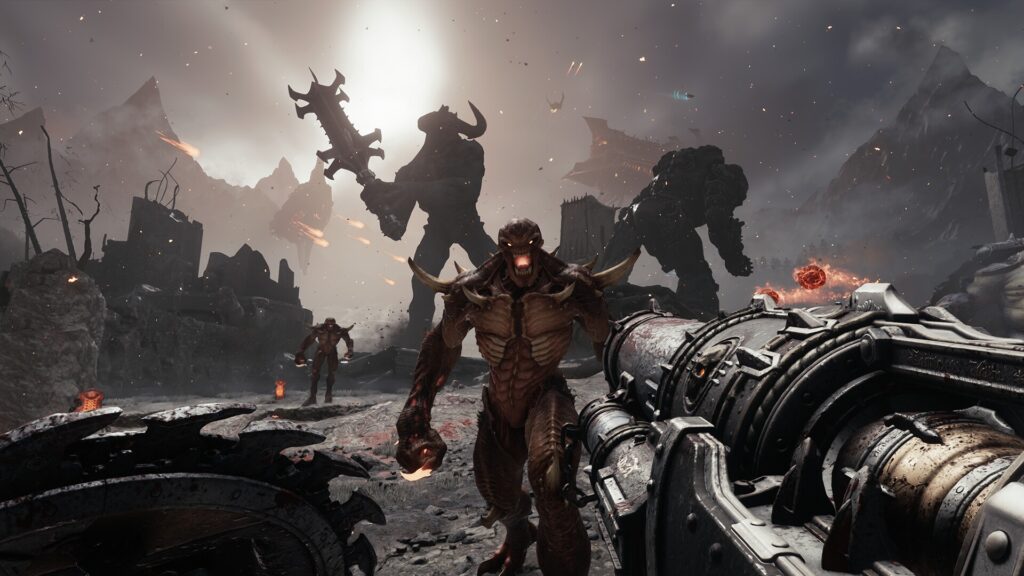
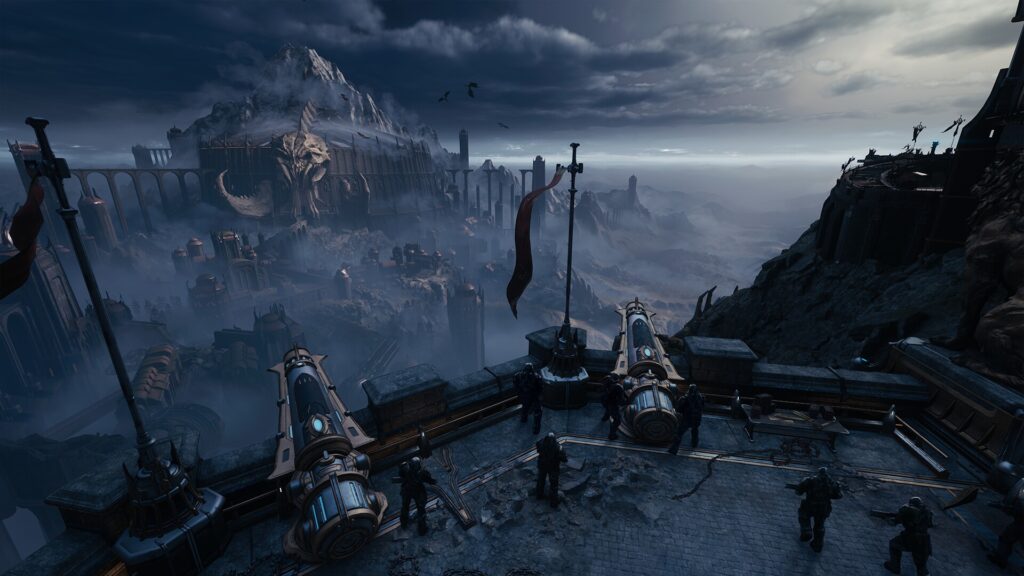
Before he was Hell’s worst nightmare, the Doom Slayer was humanity’s last hope in a world of dragons, gods, and very angry swords. DOOM: The Dark Ages takes us back to where it all began—a grim, medieval hellscape full of crumbling castles, cursed forests, and battlefields soaked in demon guts.
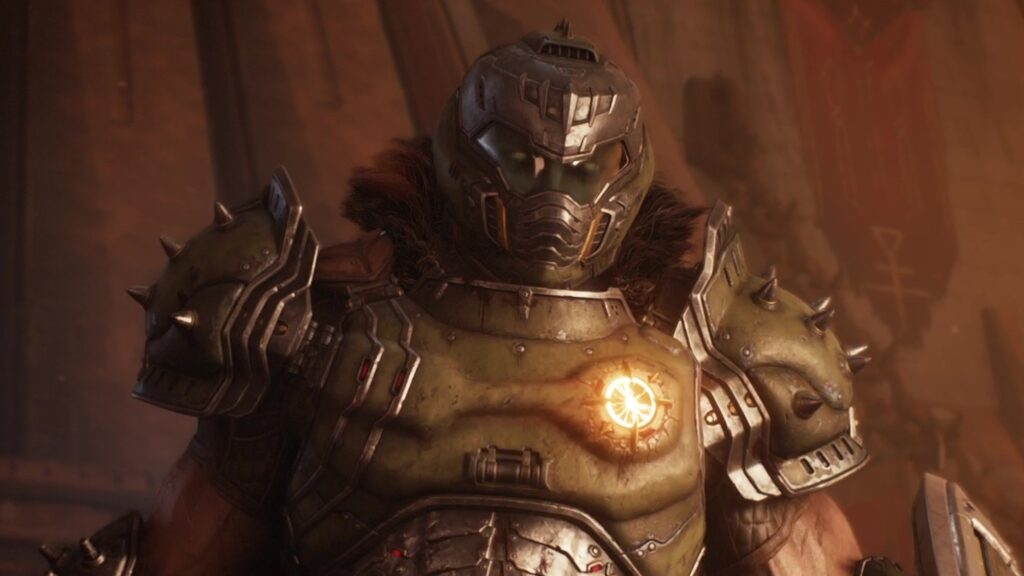
This isn’t just a bloodbath for sport. The Slayer isn’t just fighting; he’s etching himself into legend—swinging steel, obeying kings, defying gods, and turning Hell’s invasion into a very loud mistake. The story tees up the events of DOOM (2016) and Eternal, but more importantly, it gives you a proper look at the myth before the mask.
So yeah—rage, redemption, and relentless slaughter. All served with the kind of cinematic flair that makes it feel more like a heavy metal opera than a shooter. That’s about as vague as I can legally get, so let’s stop teasing and rip into the good stuff.
Elegance in Violence
DOOM’s always had a reputation for being loud, fast, and relentlessly metal—but The Dark Ages brings a strange new word into the mix: elegant. It’s still a full-throttle descent into Hell, but it’s also shockingly welcoming—especially for a first-timer like me. I came expecting chaos. I got a crash course in carnage that felt… respectful.
Rather than kicking your teeth in from the get-go, TDA hands you the tools, gives you space to experiment, and only then throws you into the meat grinder. It’s like learning to waltz—with chainsaws. The pacing is thoughtful, the weapon introductions are smart, and the learning curve is smooth enough to butter toast on. If you’re not the type to start on Ultra Nightmare “for the meme,” you’ll be just fine.
And let me just say it—playing DOOM with a controller? Criminal to some, but completely valid. My PC couldn’t be trusted with this beast, so I opted for my comfort zone. The result? Silky gunplay, responsive controls, and surprisingly refined aim assist. I had to double-check it was published by Bethesda and not Respawn. Still, all credit where it’s due: id Software nailed it.
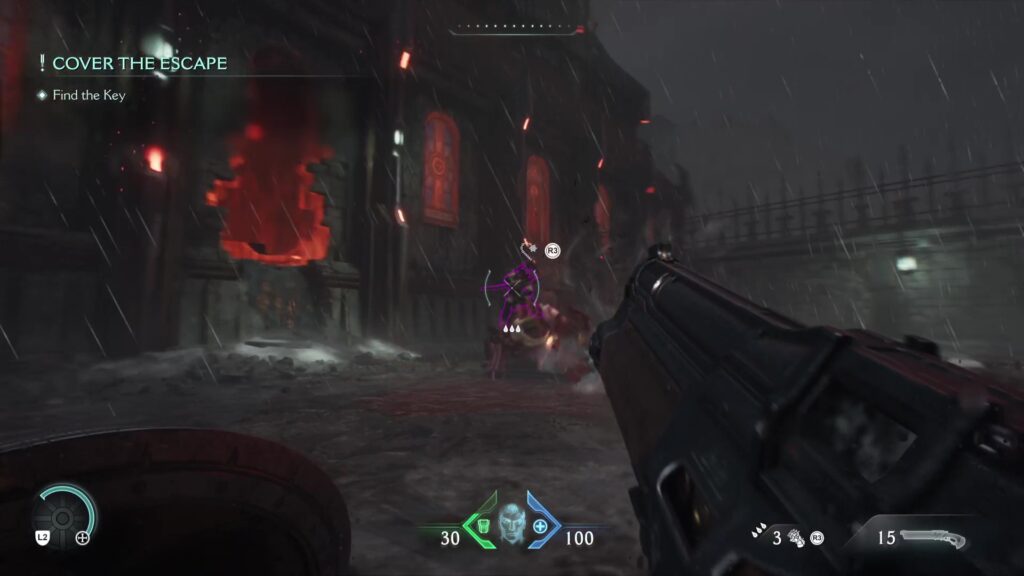
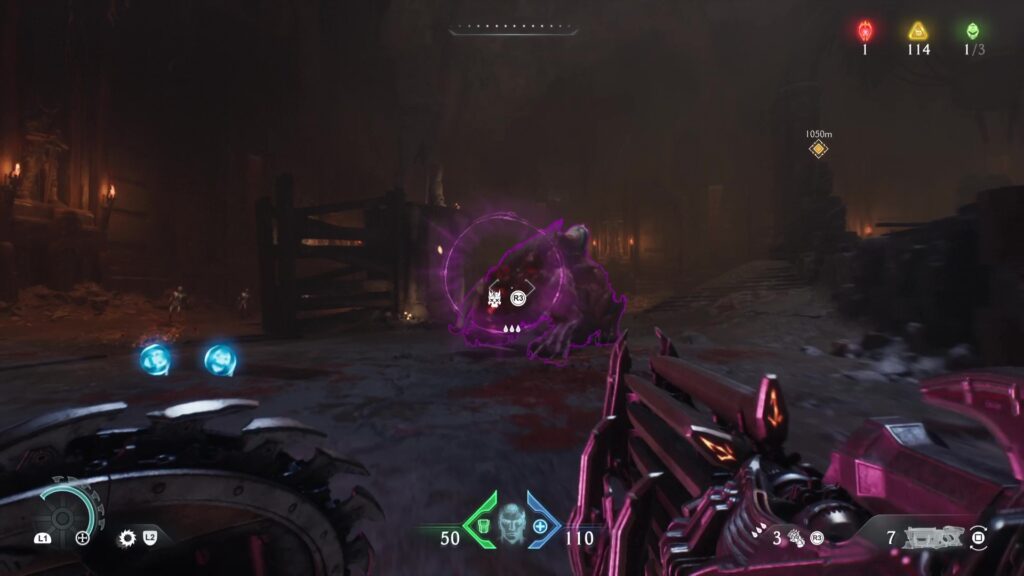
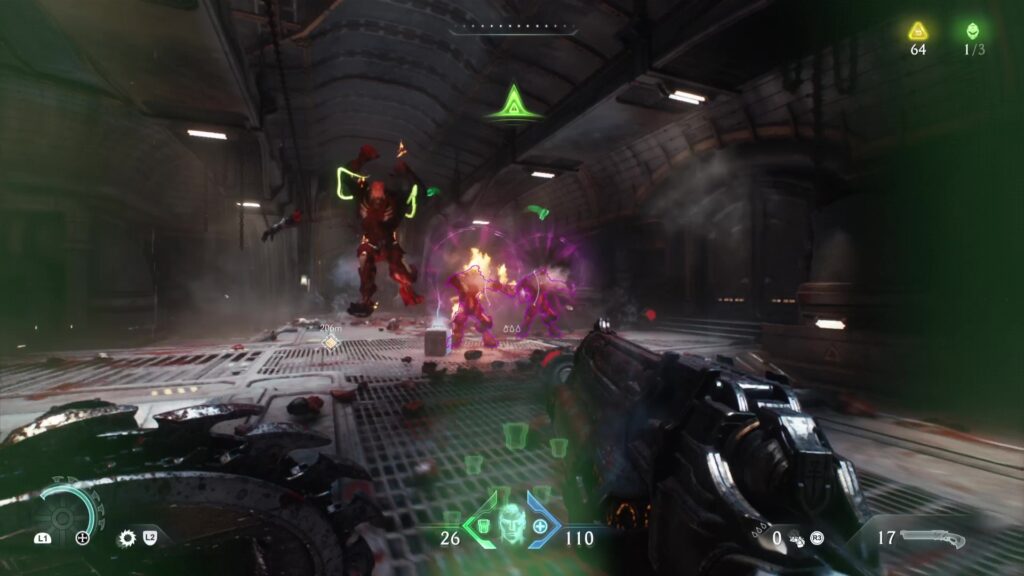
But the real magic? It’s in how the game teaches you to think. At first, you’re scrambling to stay alive. Minutes later, you’re a conductor of chaos—combining flails, fireballs, and flaming shotgun rounds like you’re composing an album called Now That’s What I Call Doom Vol. 666. Every fight is a puzzle. Do you target the big lad first? Save the fodder for health pickups? How do you chain movement, melee, and gunfire without dying like a moron?
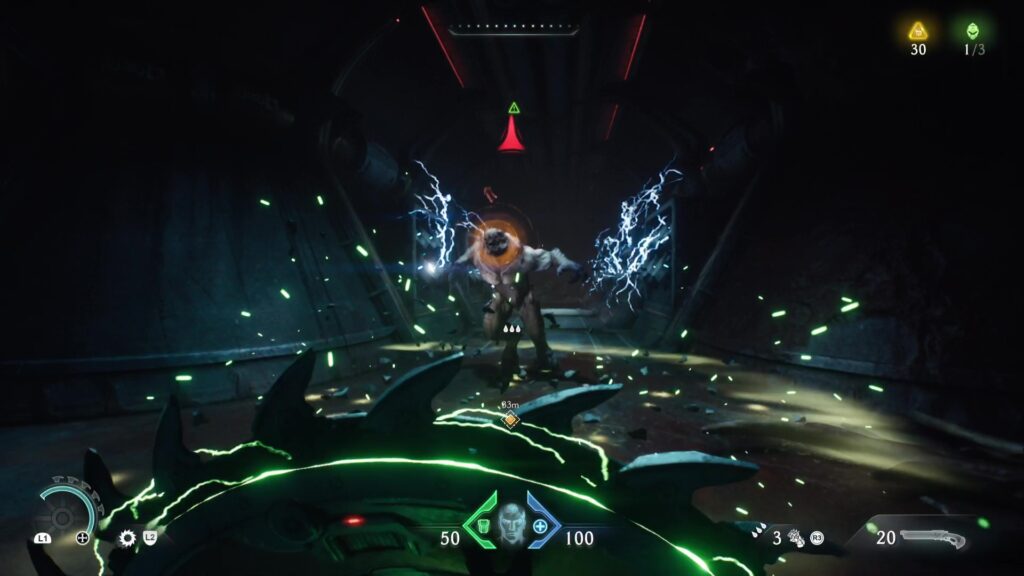
Enemies aren’t just bullet sponges—they’re mechanics with legs. The Mancubus? Aim for the arms. The Cacodemon? Feed it a grenade, then carve it open. DOOM doesn’t want you to panic. It wants you to perform. It’s less of a shooter and more of a gladiator arena where brains matter as much as brutality.
The Arsenal of Slayers
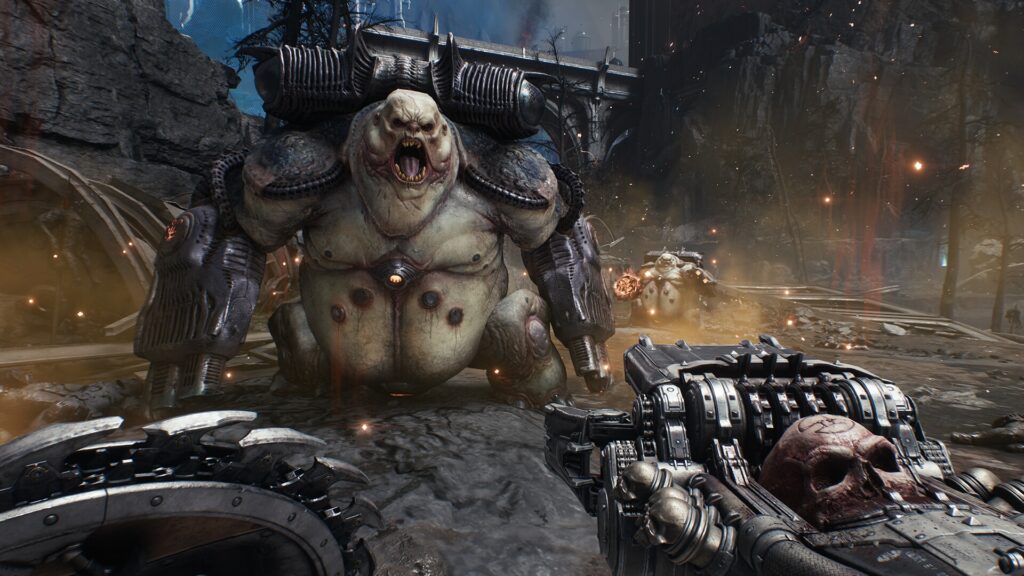
DOOM: The Dark Ages doesn’t just rip and tear—it pirouettes and pulverises. It’s a savage waltz that welcomes the uninitiated with open, blood-soaked arms, teaching them how to survive Hell with style and sophistication. For a series that built its name on raw carnage, this latest chapter feels oddly… patient.
As someone who never danced with DOOM (2016) or Eternal, I expected a full-frontal assault of difficulty spikes and metalhead masochism. What I got instead was a tutorial in beautifully structured brutality. The game hands you its tools—shotguns, flails, flaming shields—and gives you the space to experiment before the tempo ramps up. It’s like learning to box in a ballet class—except the pirouettes end with a demon’s head flying off.
The pacing is masterful. Each new weapon or enemy isn’t a sudden spike in difficulty, but an invitation to grow. You’re not punished for ignorance; you’re encouraged to explore. And surprisingly, playing on a controller didn’t feel like sacrilege. In fact, it felt right. The aim assist is generous without being obnoxious, and the gunplay is polished to a mirror shine. So credit where it’s due: id Software’s craftsmanship is singing here.
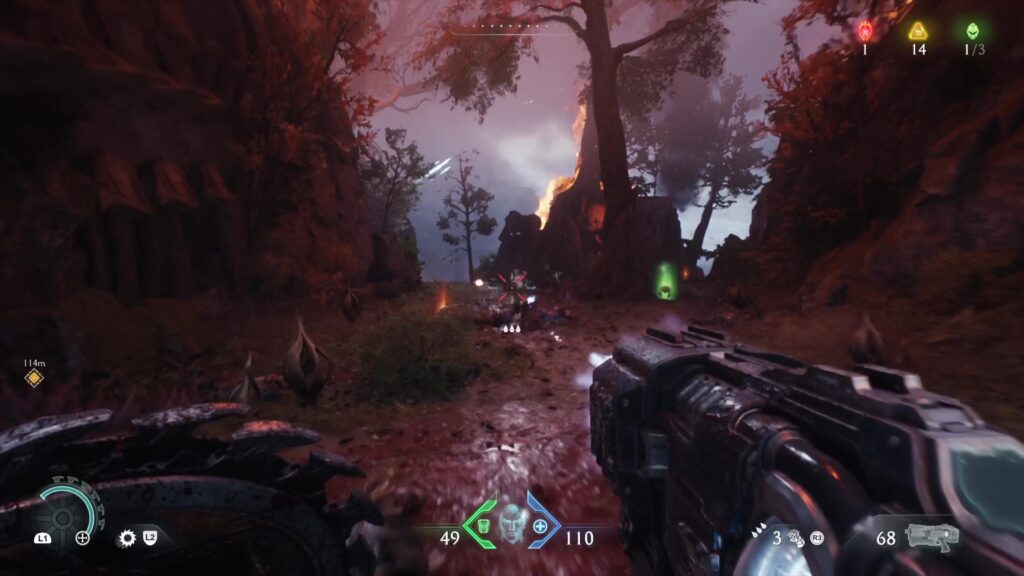
Let’s talk about the arsenal—because wow. The six-category loadout system is a smorgasbord of destruction. Every hellspawn-shaped problem has its beautifully over-engineered solution. And while the new kids on the block, like the Pulveriser and Chainshot, steal the show with sheer novelty, the real MVP is the Shield Saw. It’s ludicrous. It’s glorious. It’s a spinning, slicing Captain America-meets-buzzsaw fever dream. And it works—flawlessly.
What’s lovely is how quickly you start gravitating towards personal favourites. I kept going back to the classic Combat Shotgun. There’s something deeply satisfying about its crunch, its rhythm. Fully upgraded, it becomes less of a firearm and more of a religious experience.
Bigger, Badder, & Blessed With Mechs

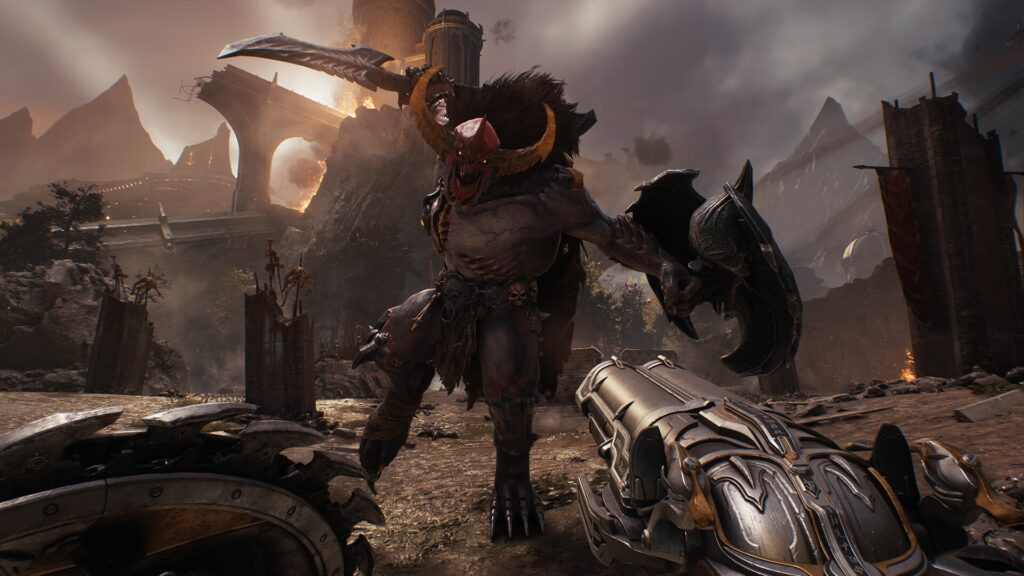
If the weapons are the brushstrokes, then the demons are the canvas. And DOOM: The Dark Ages gives you one hell of a gallery. Fan-favourites like the Hell Knight and Lost Soul return to test your reflexes and creativity in equal measure, while new additions add just enough variety to keep the combat loop fresh.
But then id Software does what id Software does best—it goes utterly bonkers.
If there’s one mild disappointment in this hellish masterpiece, it’s the boss pacing. The major boss fights are spectacular—fair, tough, and dripping with personality—but there’s just not enough of them. You get a few massive showdowns spaced generously throughout, but there’s a noticeable gap in tension between those moments.
Sure, there are “Leaders” acting as minibosses, but they don’t quite scratch the same itch. They feel more like high-health obstacles than true setpiece threats. It’s not a deal-breaker, but in a game that trains you so expertly, you’ll find yourself craving more of those exams.
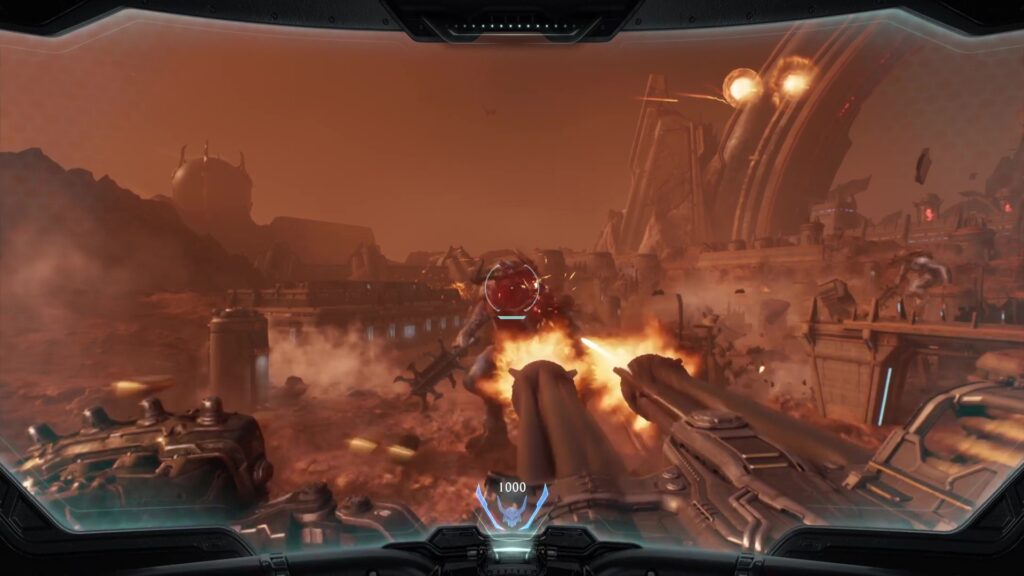
Suddenly, you’re watching skyscraper-sized titans duke it out in the distance like Hell’s answer to Pacific Rim. Then, without warning, you become the titan. The Atlan mech section is wonderfully absurd. Controlling it feels like slipping into a Slayer-sized power fantasy with the agility of a ninja and the weight of a freight train. It moves with eerie familiarity—not slow and lumbering, but sharp, reactive, and horrifyingly efficient.
The dragon bits? Surprisingly brilliant. I’ll admit, I went in expecting a cheesy fantasy detour—how exactly do you DOOM-ify a dragon without turning it into a boss fight cliché or Skyrim mod? Simple: strap a pair of miniguns to it and let it rip. The whole segment plays smoother than I had any right to expect, with controls that are intuitive enough to make you feel like you are the heavy metal album cover.
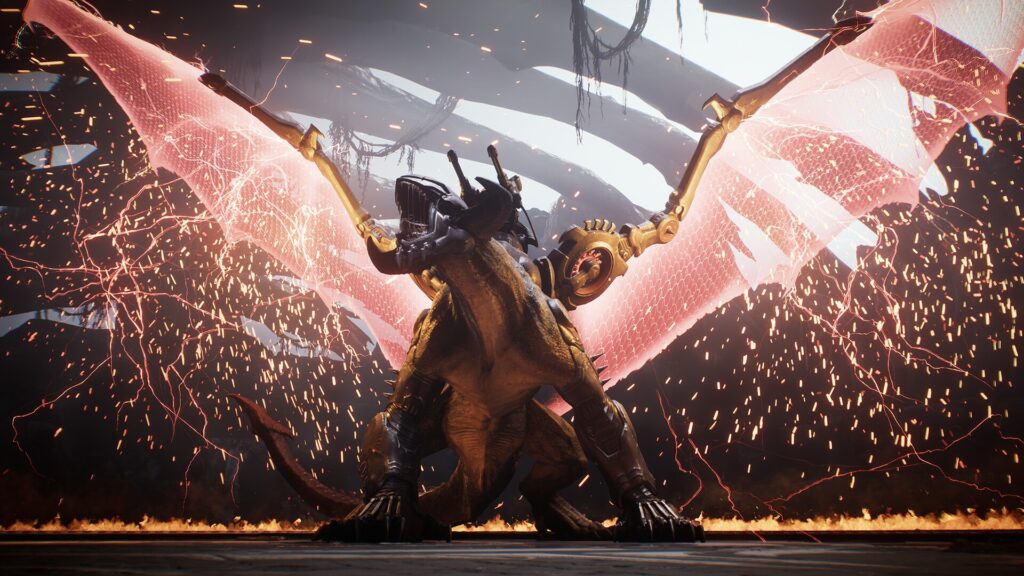
That said, I couldn’t help but feel like this winged war machine was a missed opportunity. Not that I wanted it to become the star of the show—but it feels like it was parked in its own little cinematic sandbox rather than woven into the core loop. A few more moments where it complemented your ground game or let you tag-team hellspawn from above would’ve gone a long way. As it stands, the dragon’s a badass guest star in your DOOM fantasy, not a full-time band member—and that’s a shame, because this beast deserved an encore.
Big maps. Shiny toys. Very lost.
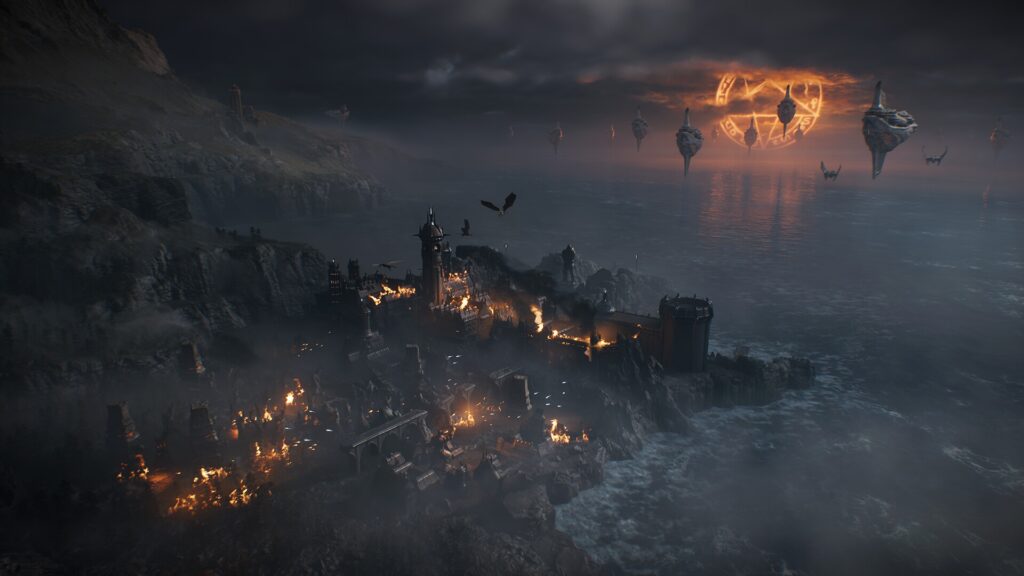
DOOM: The Dark Ages threw me off with its surprisingly huge maps. I always thought DOOM was more about tight corridors, key-doors-repeat. But here? It’s open-world-ish. Each chapter is a sprawling battleground, with just enough direction to keep you on track but enough freedom to let you feel like a demon-slaying explorer.
And it works. Brilliantly.
You’re not just running from point A to B—you’re scavenging, hunting, and getting distracted by shiny loot tucked in corners. Weapon upgrades, lore codices, and the return of collectable toy figurines. I couldn’t resist going full magpie when I spotted one.

I don’t know if treasure-hunting was a thing in past DOOM games, but I was hooked. After clearing a room, I’d forget I was saving the universe and be too busy hunting for hidden lore scrolls behind walls.
The presentation is jaw-dropping. These maps look hand-crafted, like they were painted with molten rock and bad intentions.
I’m glad I played it on PS5. My potato PC would’ve struggled to keep up with the gorgeous visuals, and that would’ve been criminal. This game needs to be seen in its full glory.
Sound That Slaps Harder Than the Guns (Almost)
Let’s get this out of the way: DOOM: The Dark Ages’ sound design is filthy—in the best possible way.
For a newbie to the franchise, the music is pure carnage. It’s a heavy metal opera where every guitar riff and drum beat syncs with you ripping demons apart. The music isn’t just background noise; it’s the tempo for violence. When the riff kicks in, it’s time to swing.
And the gunplay? Oh, good lord. Every shot feels like a subwoofer going through puberty. The shotguns roar, the Pulverizer punches holes, and the Chainshot’s satisfying thud feels like wrecking a skull. It’s all got weight, making every kill feel like sweet catharsis.
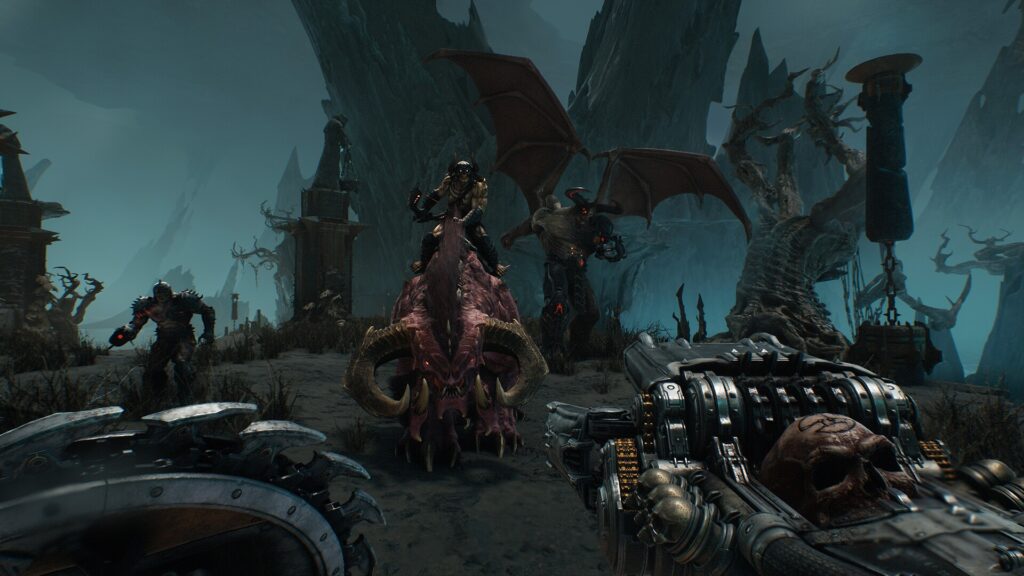
What surprised me most? The mix is smart. The music knows when to dial back—during exploration or pre-fight moments—letting you breathe before the chaos kicks in. It’s not just non-stop blast beats; it’s a rhythm that keeps you pumped without overwhelming you.
In short, if the visuals are the canvas, the sound is the paint—applied with beautifully violent brushstrokes.
Hell’s Never Sounded So Good
DOOM: The Dark Ages’ sound design is nothing short of insane. I’m new to the series, but it hit me like a bass drop from hell. Every fight is powered by a headbanging metal soundtrack that doesn’t just accompany the action—it commands it. When the drums hit, it’s time to go full beast mode. And when the music pulls back? The eerie silence makes every corner a nerve-wracking gamble.
Surprisingly, the game knows when to ease off the noise, striking a perfect balance. You’ll be thrashing through riffs one moment, then tiptoeing through blood-soaked hallways the next.
As for the weapons? They sound criminal. Every shot, explosion, and kill has a bass-heavy punch that makes you feel every bit of the violence. It’s not just noise; it’s texture.
Might Just Curb-Stomp The Competition
DOOM: The Dark Ages doesn’t just raise the bar for single-player shooters—it obliterates it. This game is a thunderous, chaotic masterpiece. It’s not mindless slaughter; it’s a high-speed puzzle, with each headshot and glory kill feeling like conducting a brutal symphony.
As a DOOM rookie, this wasn’t just a welcome—it was a spiked boot to the face and a standing ovation. I’m leaving with whiplash, tinnitus, and a new obsession with molten shotguns.
Unless someone else brings more firepower and ferocity, DOOM: The Dark Ages is the undisputed king of the genre.
So This Is Hell? Sign Me Up.

Going into DOOM: The Dark Ages, I expected loud guns and louder music—and I got both in spades. But what I didn’t see coming was how this game would make all other shooters feel like walking through a wet cardboard box. After hours of hellfire leaps, drop-kicking demons, and piloting a massive Sentinel mech like it’s Tuesday, anything else just feels… pedestrian.
As a DOOM newbie (yes, I’m that guy), The Dark Ages is like being thrown into a decade’s worth of fury distilled into one of the most visually insane, technically flawless shooters I’ve played. And somehow, it nails the narrative, makes exploration fun, and even gets you invested in collecting lore codices and cute demon plushies. Blood-soaked cherries on top.
Sure, there are some nitpicks, such as the dragon feature being underutilised, but nothing ever really pulls you out of the experience.
What’s left? A strange, almost reverent love for a game that’s raw, ridiculous, and unnecessarily metal. And I loved every second of it.
If this is hell, I’m not just walking in—I’m speed-boosting with a maxed-out Combat Shotgun and Finishing Move blaring at full volume.
Pros
- Epic combat and satisfying mechanics.
- Smooth learning curve.
- Polished controls.
- A fantastic range of destructive tools, including the gloriously over-the-top Shield Saw.
- Expansive maps and stunning graphics are jaw-dropping, especially on next-gen consoles.
- Metal-infused soundtrack is a perfect match for the intensity of the action, blending perfectly with the gameplay.
- Game’s story builds the Doom Slayer’s mythos with cinematic flair, making the medieval setting feel epic.
- Open-zone maps that encourage exploration and treasure hunting add a rewarding layer to the gameplay.
Cons
- Boss fights are spaced out too much.
- Dragon incorporation feels like a missed opportunity.
- Vastness of the open-zone maps might be overwhelming for some.
Final Score: 90/100
Review code provided by publisher.
Leave a Comment