
Castlevania: Belmont’s Curse Review – Whip It Good

Platform: PC (version reviewed), Nintendo Switch 2, Xbox Series, PlayStation 5
Genre: 2D, Action, Search Action, Metroidvania, Vampire, Retro
Before the Konami crashout of 2015, the video game company really did their best in making its vampire killer action game relevant. While they had success with the Koji Igarashi-produced Castlevanias which cemented it being the lead search-action/Metroidvania series, they also tried their hand in rebooting it into a 3D action series with the Lords of Shadow spin-offs. These plans wouldn’t continue because of that 2015 moment, but it did make indie devs rise up to make their own Metroidvanias, and there’s been tons of success with that: see the Hollow Knight and Blasphemous series as stellar examples of the genre.
Fast forward to recent years, and Konami’s back in the literal game with newfound purpose in revitalizing its classic titles and franchises. First with the Silent Hill series with great success, and now with Castlevania with not just a few partnerships ala Dead Cells and Vampire Survivors, but with a brand new game.
But in a field already crowded with too many darn Metroidvanias, can the former king retain their crown? It’s hard to say, but I can tell you that I had a blast with Motion Twin and Evil Empire’s collaboration efforts.
Well, almost.
New Belmont, New Rules
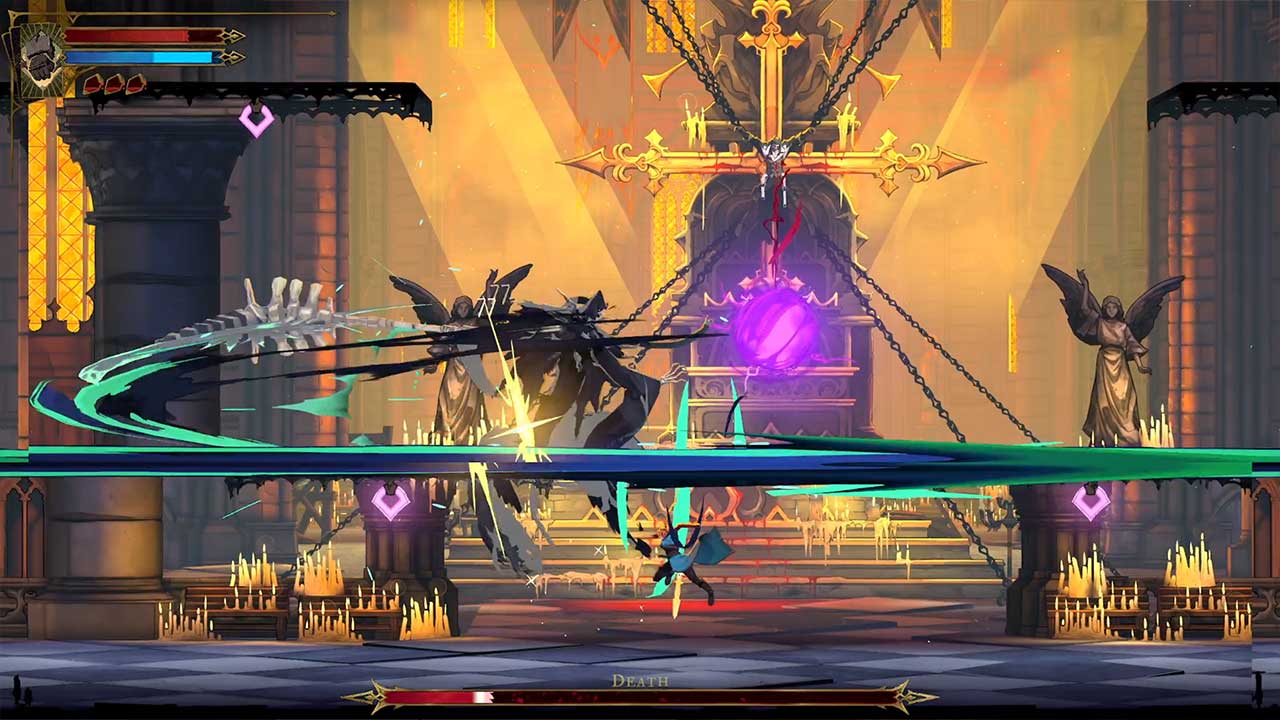
Castlevania: Belmont’s Curse has you playing as Rose Belmont, daughter to the ageing Trevor from Castlevania 3 (canonically the first one) and the late Sypha Belnades. As a parting gift, Rose has bequeathed her mother’s magic Tarot cards which will immensely help her in her journey to take down Dracula and his forces of evil in 1499 Paris, France.
And thus she goes, fighting off bad guys from skeletons to hollowed knights in 2D action glory, exploring the streets of Paris, its graveyards and catacombs, and eventually in Dracula’s magic floating demon castle with its own giant-ass rooms and trademarks like the clock tower and the library. Each of these stages are designed well, have their own style and gimmick, and come loaded with secrets and puzzles, whether they’re platforming or of the sequential inputs variety.
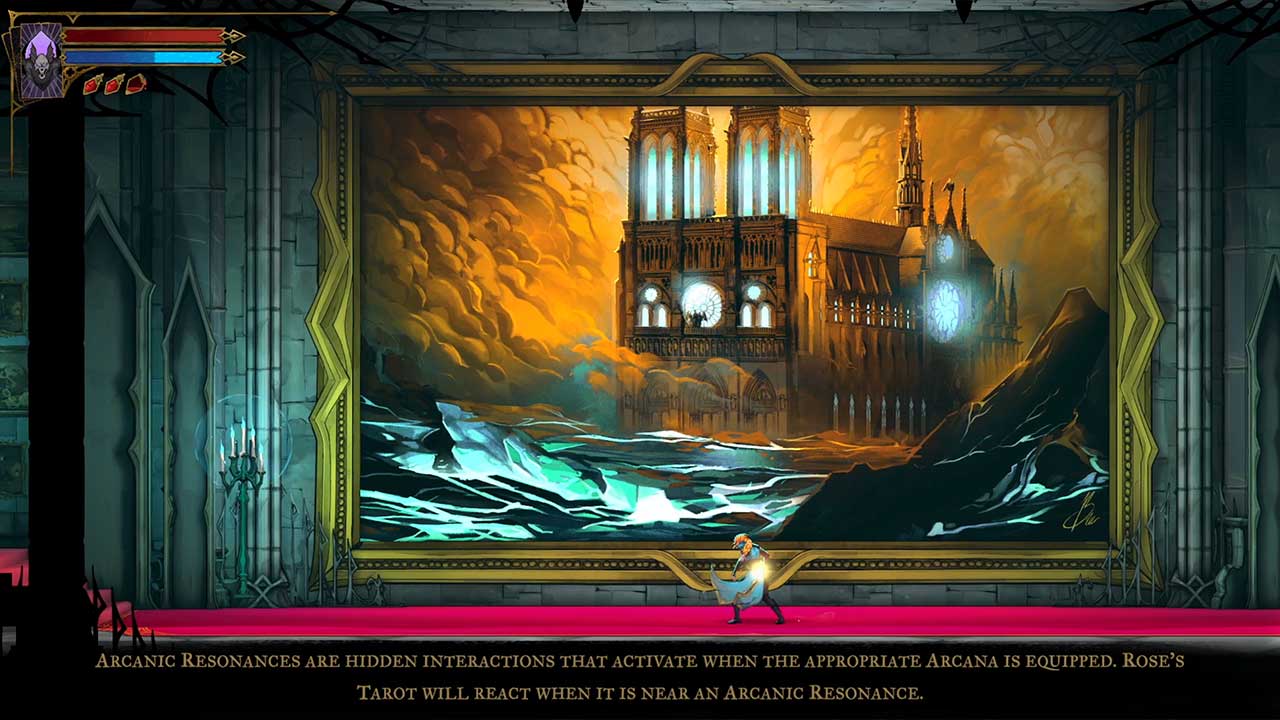
My favourite levels are the Library and its bouncing pad stars, along with its constellation unlocks, the Notre Dame cathedral with its tricky jumping and bell-tolling subquests that requires you to be dilligent with your Tarot-collecting, and the Hall of Mirrors labyrinth that will intentionally mislead you but can be cracked if you’re paying attention to the clues. You’re sure to find your favourite stage, for they’re all designed and laid out creatively and with much love for 2D action fans. They can get tough with some of the platforming challenges, but nothing a bit of practice can’t solve.
Speaking of which, this Castlevania has you seeking ghosts and notes that bring up clues to the many levels, bosses, and tarot card holders to tell you where to go next. No yellow paint or arrows here: if you’re good at uncovering corners of metroidvania maps, you’ll have a clear idea on what to tackle with these helpful bits of text and lore. Some are helpful against bosses; one protip from the cemetery told me to turn my back whenever a boss is gearing up for a stone gaze attack.
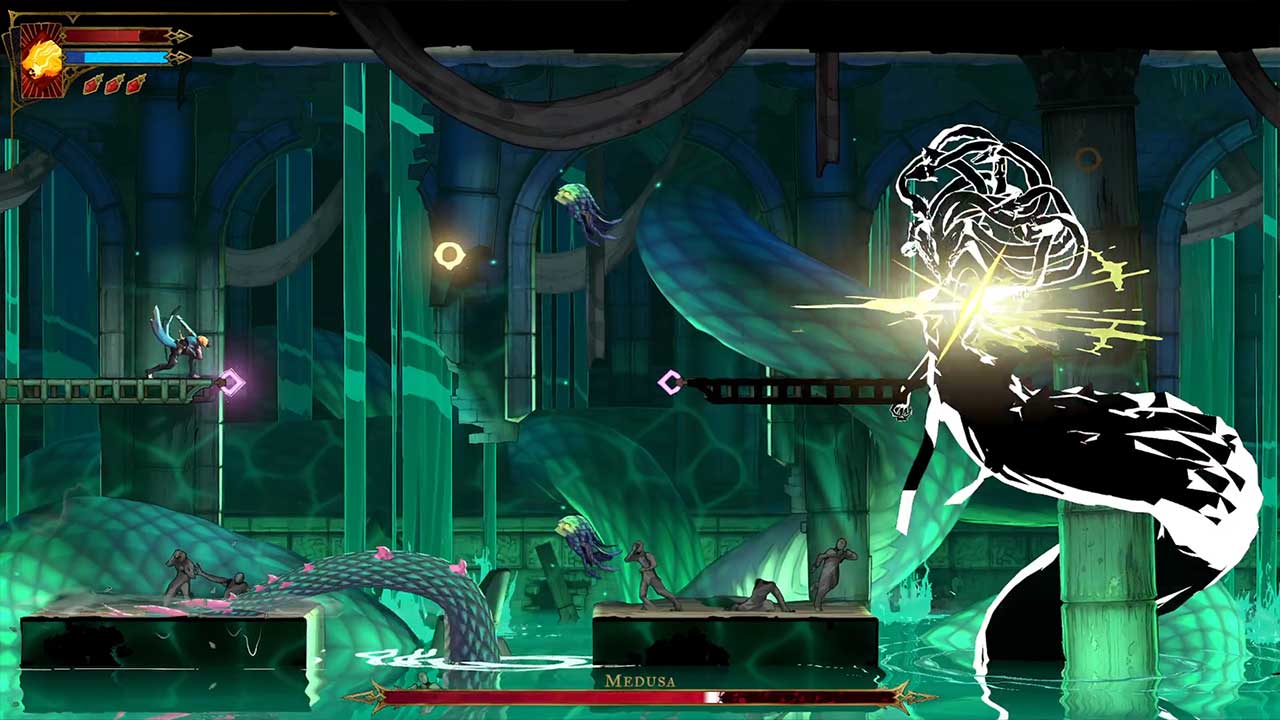
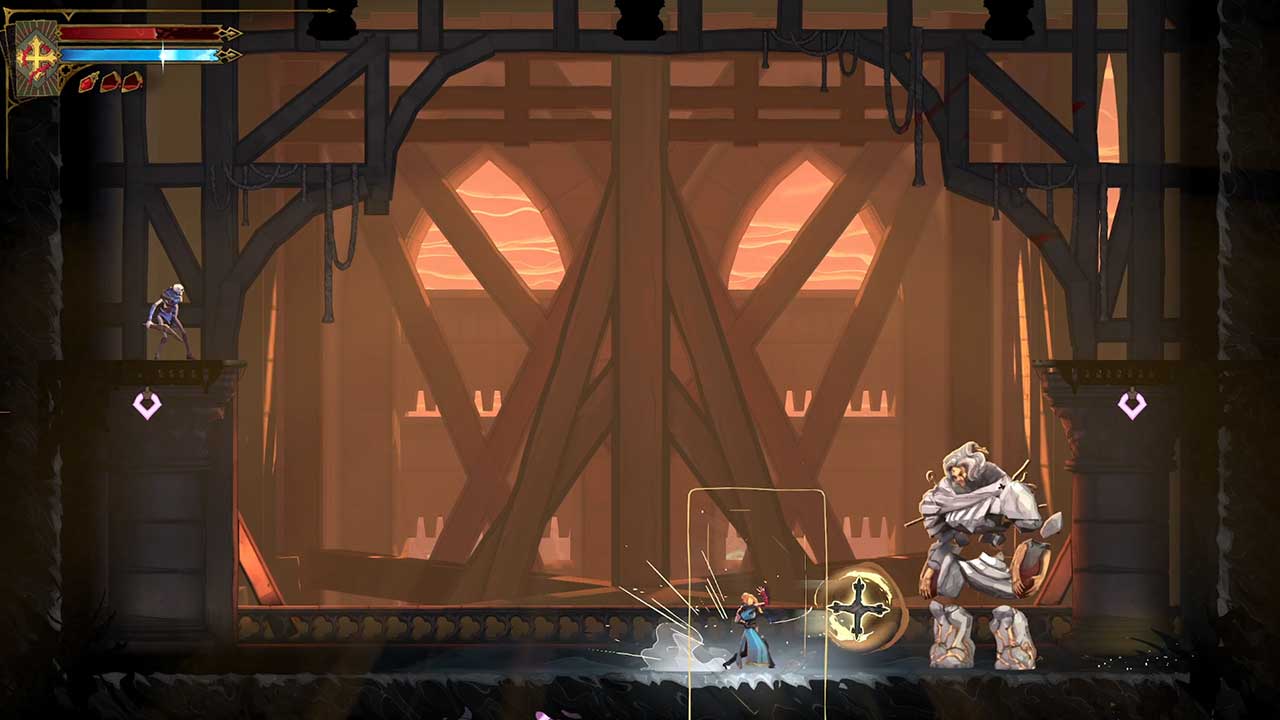
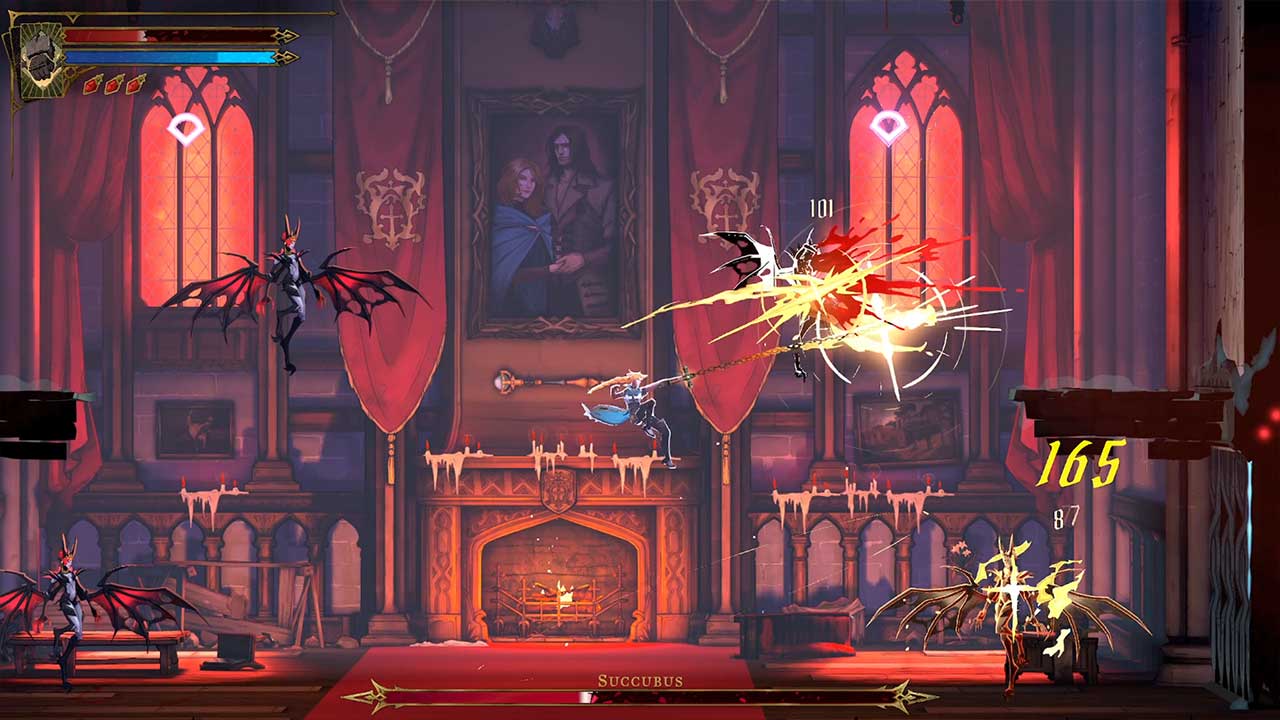
To which to say: the boss fights in this Castlevania are fun and challenging at times. One moment you’re fighting a giant stone golem thing and sorting out its attack patterns, the next you’re running back and forth through obstacle courses with crushing pillars, and even a timed section when the boss is at death’s door. This Castlevania even features recurring boss fights with the same villains; it’s a nice touch that help flesh out Rose’s journey from a naive hero to a seasoned vampire hunter.
Rose also has an assortment of weapons and gear to get equipped. She can use regular one-handed swords, a sword and shield combo, a lance that can be thrown as a javelin, and the trademark whip. Her Tarot cards, once she gets them either from defeated bosses or persons of interest, has her casting boomerang crosses from Castlevania: Rondo of Blood, a gargoyle summon that divebombs on command and shoots out flames, a magic giant metal fist that slams downward and comes with aftershocks, and a portal that recalls you back from its summoning point to heal you.
Rather than collectible hearts, Rose uses mana points to cast these Tarot card spells and can get back this resource by hitting things with her weapon. Furthermore, she can equip up to three trinkets that help give passive abilities that complement various playstyles, like a piece of gem that gives you a big damage boost if you’re out of healing potions (equipped by default Estus style ala Dark Souls series) or a pocketwatch that negates damage once and slows down time around you if you get hit (with its own 60-second cooldown so you can’t spam it).
They’re all handy and can complement your playstyle, whether you play aggressively and are good at not getting hit and dodging, or would rather turtle and buff up your defenses from enemy hits and continuous spell-casting. I rather have my potions heal me to full health, and gain some benefits from empty potion slots, so I equipped the necessary trinkets to help me back to full health when I’m making too many mistakes while also using my Vampire Killer whip’s tip for max damage.
Curse of Darkness
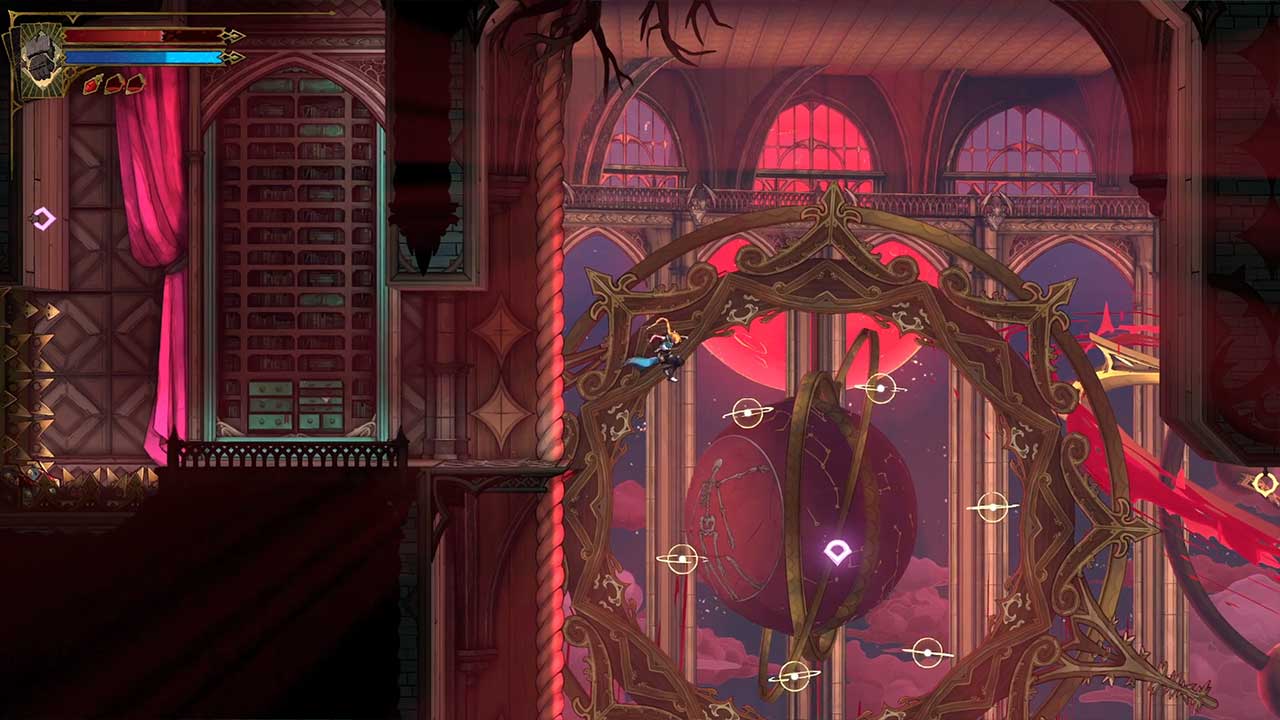
You can’t conclude a Metroidvania game segment without addressing the traversal methods and controls. Rose’s primary mode of movement is the Arcane Whip she gets from the first boss in Paris. It has a slight startup, but it has great reach and will get you across platforms and large gaps with ease. When whipping and grappling onto golden anchors, she can swing and gain a huge jump boost to get across higher areas. Plus you can grapple enemies, get in their faces, and unleash a powerful slam attack depending on the weapon you’re holding.
You also get a Holy Light ability after defeating a Dracula-influenced Joan of Arc; this lets you disperse chaos shard barricades and platforms, as well as parry enemy attacks and projectiles. Later on, you also get a downward slam kick that destroys ground barricades, an air dash, and a double jump.
Mastering the Arcane Whip and Holy Light ability is essential, as ALL early and middle segments of Castlevania: Belmont’s Curse’s platforming sections have you timing your grapples to get across tricky puzzles. As the Holy Light is mapped on the left trigger and the Arcane Whip on the right, it can take you a while to get used to whipping and grappling, while also anticipating parries and even making certain chaos shards dissipate to get through a timed platforming segment. I can tell you that it’s tough to keep all this in your mind in stacks, but these challenges are doable and are fun to conquer.
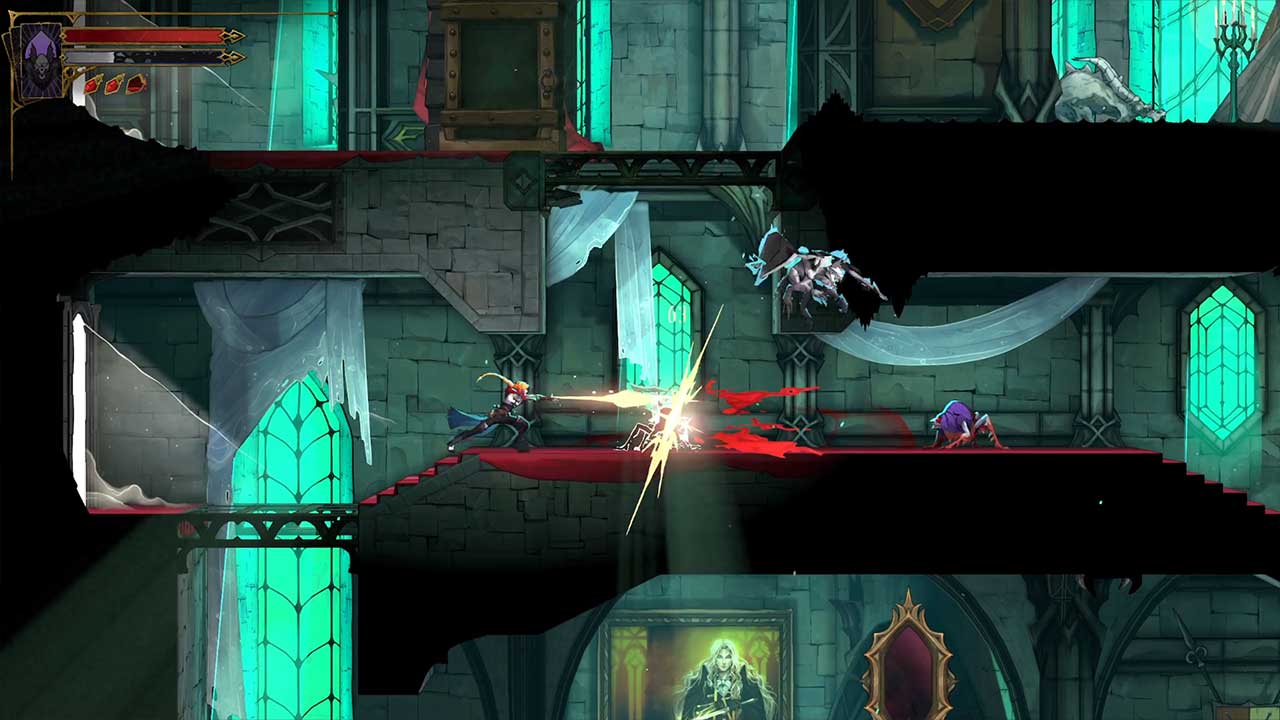
I also cannot stress how much the grapple-and-slam attack move via the Arcane Whip has saved me as it gives me huge invincibility frames against enemies. Castlevania: Belmont’s Curse dodge button lets you swap sides with enemies and crouch to dodge high attacks and projectiles, but you cannot dodge through them as it doesn’t offer as much invincibility. I have eaten lots of hits and gone through so many deaths by not playing by this game’s evasion rules.
Plus, whatever techniques you learned from the Iga-vanias (like the 2000s Castlevanias and Bloodstained) has to be put on the backburner when tackling Castlevania: Belmont’s Curse and its many enduring challenges. But I assure you, it’s a rewarding and incredibly fun process getting through the game’s trials and getting accustomed to the new style of controls and movement. It feels good, but definitely different. The best kind of different, if I’m being frank.
Harmonies of Dissonance
I wish the same kind of praise can be given for the game’s music: it kinda sucks. Soundtracks are subjective, sure, but for a series with a huge legacy of amazing music and bangers, Castlevania: Belmont’s Curse’s OST is underwhelming to say the least. True, the remix to “Bloody Tears” is good enough and there’s “Epitaph” from part 3 in one of the game’s many endings. But it’s honestly not even up to par to Michiru Yamane’s work. Hell, it’s not even on the same level as Castlevania: Harmony of Dissonance’s OST. And that’s arguably the weakest among the 2000s Castlevania titles music-wise.
I don’t think it’s even composer ASADI’s lack of talent; his work on Rogue Prince of Persia is pretty awesome and does the series’ tone and vibe justice. The soundtrack is essentially going for the “lo-fi” and vibes style of music the majority of the time. As a result, it feels like it’s trend-chasing rather than trend-setting and ends up soulless; ironic for a series with undead and hollow knights galore.
If you’re expecting hummable melodies and jingles that stick to your head, you won’t find any of that in this mid-tier soundtrack offering.
Lament of Innocence
Castlevania: Belmont’s Curse may not play exactly like an Iga-vania, but that doesn’t mean it’s not a Castlevania title. It truly is in spirit, ambition, action, and overall structure, with a few new twists to the rules that make even veterans wary and up their game. At the same time, casual players who want to know where the “Vania” in Metroidvania came from could do well and experience this 2026 Castlevania offering that’s overdue for far too long.
Even if its music direction may leave you in bloody tears, everything else about this new search action title is as golden as the alchemist stage in Symphony of the Night.
Keep an open mind, and you’re sure to find a lot to love in this “remake” of sorts for the 2D Castlevanias of yore. Besides, Koji Igarashi’s next Bloodstained game won’t be out until next year; why not enjoy this return of an old friend, now with new clothes and already kept up with the times?
Pros
- Immaculate art style & graphics.
- Fun and challenging gameplay and boss fights.
- Lovely Tarot card powerups and progression system.
- Well-designed stage layout and map that’ll keep you exploring & traversing.
- Fleshed-out story and appropriate resolutions.
- Peak controls & combat mechanics (once you get used to it).
Cons
- Lackluster music (save for one or two remixes)
Final Score: 90/100
Review copy provided by publisher.



Leave a Comment