
The Operative: No One Lives Forever Retrospective -A Spy-Fi Classic In Need Of Resurrection

In lieu of Monolith Productions shutting down as of late, we had our guest writer Munira Mustaffa dish out her thoughts on one of the games that shaped her tastes in interactive entertainment: The Operative – No One Lives Forever (abbreviated to NOLF as the title is a mouthful to type over and over).
Growing up, I was besotted with spy fiction across all media, from classic Bond films, and Mission: Impossible along with the admittedly cheesy Alias television series to more cerebral fare like Tinker, Tailor, Soldier, Spy and The Sandbaggers. The comedy stylings of Austin Powers tickled my fancy too. Not since Guy Ritchie’s slick reimagining of ‘The Man from U.N.C.L.E.’ have I experienced anything that scratched that particular spy-fi itch.
When first booting up No One Lives Forever during its initial release, I was immediately captivated by its protagonist and narrative arc. The game’s psychedelic ’60s aesthetics paying homage to the Austin Powers films, whilst maintaining the espionage gravitas of the 007 franchise. What stood out wasn’t merely that it was a spy-themed first-person shooter, but that it featured a female lead—following the trailblazing path forged by Lara Croft.
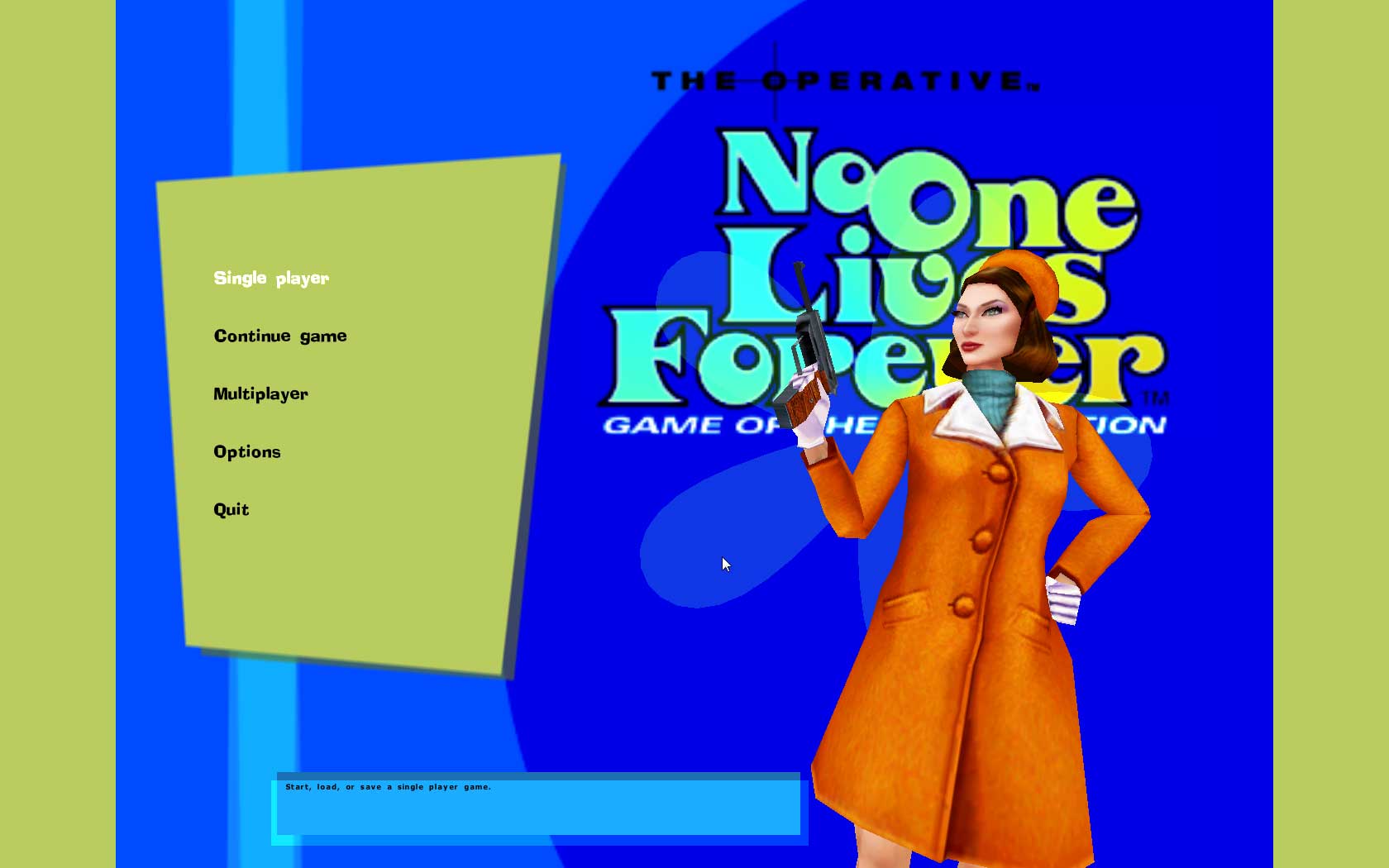
While not revolutionary in gameplay mechanics, NOLF broke new ground with its immersive world-building as experienced through the eyes of protagonist Kate Archer.
Shaken, Not Deterred
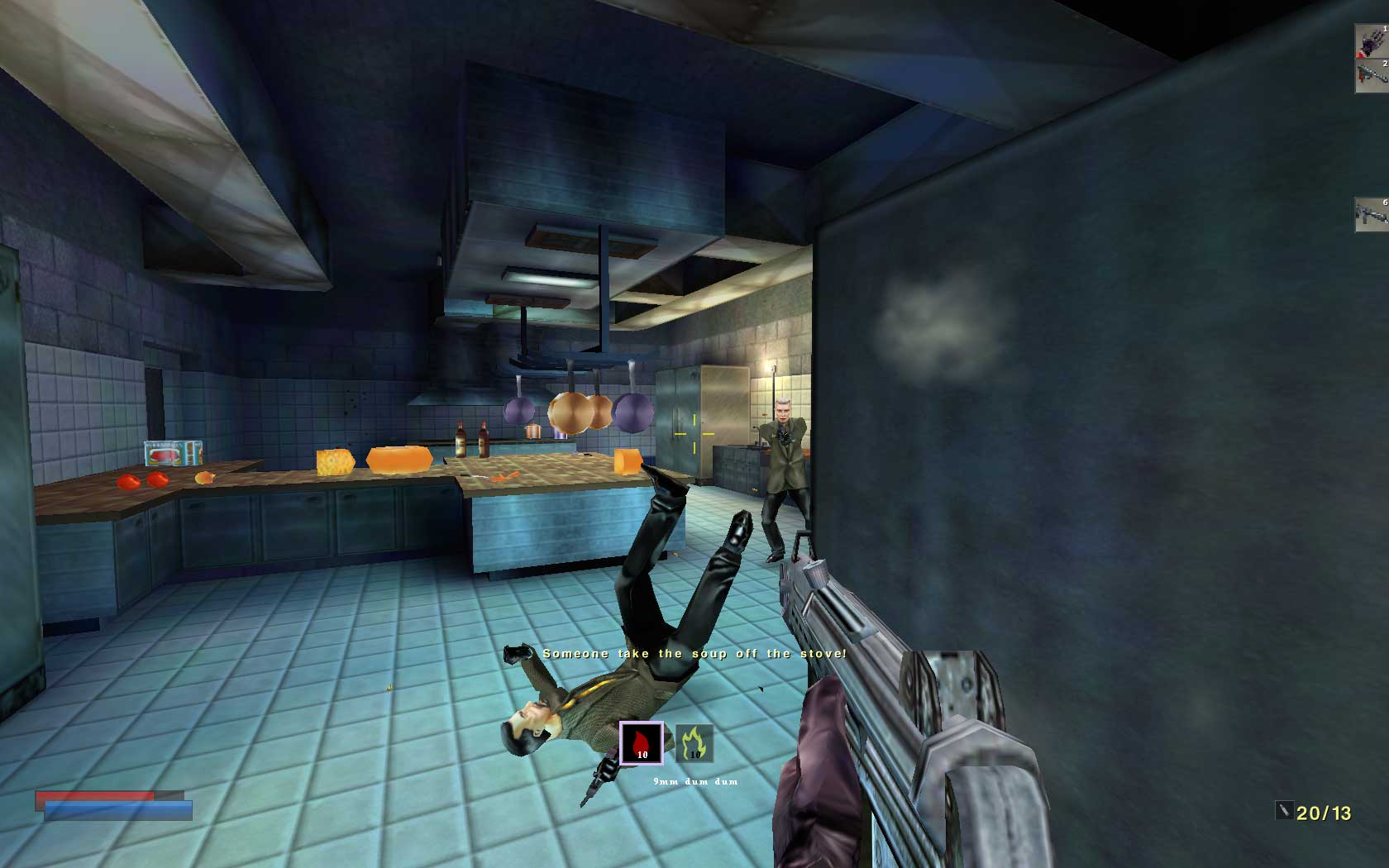
As orphaned agent Kate Archer, you work for UNITY (an obvious homage to U.N.C.L.E.) against the nefarious organisation HARM, spearheaded by Russian villain Dmitrij Volkov. Although the shooting mechanics weren’t particularly groundbreaking in an era dominated by the Quake series & Half-Life, NOLF distinguished itself through exceptional storytelling and atmospheric world-building.
Set in the 1960s amidst the second wave of feminism, Kate navigates workplace misogyny and chauvinism from colleagues and superiors alike. Only her mentor Bruno demonstrates genuine faith in her abilities. Rather than being hampered by sexism, Kate cleverly weaponises it, using feminine charm and capitalising on enemies’ tendency to underestimate her.
What truly sets NOLF apart from other shooters of its era is Kate’s delightfully innovative arsenal which blends traditional firearms with spy-craft gadgetry disguised as feminine accessories. Instead of simply wielding the standard machine guns and sniper rifles (though those are available too), Kate carries an array of ingeniously concealed weapons within her signature bright orange outfit that would make Q Branch envious.
Among the most memorable are her explosive lipsticks that function as potent grenades with various effects, knockout perfume atomizers that silently incapacitate unsuspecting guards, and a powder compact that doubles as a camera for gathering intelligence.
Stellar Performances
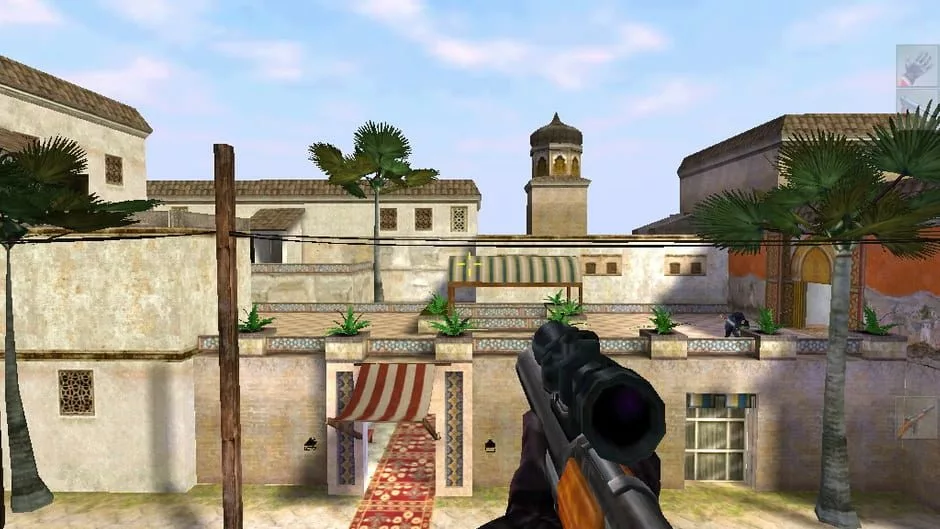
The voice acting throughout NOLF deserves particular praise, with the cast delivering performances that elevate the already sharp writing. It’s virtually impossible not to find Kate charming, with her Scottish sensibilities and sardonic wit bringing genuine depth to what could have been a one-dimensional protagonist.
Her acerbic retorts and dry observations feel natural rather than forced, making players genuinely invested in her character. This exceptional voice work extends to the entire cast, helping to establish NOLF’s unique tone where humour and espionage thrills coexist perfectly.
Villains Most Foul
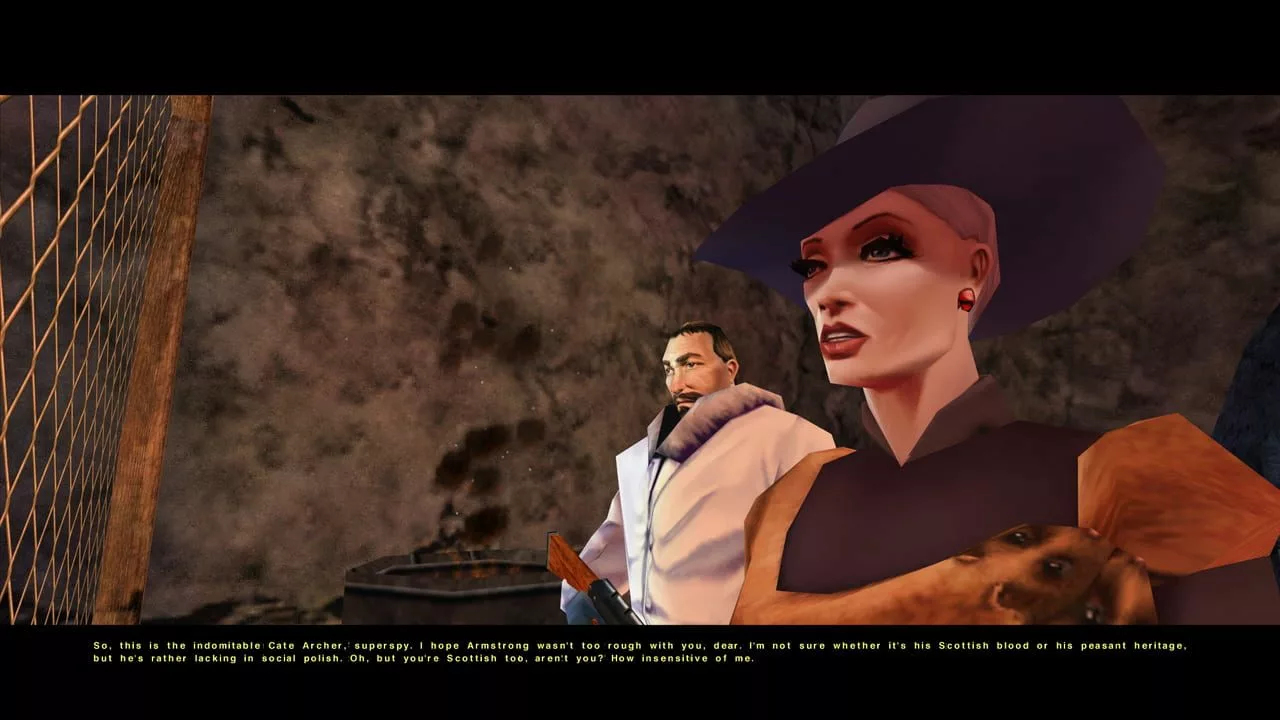
The narrative builds towards a climactic showdown with an unconventional villain, surrounded by a distinctly quirky rogues gallery. Among these standout antagonists is the imposing Scottish bruiser Magnus Armstrong—a barrel-chested, kilt-wearing enforcer whose booming voice and appreciation for a proper scrap make him as memorable as he is menacing. Armstrong exemplifies the game’s knack for creating villains who transcend typical FPS fodder, becoming genuinely interesting characters in their own right.
Licence to Amuse
The game masterfully employs visual gags and sharp humour throughout. Players can eavesdrop on enemy conversations that often prove hilarious: like two guards gossiping about a colleague caught cheating on his wife, only to experience an unfortunate series of events resulting in both women abandoning him. These exchanges typically occur moments before you round a corner and catch the unsuspecting guards off-guard.
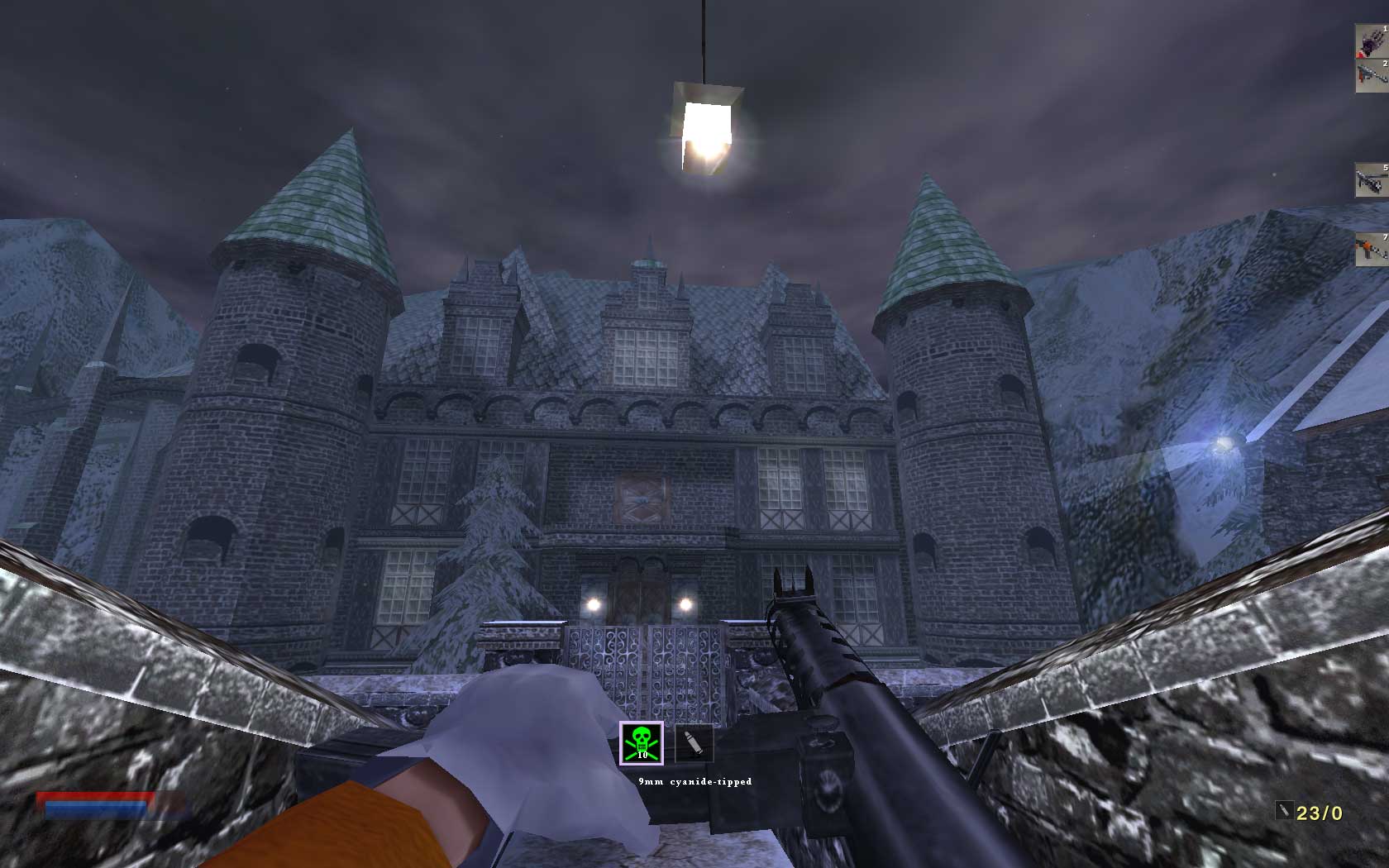
While the visuals appear somewhat blocky by today’s standards, they were impressive for their time. The witty script and clever dialogue elevate the game experience to something truly memorable, complemented by unique level designs, including a particularly standout mission on the moon. The voice acting skills were impressive: it’s difficult not to find Kate charming, compounded by her Scottish sensibilities.
Sounds Like Spy Spirit
The game also boasted an impressive soundtrack that perfectly complemented its ’60s spy aesthetic. Composed and produced by Guy Whitmore, the orchestral score expertly blended period-authentic sounds with cinematic flair, with tracks like “Intrigue” highlighting Kate’s stealthy infiltrations and the highly memorable “Escape” underscoring the epic fight scenes.
The Game of The Year edition included an accompanying music CD titled, “In The Lounge” to accompany the game, featuring standout tracks like “Goodman’s Surprise” and “Santa’s Workshop” that clearly drew inspiration from the Austin Powers films with their psychedelic overtones and bombastic arrangements. The musical accompaniment shifts seamlessly between tension-building stealth sections and adrenaline-pumping combat sequences, enhancing the immersive quality of Kate’s espionage adventures throughout.
Remaster Royale 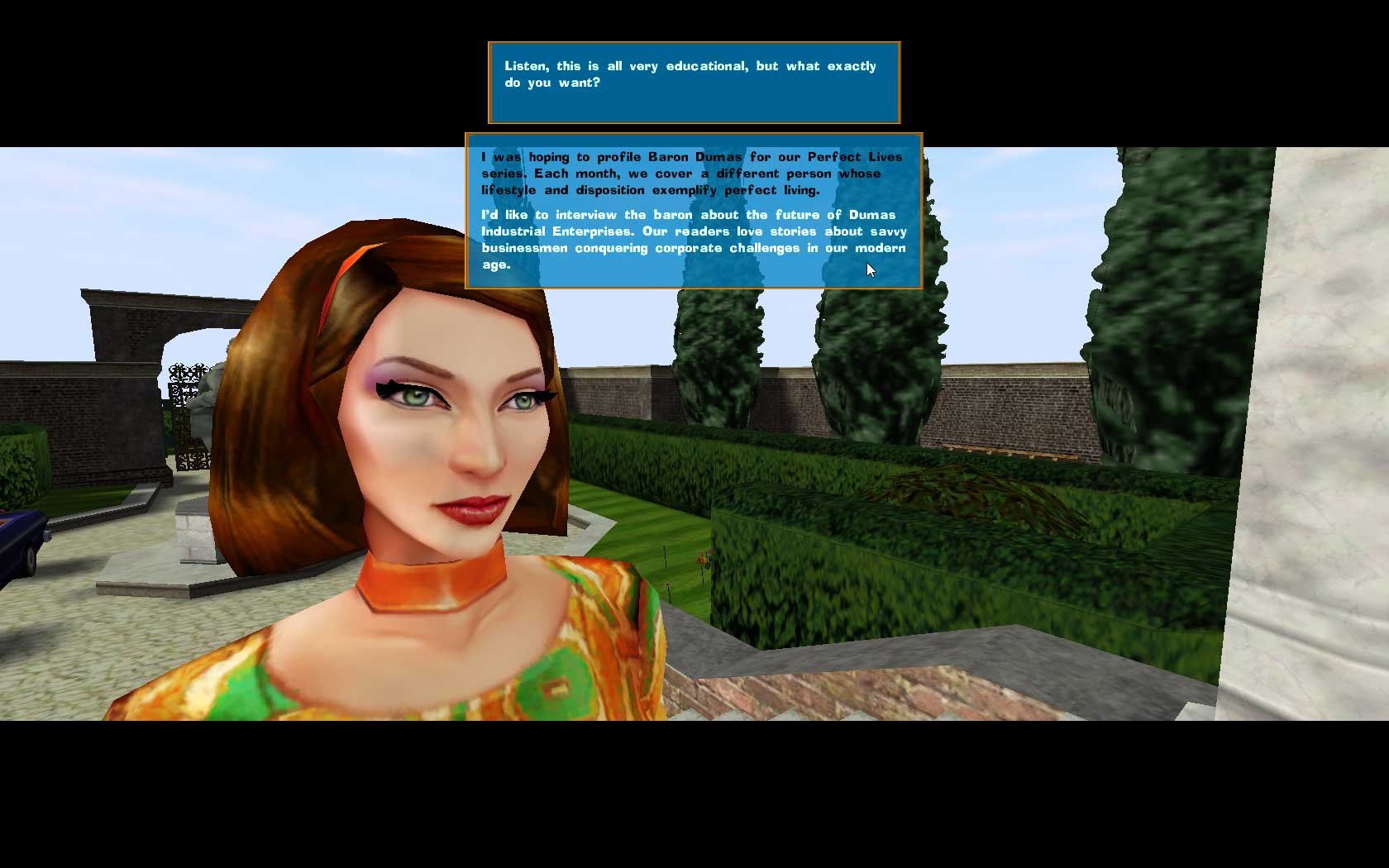
‘No One Lives Forever’ remains a personal favourite that desperately deserves a remaster or remake lest it fade into gaming obscurity. Legal complications regarding IP rights have thus far prevented any re-release, though one hopes these issues will eventually be resolved. The campaign offers a substantial experience with approximately 10 hours of gameplay across varied chapters filled with engaging allies and foes.
If I were to review this in its prime back then, I would give it a distinctive 90/100. NOLF is a criminally overlooked spy-fi gem that combines ’60s swagger with sharp wit and compelling storytelling. It’s a crime to not have anyone remaster this classic even up to now; I do hope folks like Nightdive can sort out the rights for the NOLF series and work on sorting out a remaster to not just The Operative: No One Lives Forever, but also its sequel No One Lives Forever 2: A Spy In H.A.R.M’s Way.

Leave a Comment