
Once Upon A Katamari Review: Rolling, Rolling, Rolling

Platform(s): PlayStation 5 (version reviewed), Xbox Series, Nintendo Switch, PC
Genre: Puzzle, Rolling, Katamari, Surreal
21 years ago, a genius by the name of Keita Takahashi decided to make a game where you roll a ball using the left and right analog stick, and have it collect things in plain sight. The kicker? It gets bigger the more stuff you amass. Add purposely voxel-looking graphics (way before Minecraft made it popular) and a catchy J-pop soundtrack with a mix of choirs and world music, and you have an oddity of a title called Katamari Damacy.
This title was yet another cash cow for Bandai Namco due to its all-ages gameplay and tone, meaning tons of spin-offs and sequels on different platforms. Since the remake of the first game in 2018, there hasn’t been a mothership Katamari game in a while, at least until this month.
I’m pleased to report that this new Katamari game ditches past gimmicks and just went to good old basics: making the levels and rolling objectives speak for themselves while its quirky narrative shines.
Katamari On The Rocks
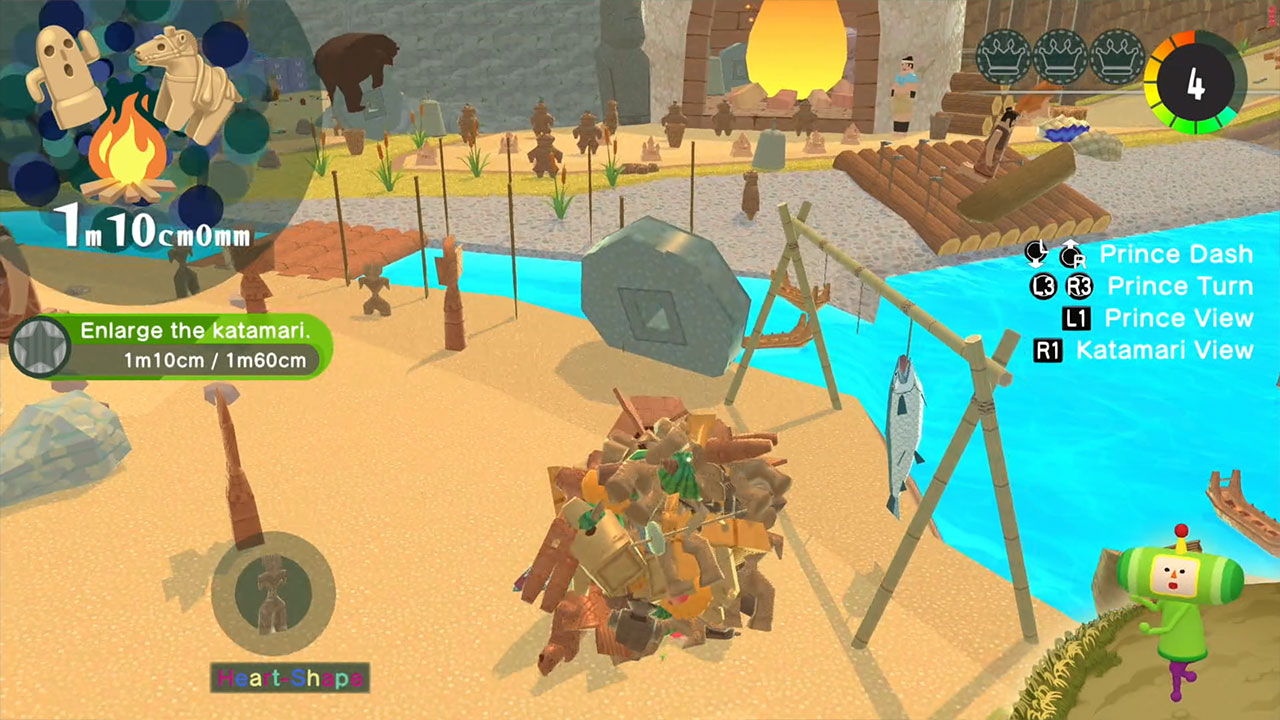
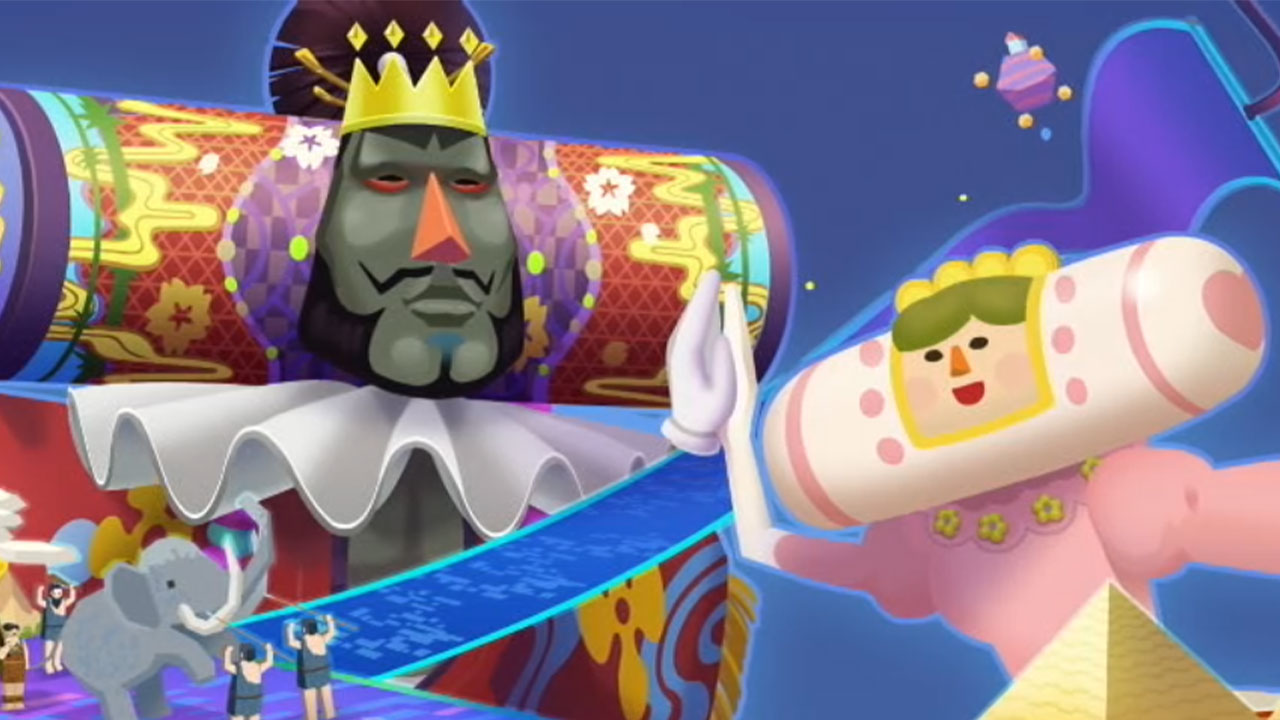
Once Upon A Katamari now tackles time travel: the King of the Cosmos, after an accident involving spring-cleaning the castle with the Queen and Prince, is stuck in Feudal Japan with his Cosmos family and must find a way to get back to the present and fix a galactic hole in the Cosmos Scroll. He leaves it up to his Prince to do the dirty work: use and roll the Katamari Ball to collect objects and make it big so that it goes up into space as a star. As an era-based time-travelling title, you’ll spend a lot of time rolling around in Ancient Greece, Egypt, and even the Prehistoric Age, where dinosaurs roam freely.
For those who haven’t touched a Katamari game, the controls are simple: you use the left and right analog stick to push the ball forward or backwards, or even turn left or right. You can do quick 180 degree turns by pressing both analog sticks. You cannot collect items bigger than you; you need to collect smaller items and living things first to grow in size before you can even pick up human beings, animals, and even dinosaurs and skyscrapers.
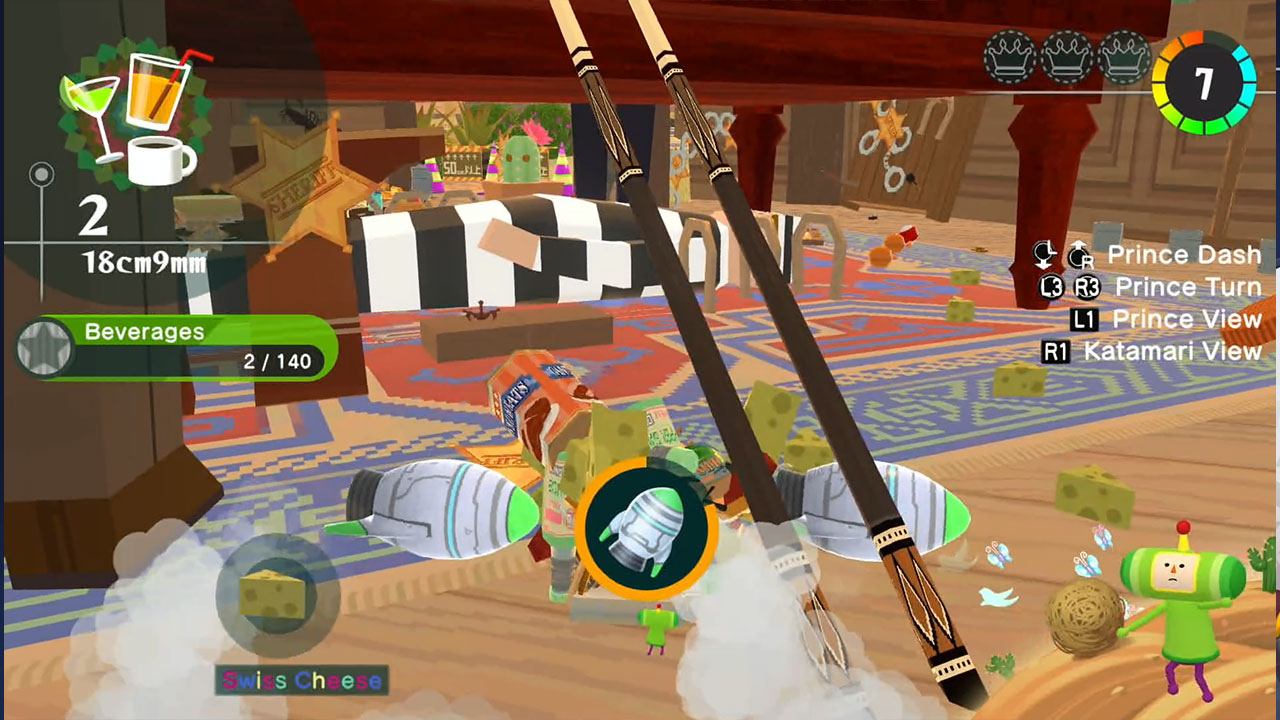
Most stages have you amassing the ball and growing it to ginormous lengths and girth. Once Upon A Katamari puts a spin on things with various mission objectives: some stages have you collecting more of one item type -drinks, gold, and so forth- and as quickly as possible. Other missions have you use a Water Katamari ball that showers a dry desert with life, but drains quick and requires breaks at water sources.
When you’re done with one stage, you can replay them and try to achieve all the challenges for a much tougher rolling game. The main questline is generally easy and linear, but you do need to find a certain amount of crowns (scattered throughout each level in threes) to open up progress walls. They’re not that tough to find, and most of these stages take less than 10 minutes to complete and explore.
Which brings me to the power-ups: they can help speed up the Katamari-embiggening process and even help find important items. The Magnet does the former by sucking collectable items within range, and the Radar pings important collectibles like mission items, Crowns, and your missing cousins. They don’t break the game, but they do help whenever you’re stuck figuring out proper ways to grow your ball on the fly.
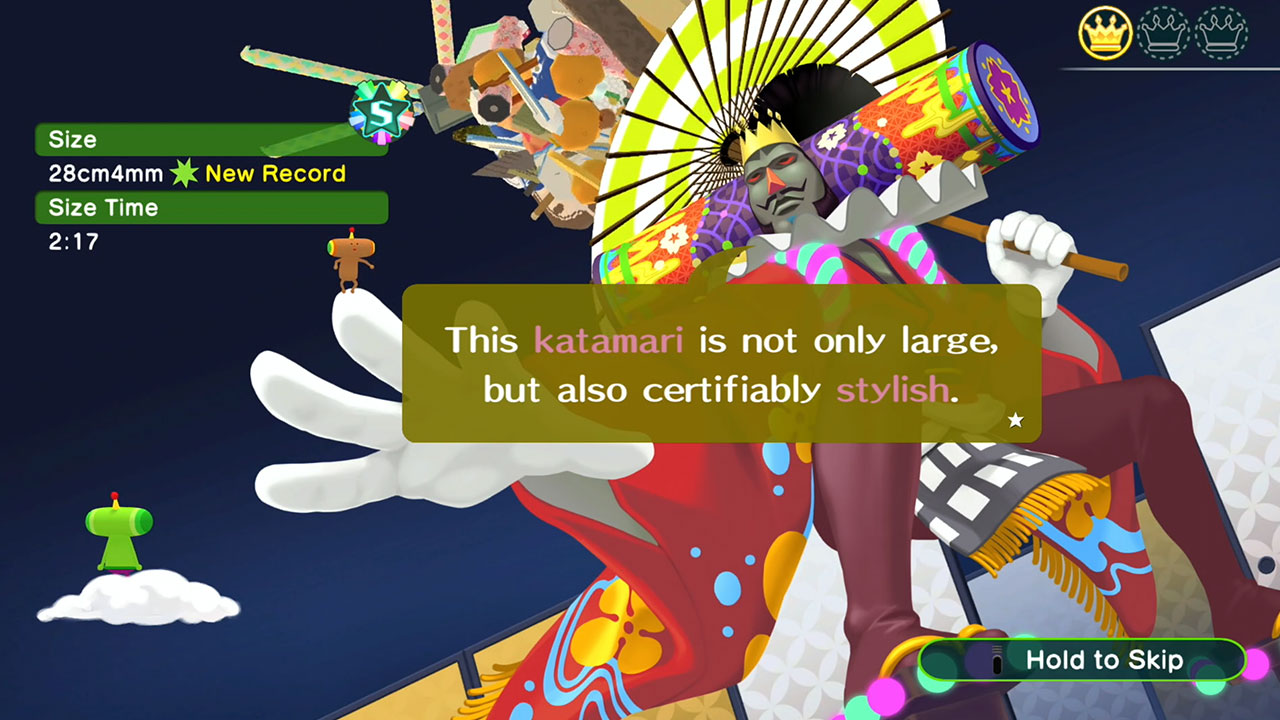
And therein lies the appeal of Once Upon A Katamari: being able to avoid getting knocked around while at a small state, growing the ball to an insane size over time, and then taking revenge on that cat that bullied you by rolling it into your 30-feet Katamari. You’re given limited time to grow big or even complete your given tasks, but these timers are considered generous and are just incentives for you to be efficient in rolling for size and memorizing key points on a map.
Lonely Rolling Star
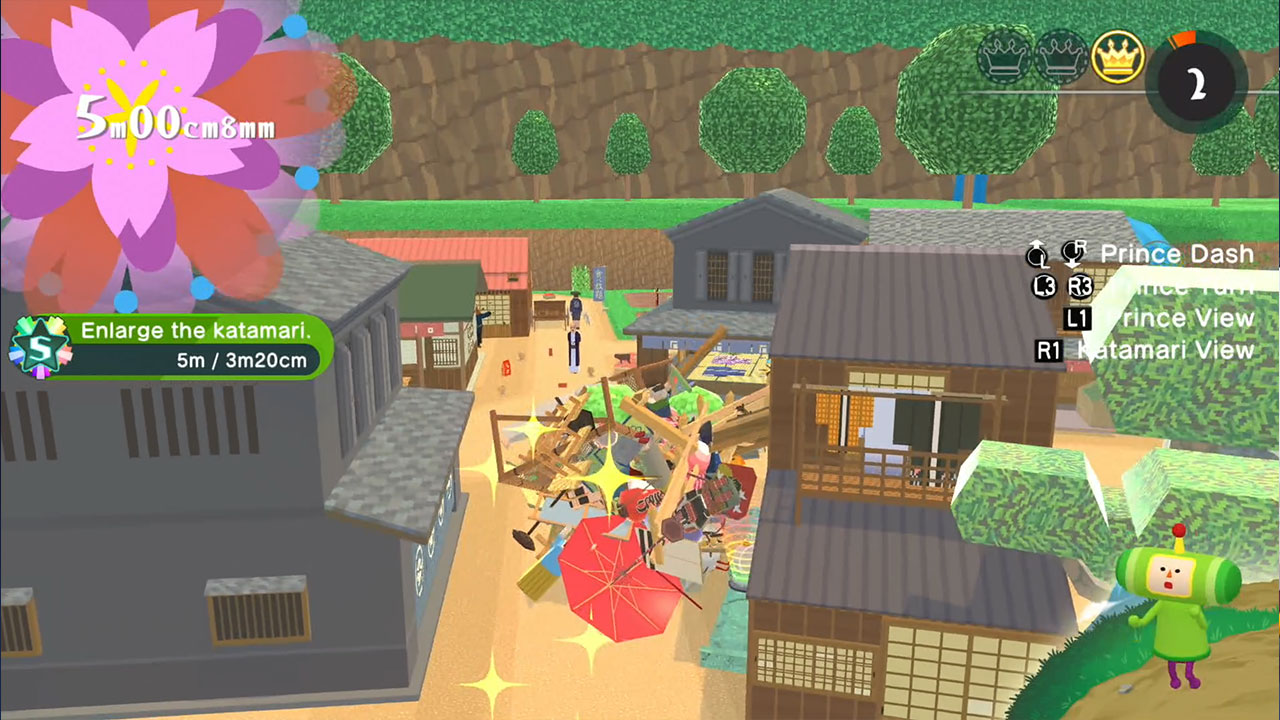
Once Upon A Katamari goes back to the good old days of PS2 weird-ass puzzle gaming where ideas were kept simple. With a fresh take on levels -now dished out in different eras- and a slew of new mechanics like power-ups and different ball types, this Katamari-type game is still a joy to play through from start to finish. Plus, there are multiplayer competitive modes that help lengthen the title’s replay value if you’re done with the many, many single player challenges.
It ain’t that lengthy and isn’t completely innovative since its PS2 zeitgeist days, but it makes up for it with fun-if-simple gameplay and a bizarre tale about a prince taking s*** from his cosmic dad, while his mom goes on other sorts of nonsensical cutscene adventures. There’s nothing more stress-relieving than rolling up pieces of wood to build a giant pirate ship, or just roll up pirates and all sorts of sea life just to please your space dad and get back to your modern timeline.
Final Score: 80/100
Review copy provided by publisher.


Leave a Comment