
Onimusha: Way of the Sword Review – Stealing Souls & Hearts
Platform(s): PC (version reviewed), PS5, Xbox Series
Genre: Action, Adventure, Fantasy, Samurai
2026 is clearly a good year for long-time game company Capcom, with two big hits already out. One new Resident Evil game that brings in longtime favourite Leon Kennedy, and one new game entry involving little girl robots and the makeshift dad who protects them with spaceguns and space airdashes.
I may have some misgivings about their past practices and dipping through the well for abandoned IPs to make anew. However, if it turns anything just as grand as Onimusha: Way of the Sword (the fifth mothership game after 20+ years), I’d say dip in long, hard, and good!
Partying AND Studying The Blade
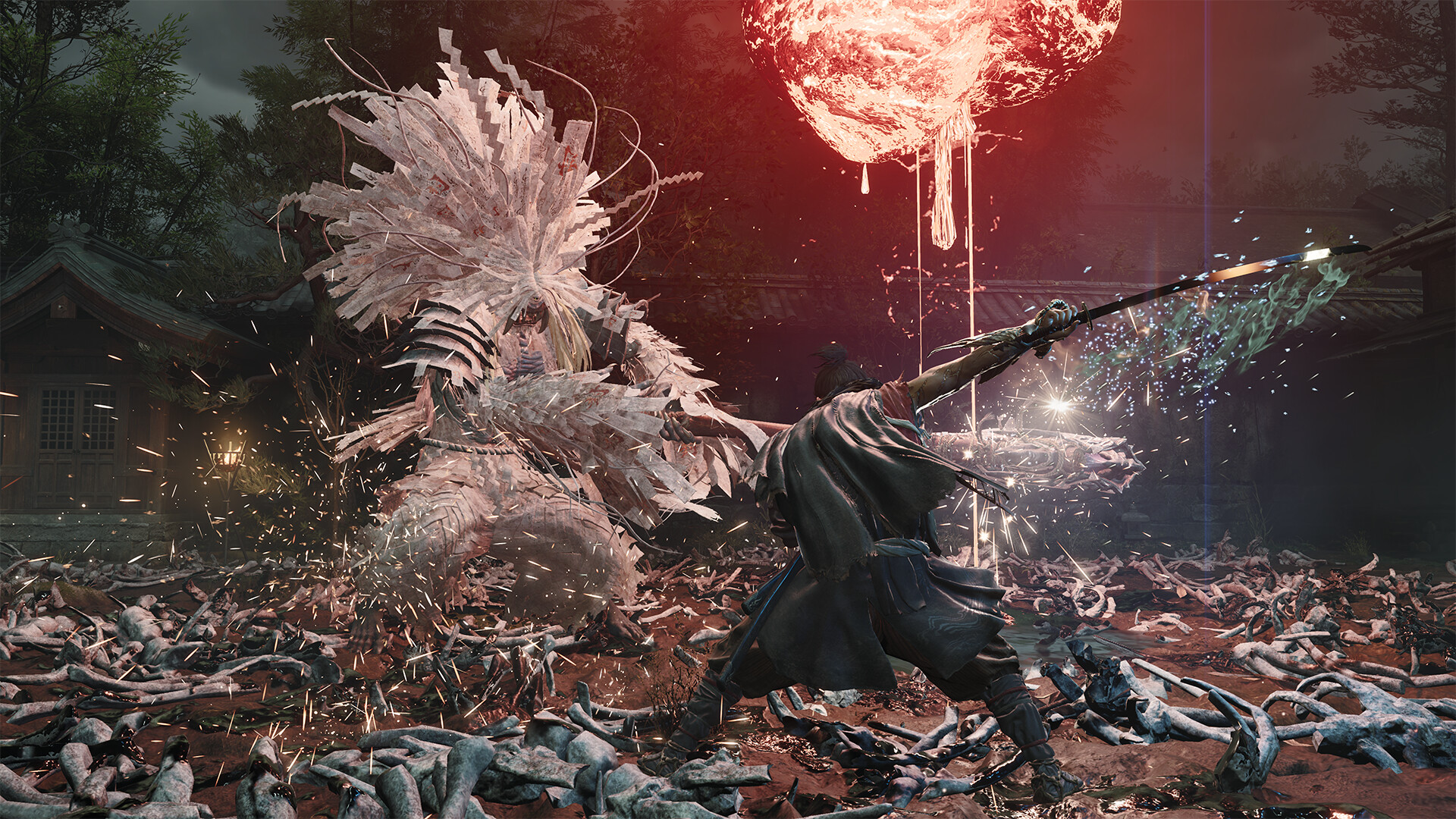
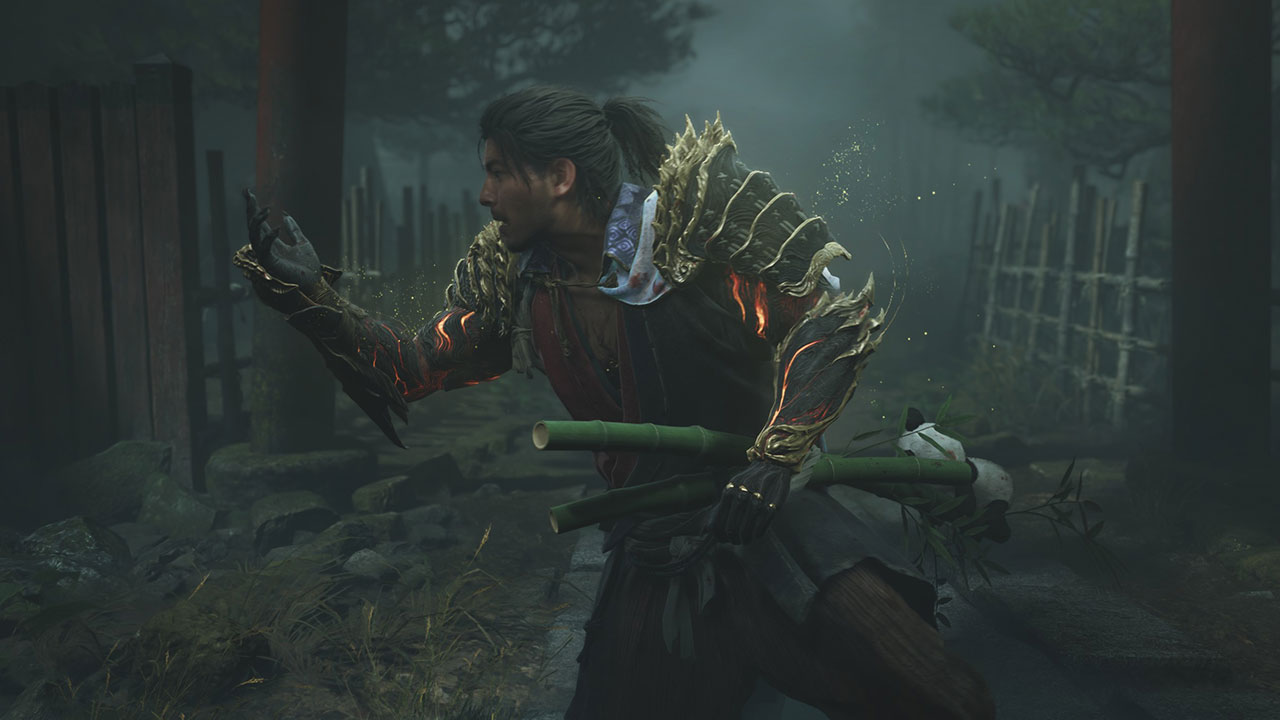
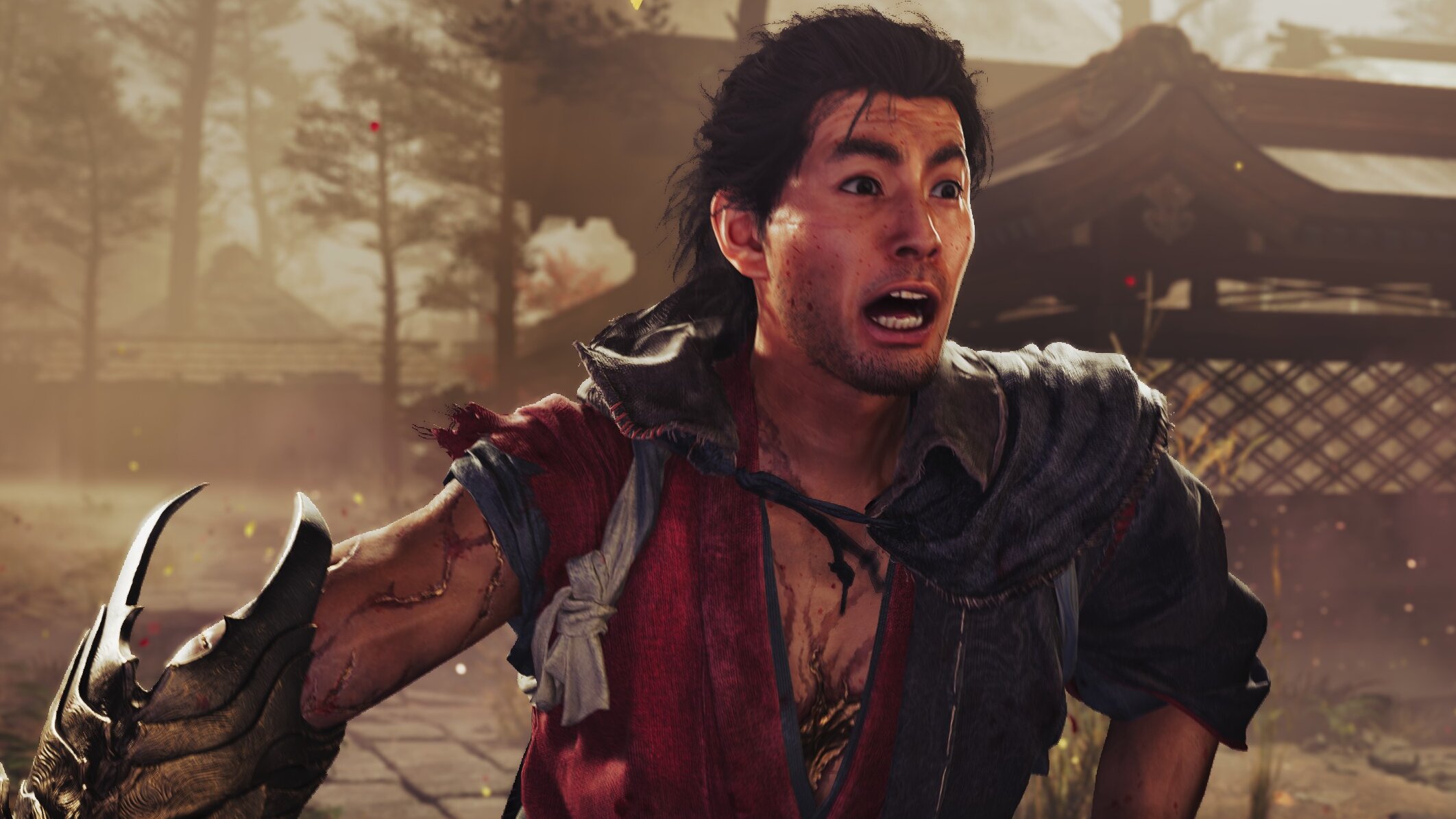
Part of the series that arguably influenced action RPGs ala the Dark Souls series and all other copycats, Onimusha: The Way of the Sword is an action-adventure RPG title where you play as Musashi Miyamoto, a brute and a swordsman who is really good at fighting. He gets killed by demons called Genma after a scuffle with a nearby sword dojo (in a pretty cool tutorial segment), and then ends up possessing the Oni Gauntlet. He needs it to kill the Genma, and also suck their evil souls so you can power Musashi up and eventually become the reluctant hero of East Kyoto, portrayed accurately according to the history books (sans flying demon heads and soul-sucking zombie samurais).
Right from the get-go, I fell in love with our main hero Musashi. He’s clearly not perfect and is boorish, but he has a heart of gold and is damn good at helping others using swordplay. From the intro bit where he reluctantly helps the poor, to his candid talk and lack of manners when addressing his superiors, he comes off less like an asshole and more charming; someone you root for even with all the snark that doesn’t feel forced and contrived. His other pals, the other Oni Gauntlet user Takamura, and kabuki dancer little lady Okuni, to even the gauntlet spirit Shizuka, are equally on par charisma-wise and help service the story. But in the end, it’s clearly Musashi who carries the tale from start to finish. I do wish his story with his rival Ganryu was fleshed out more, but at least we got a good number of epic boss fights out of it.
Speaking of which, combat is the main highlight of this Onimusha. Like past games in the series, Musashi has light and heavy sword attacks, can dodge, parry, and deflect attacks back. If you’re REALLY confident, you can do an instant “issen” move by swinging your sword just before you get hit by an enemy attack. The timing is incredibly strict here, but your rewards are huge. I have yet to get the hang of this technique, but just parrying and countering is the way to go, as Musashi looks really slick and cool just deflecting attacks and slicing fools up in style. The tight controls do help; it truly is your fault if you keep getting hit.
Musashi can also use special spirit weapons that act as temporary big damage dealers, area-of-effect swings, and life-sapping tools provided you have enough blue souls to power them up. When you down enemies, you can collect red, yellow, and all other coloured souls by activating your gauntlet. For the most part, you go through each level and dungeon, solve puzzles along the way, and then deal with most enemies with your sword, capped off with a boss fight or two.
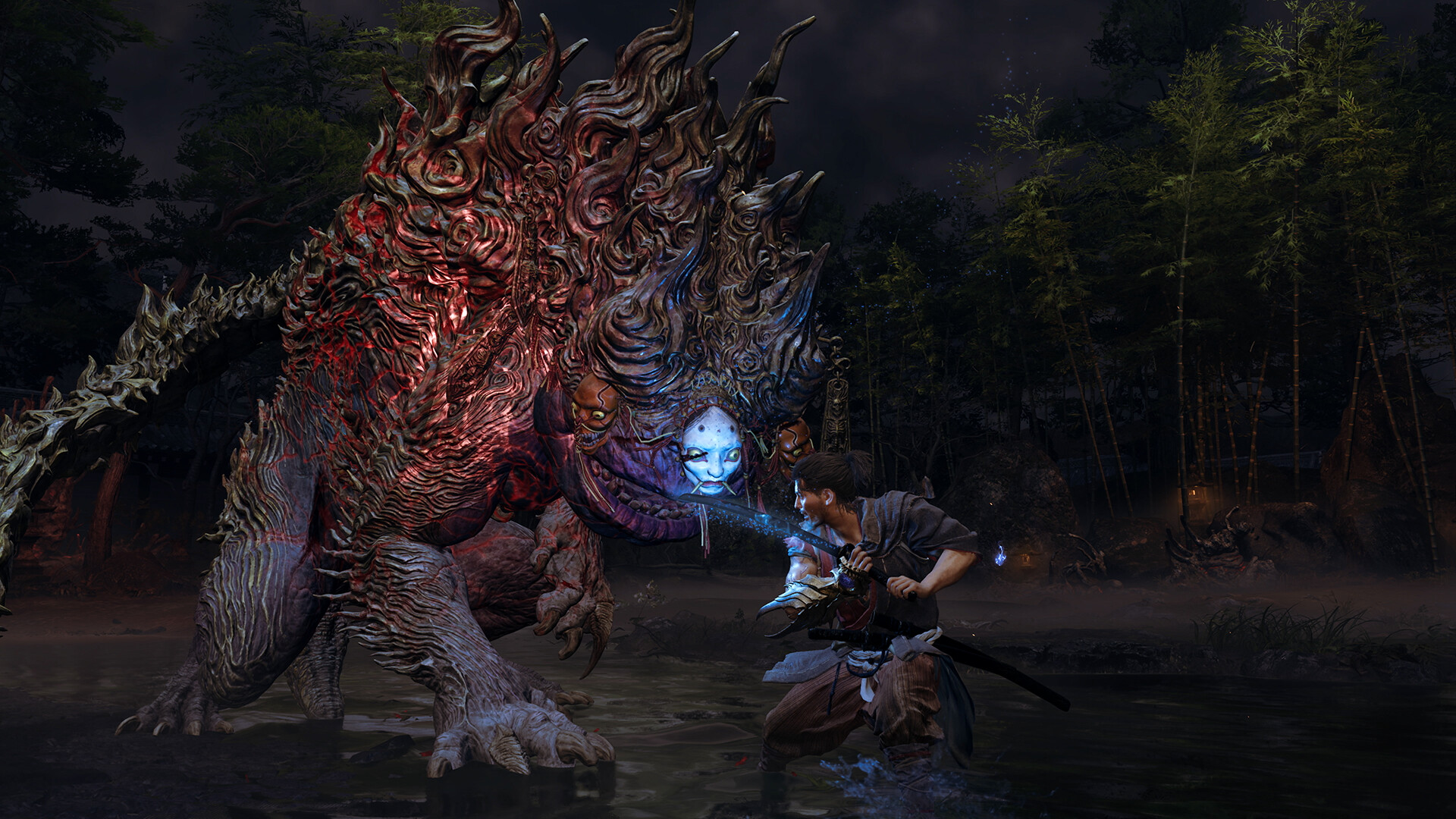
The plethora of boss fights in Onimusha: Way of the Blade is the sole reason you go through the stages and rank-and-file: they are colossal, epic in scale, and challenging. It’s not From Software action RPG scales of difficult, at least for the first half of the game, and when the game start introducing new action mechanics like “Pink Attacks” which can only be parried, that’s when the gloves are off. The fact that the grunts get upgraded with these new mechanics as the game goes on through its 20-hour-or-so runtime means that you can’t be asleep at the wheel too often when you’re doing the regular story missions.
Like beefed-up appetizers before the main course, the common enemies help sharpen your skills before the big battles. Spoiler-free highlights include the elemental-themed demon siblings (duels and tag team), the giant demon monk on the bridge with the armour, the first boss that introduces you to the aforementioned “Pink Attacks”, your rival, and the last fight that takes all the techniques and mechanics you learned and test you.
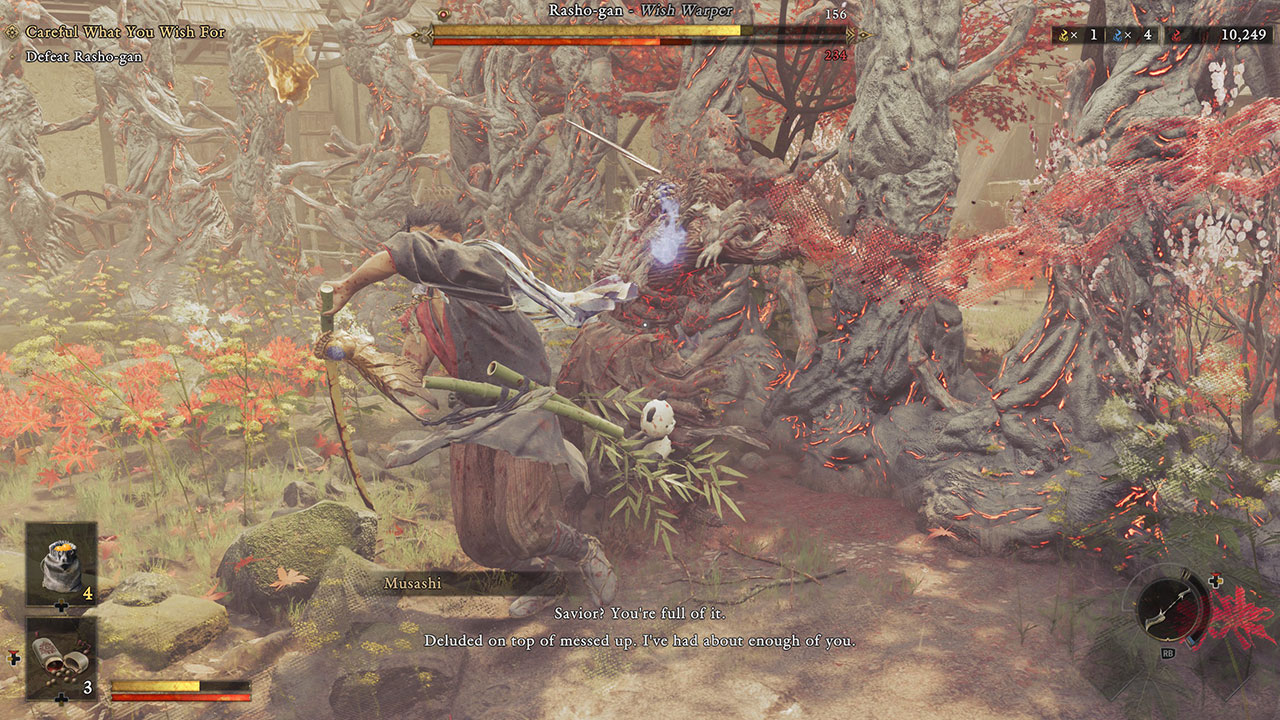
If I had any issue with Onimusha: Way of the Sword, is that its open world structure may be its detriment. The game is peppered with sidequests that are essentially fetch quests and “kill waves of enemies for reward” nonsense you find in MMOs. The sad part about this is that this padding is necessary, since all the upgrade items are from these mundane missions. Still, there are some gems, like the short quests involving Lady Murasaki. She shares lore about Japanese myths as you help crack cases with her as an ethereal butterfly. I say play through those not just for the stories, but also appreciate how they’re presented. Let’s just say that if Capcom do not have any ASMR-esque plans with those segments, they’re not marketing the game right.
I’d also complain about the lack of a harder difficulty, but that gets unlocked once you finish the game. Personally it’s a better way of pacing yourself to try out the tougher route once you get the hang of the main game on the developer’s intended experience. But that’s just me.
Blue-Eyed Samurai
I am so glad to be playing a triple-A action game that isn’t a stamina-hampered Soulslike RPG; one that doesn’t have purposefully-gimped controls and just focuses on linear(ish) slicing and dicing and boss-fighting fun. While Onimusha: Way of the Blade could use a bit of trimming for its semi-linear structure, everything about it is golden.
Capcom essentially “issen”-ed its way back into every action gamer fan’s heart with this fifth mothership samurai-versus-demons-and-soul-vacuuming action entry. With a likeable protagonist, beautiful aesthetics, spot-on controls and fighting, and memorable boss encounters, there’s never a better time to get into Onimusha than with this big-budget samurai supernatural combo. The king of parries & aura-farming samurai action is back, baby!
Pros
- Awesome fantasy-slash-historical setting and pacing.
- Fun combat with plethora of offensive and defensive options.
- Incredibly charming protagonists and main cast.
- Epic boss fights.
- Fair difficulty, with higher challenges post-game.
Cons
- Some semi open-world sidequests feel phoned-in.
Final Score: 90/100
Review copy provided by publisher.
Leave a Comment