
Marvel’s Thunderbolts Was Groundbreaking 90s Comic Book-Reading; Here’s Why
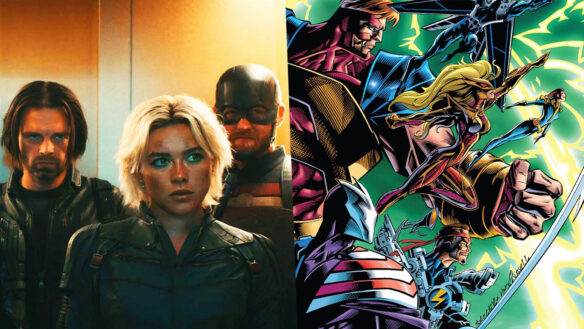
Stop me if you’ve heard of this one: a bunch of established comic book villains team up to pretend to be the good guys to gain the public’s trust, in a world where its heroes went missing or are presumed dead. Secretly, the faux heroes enact their master plan, but most of them end up loving the job of being the good guys instead.
While that plot arc isn’t the most innovative or effective in this current comic book movie (or comic books) climate, it was a breakthrough in the late 90s, especially when it was a huge company secret prior to the story’s debut to the public.
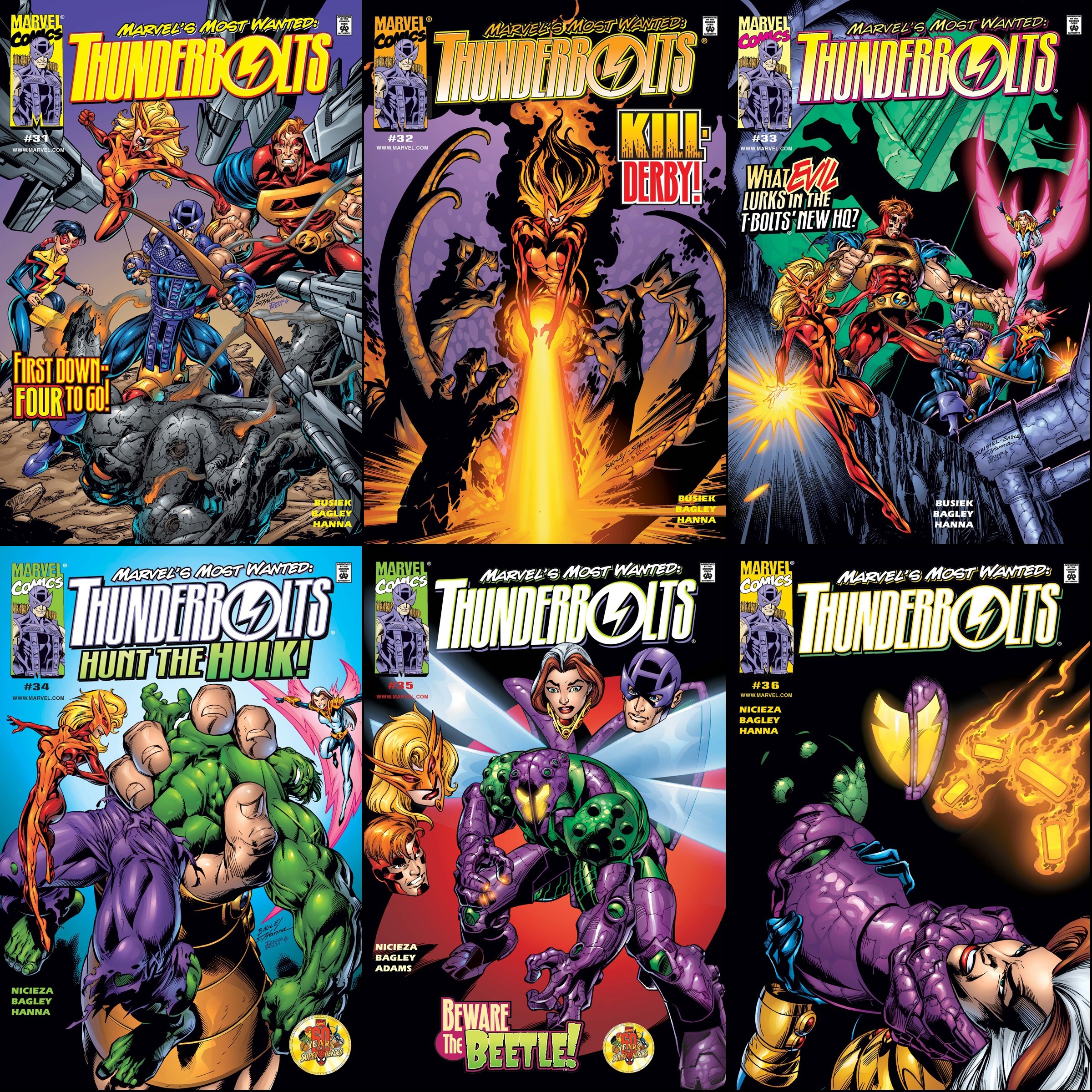
Marvel did just that in 1997 with its then-new comic series Thunderbolts. Created by Kurt Busiek and Mark Bagley, it was Marvel’s way of making a different kind of anti-hero team that came in at the right time after the company’s recent comic book event, and at its lowest moment to boot. Remember, this wasn’t the Marvel that was enjoying the coattails of the Marvel Cinematic Universe’s windfall.
Heroes Revamped
To put things in perspective, Marvel Comics was rescued by Toy Biz from bankruptcy in 1997. As such, Marvel was experimenting with all sorts of ideas and angles to revitalize its brand. But before the comic’s gritty phase in the 2000s, they had to go through a Heroes Reborn arc, where Marvel let Image Comics founders/creators like Rob Liefeld and Jim Lee have a stab at Captain America, the Fantastic Four, and The Avengers in an alternate universe far from the established Earth-616 main canon dimension.
What about Spider-Man? Well, the Clone Saga happened, so he was on the s*** list at the time.
With a void left to fill, that was when writer Kurt Busiek (after work on Astro City and Marvels) jumped in with his long-brewing idea for a new superhero group. But the twist is that they have to be villains who are wrestling with the perks of pretending to be good guys. Not just one, but a group of them. So some cross-promotion happened to introduce the members bit by bit via Incredible Hulk #449 back in early 1997, eventually leading to the group debuting in their own book series in April 1997.
The first issue starts with a bang. The city of New York was still ravaged after the Onslaught Marvel event -the one where Professor X and Magneto merged to become one superpowered evil badass that required the whole Marvel superheroes team to take down. A new criminal group called the Pack Rat decided to loot whatever remains and take over.
Then BAM! In comes the dashing Citizen V, son of old Marvel hero Patriot V and a group of new heroes: Techno, MACH-1, Songbird, Atlas, and Meteorite.
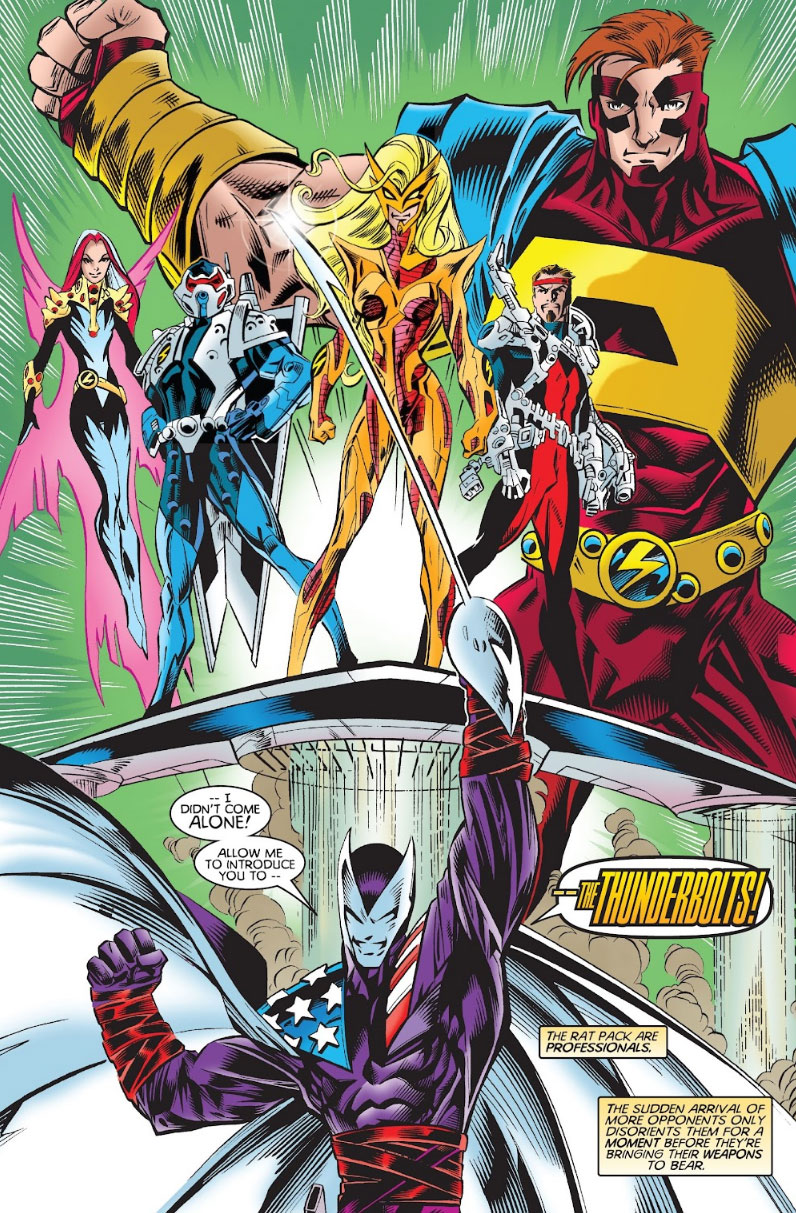
They took down the ragtag group and even fought against established Marvel villain group The Wreckers (evil crooks with a fragment of Asgard’s power). The new team even restored the Statue of Liberty which got caught in the crossfire, using their powers once things settled down.
They also managed to get some good PR out of their good deeds, though they rather make their headquarters a run-down place rather than some fancy mansion because they prioritize world-saving over amenities. They would rather earn their place in hero pantheon-dome rather than act entitled and demand things from the public they’re saving.
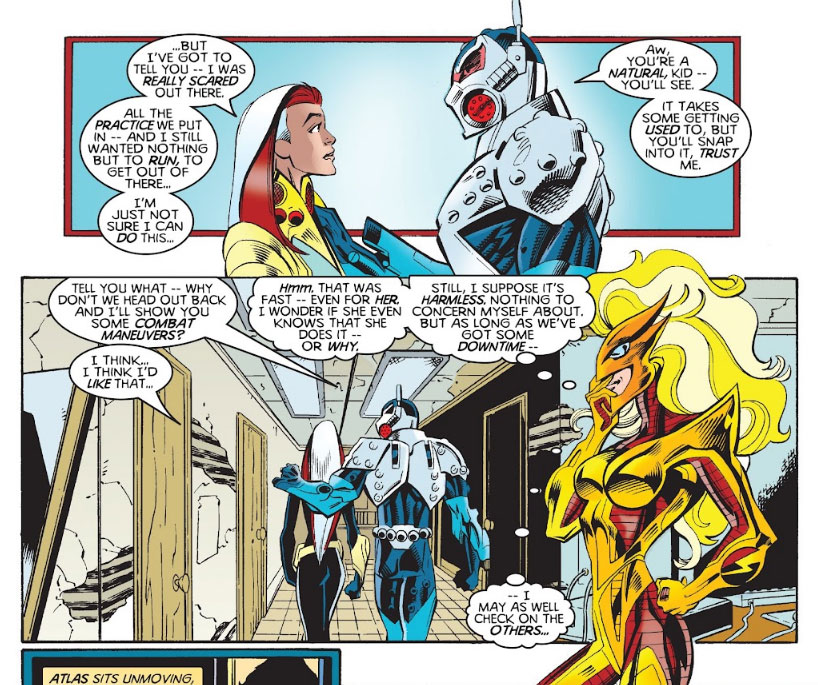
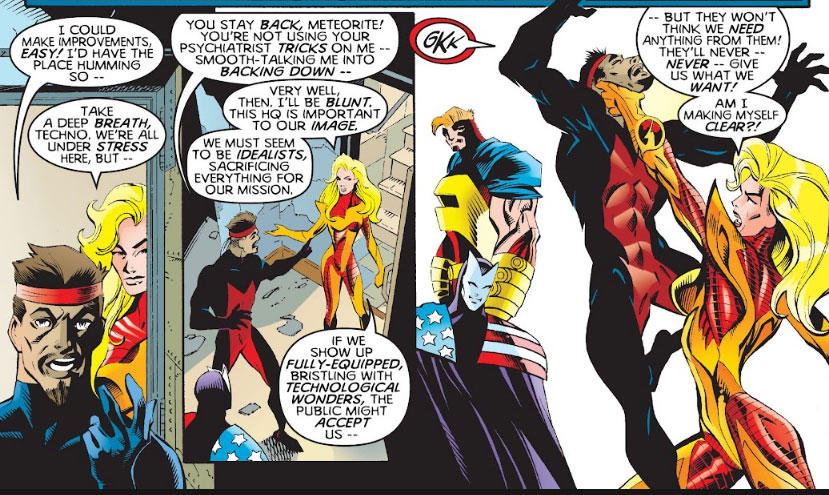
They even have their own personal drama to go through as a team, with MACH-1 and Songbird eventually getting into a relationship and Meteorite becoming a little too controlling of the group and quite a busybody (though it’s for the greater good than just for kicks).
Just when issue 1 is getting wrapped up, we get a bombshell of a plot twist, one that was kept a huge secret by Marvel management and creatives together. Citizen V is actually long-standing Marvel villain Baron Zemo (and Masters of Evil big boss) in disguise. And it’s not just him: his entire Thunderbolts team are ex-Masters of Evil goons: Techno was Fixer, MACH-1 was Beetle, Songbird was Screaming Mimi, Atlas was Goliath (of Avengers infamy), and Meteorite was Moonstone.
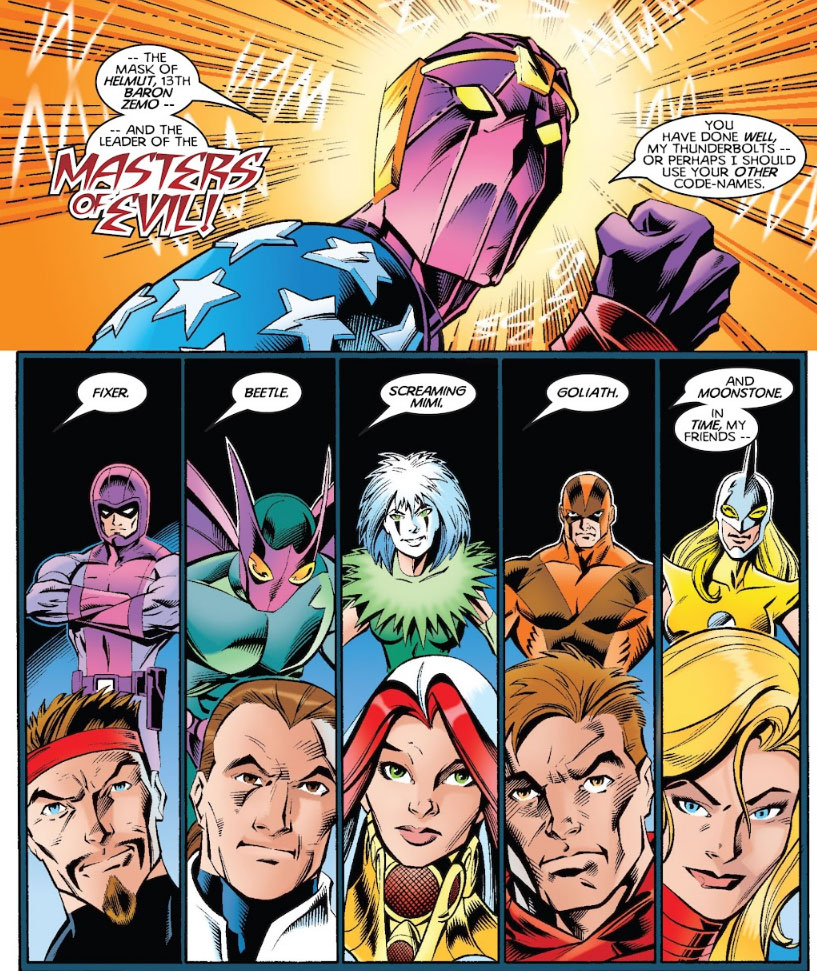
Long story short, Baron Zemo long-term plan with this charade was to gain the trust of the public by pretending to be superheroes in a time when they’re really needed (as the Avengers and Fantastic Four were “dead). They eventually gotinto good graces with S.H.I.E.L.D so that he and his group can use their tech and secrets to put them in a powerful position and even protect other supervillains from the law in exchange for tribute.
One major problem though: the villains apart from Baron Zemo actually ended up being seduced by good; they eventually found the superhero life alluring and more fulfilling than being a villain. It’s the case of the grass being greener than the other side, and the writing and energetic artwork are done really well and paced better. It’s the opposite of seduction of evil; it’s the seduction of good.
This is also made complicated by the addition of Jolt, a new superhero who has no ties with The Masters of Evil so the team has to keep their real identities a secret. And when the Avengers and Fantastic Four returned to the current comic timeline -Earth 616- Baron Zemo outed the entire group as bad guys to make sure the Thunderbolts were loyal to him out of necessity.
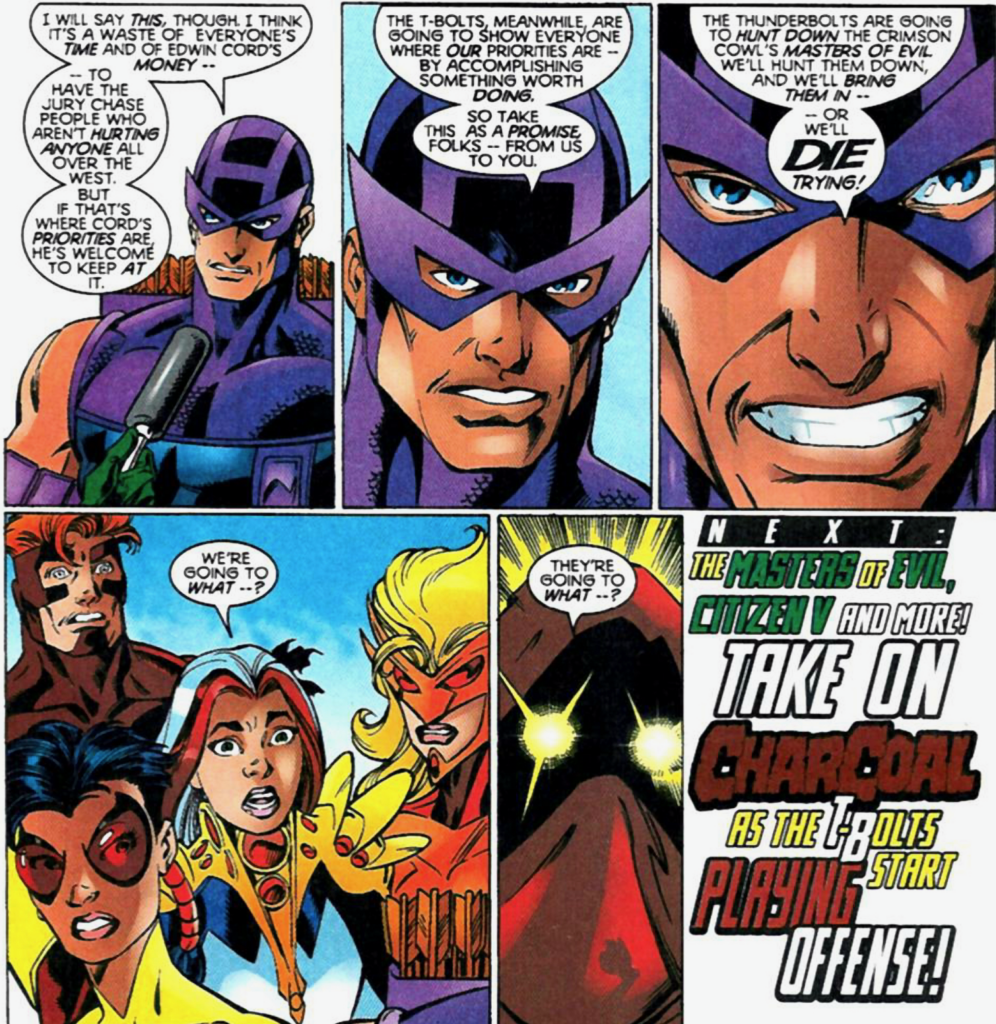
That plan backfired and he and his only supporter Techno ended up being brought to justice by the reformed team, like lightning. The Thunderbolts were still outlaws, so luckily they had help from ex-Avenger Hawkeye (who was also previously a villain) to help reform the team and get them back into the good graces of the public.
System Shock
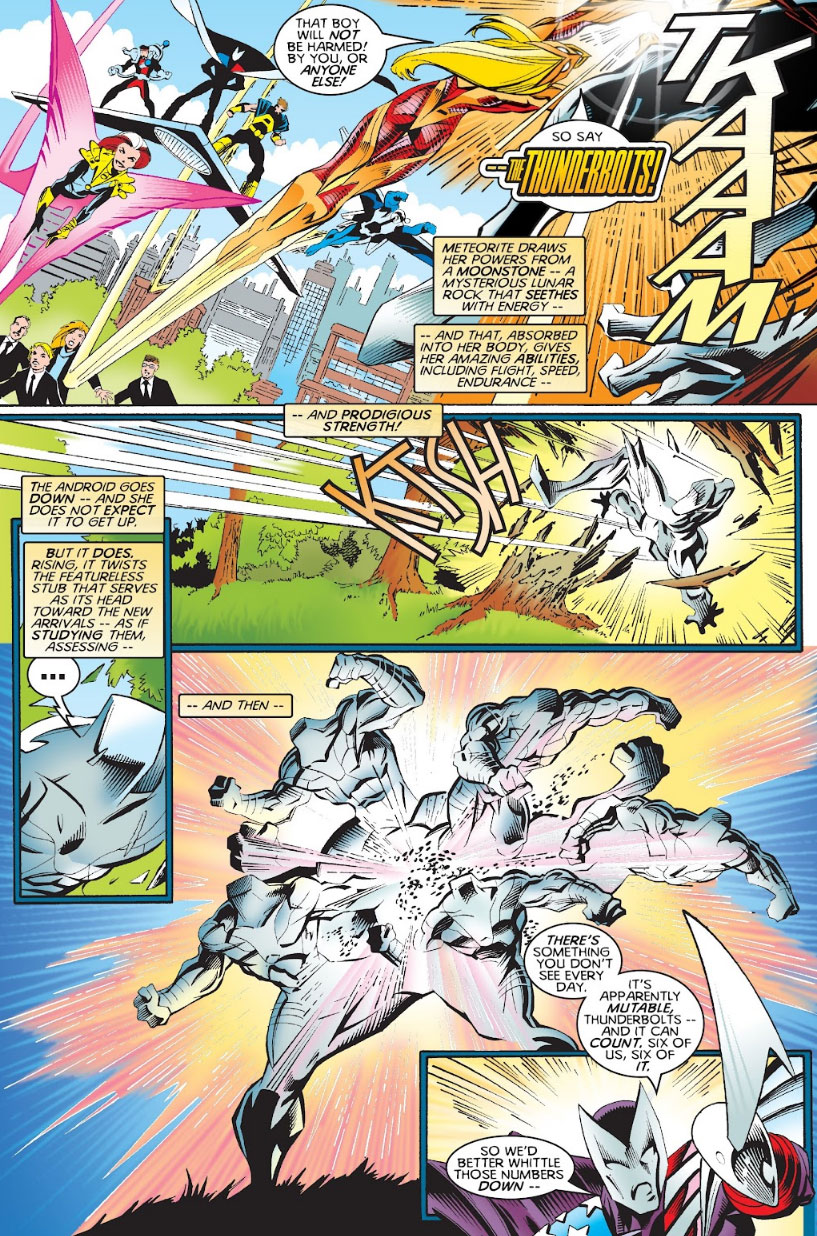
Marvel’s Thunderbolts debut run was an awesome comic book series because its writer Kurt Busiek uses Marvel’s superhero and villain history and incorporates it very well to tell its new tale without bogging down and convoluting it for all readers. The artwork was also very beautiful, dynamic, and action-packed thanks to Mark Bagley. His works in Thunderbolts did cement him as the go-to artist for future projects like Ultimate Spider-Man and working with writer Brian Michael Bendis for a very long while.
Thunderbolts also kept its plot twist a heavily-guarded secret, blowing everybody’s mind on what the medium can achieve even when it’s been around since the 60s. In contrast, the recent comic book Marvel movie Captain America: Brave New World failed mostly because it revealed its plot twist in its pre-release marketing. Had Marvel and Disney had more faith in the film and just kept its marketing disciplined (or even purposely pivot it to Giancarlo Esposito’s villain character), then maybe the film wouldn’t have been s*** upon so bad. Can you imagine if that happened to Marvel’s Thunderbolts where you advertise the Baron Zemo plot twist before the first issue happened? Marvel would have been bankrupted much earlier and permanently.
Still, the book ran as long as it could before its eventual rebranding, replacing the team with new characters and also going through different names like Dark Avengers, as well as using more popular characters and anti-heroes like Red Hulk, Elektra, and Punisher. As of now, the new Thunderbolts group consist of former hitmen, assassins, and disgraced soldiers: Black Widow, Sharon Carter, White Widow, Red Guardian, and US Agent. This new iteration is similar to the one in the Marvel Cinematic Universe, as there are already established anti-heroes in that canon that would group up out of necessity.
It’s a shame it did take this route, because having a bunch of established villains masquerading as heroes in a world without Avengers would have been a page turner and a breath of fresh air. Maybe Marvel and Disney might revisit this specific plot point in the future, but as it stands, a Thunderbolts series in the veins of the 1997 debut comic (but with MCU stuff) would make for lovely TV drama on Disney+ at the very least.
After all, the MCU Hawkeye was a villain and anti-hero at one point, right? He would make a great leader figure to a new batch of reformed villains.

Leave a Comment